Shepherd and Sons Contracting ltd
FAQ
Answers based on experience
ASK THE EXPERTS
The Questions We Hear Most
From how our sealants behave to how quickly a surface can reopen to traffic, this page answers the questions we are asked most. You will find practical guidance on joint sealing, sealants and surface repair, alongside answers about who we are and how we work. As a third-generation, Kent-based specialist surfacing contractor, we have drawn these answers from more than 40 years of work across aviation, highway, ports and public projects.
What is different about airside working?
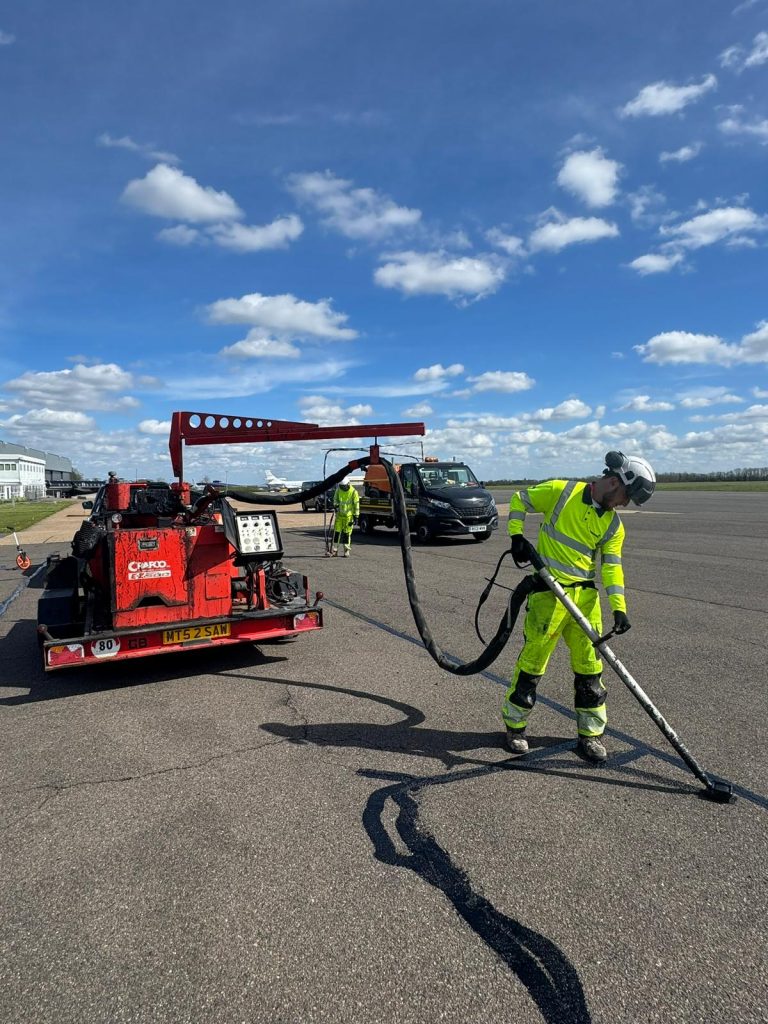
Airside working means operating within a live, secure airfield environment where access is granted only inside defined possession windows, often overnight, before the surface must be handed back for the first flights. From working with clients across all seven former BAA airports, we have found that the real difference is not the cutting or sealing itself but the discipline around it: airside passes, escorting, foreign object debris control, and handing a runway back signed off and on time. It is a different way of working that comes only from decades on operational airfields.
How much experience do we have as contractors?
Our surfacing pedigree runs back more than 40 years, beginning with Shaw-Seal Ltd in 1966 and continuing today as a third-generation family business. We have been the sole contractor for BAA PLC since 2008 and have delivered work at all seven of the UK’s largest airports, including the Heathrow Terminal 5 runway in 2005 and the A380 Code F conversion in 2007.
How did Shepherd and Sons start?
The business grew out of Shaw-Seal Ltd, founded by Alan Shepherd in 1966, which held the chairmanship of the Extruded Sealant Association in 1989 and worked across the country’s biggest airports. When Lagan Aviation called on Richard Shepherd to assist with the Stansted runway resurfacing in 2023, the current company, Shepherd and Sons Contracting Ltd, was formed by Richard, Jordan and Sasha Shepherd, carrying that experience into a third generation.
What are airfield specifications?
Airfield works are delivered to the standards set by the Civil Aviation Authority (CAA), the International Civil Aviation Organisation (ICAO) and, on defence estates, the Defence Infrastructure Organisation (DIO). These cover everything from marking dimensions and materials through to sealant performance and surface tolerances. In our experience, working to airfield specification is far less forgiving than general highway work, because a marking position or a sealant return-to-service time is checked against a published standard before the surface goes back into use.
What are highway maintenance specifications?
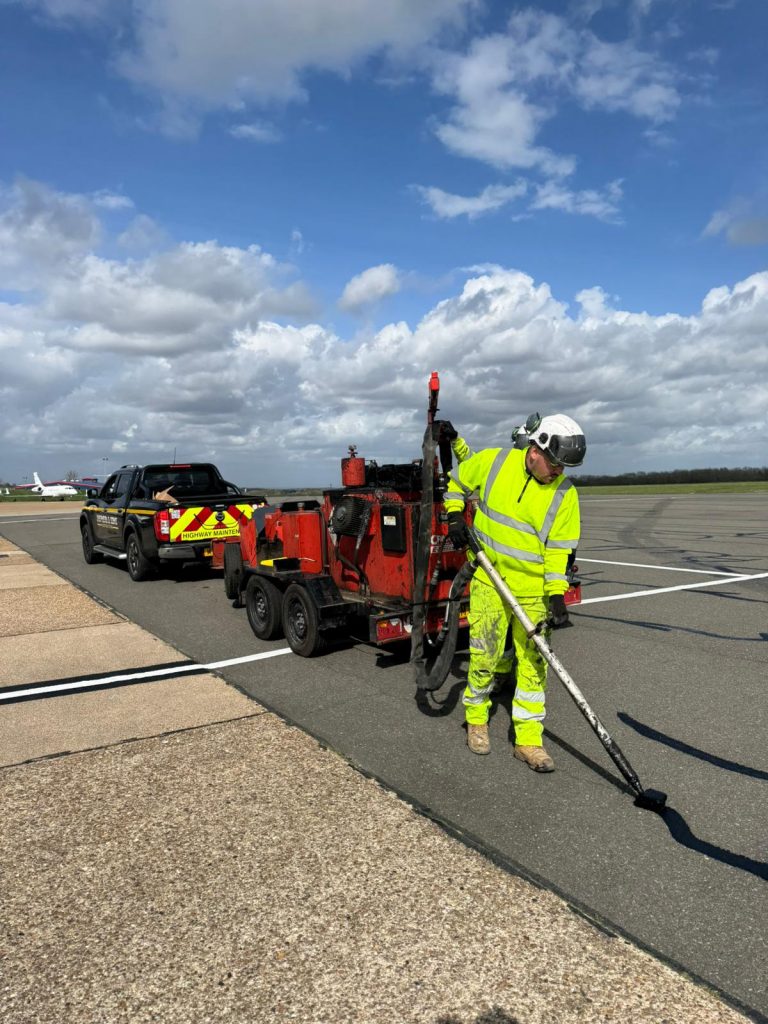
Highway works follow the Specification for Highway Works (SHW), with joint seals governed by the Series 1000 dimensions, alongside the relevant National Highways standards. Joint sealants are specified to BS EN 14188 and applied in line with the ESA Code of Practice. We have found that matching the seal and slot dimensions to the SHW table is what keeps a highway joint performing, rather than simply filling the gap.
How deep can we cut concrete?
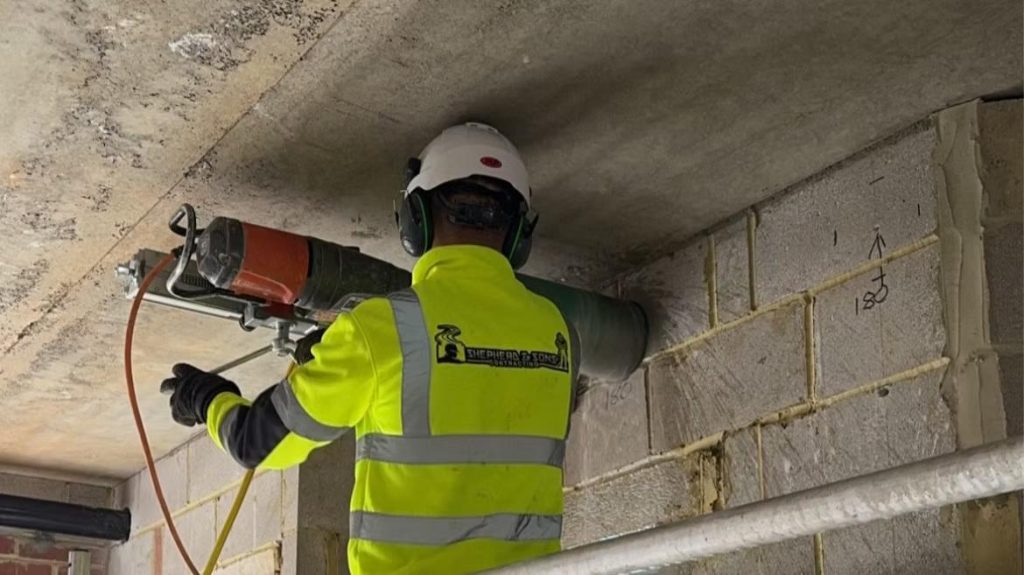
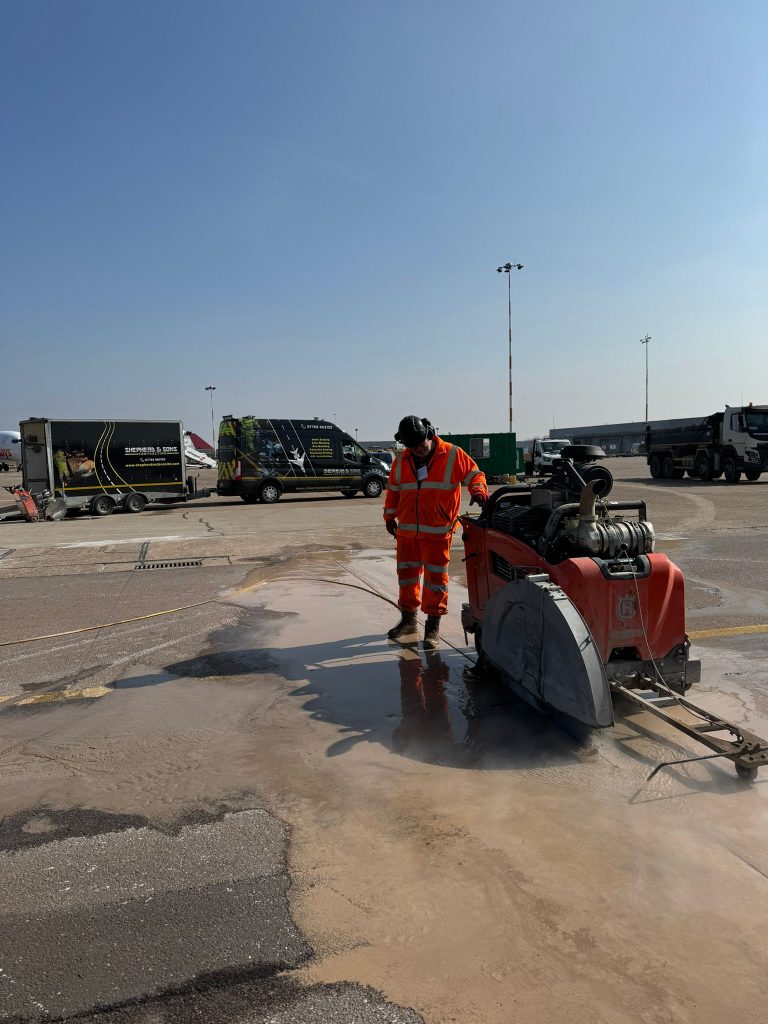
Our floor saws cut concrete to a maximum depth of 420mm in a single pass, which covers the vast majority of slab, highway and airfield work. Where a section is thicker than that, we cut from both faces or step the cut down in passes to take it through cleanly. We have found that planning the cut to the slab thickness from the outset, rather than forcing a single deep pass, gives a squarer edge and longer blade life.
How does water help suppress silica dust?
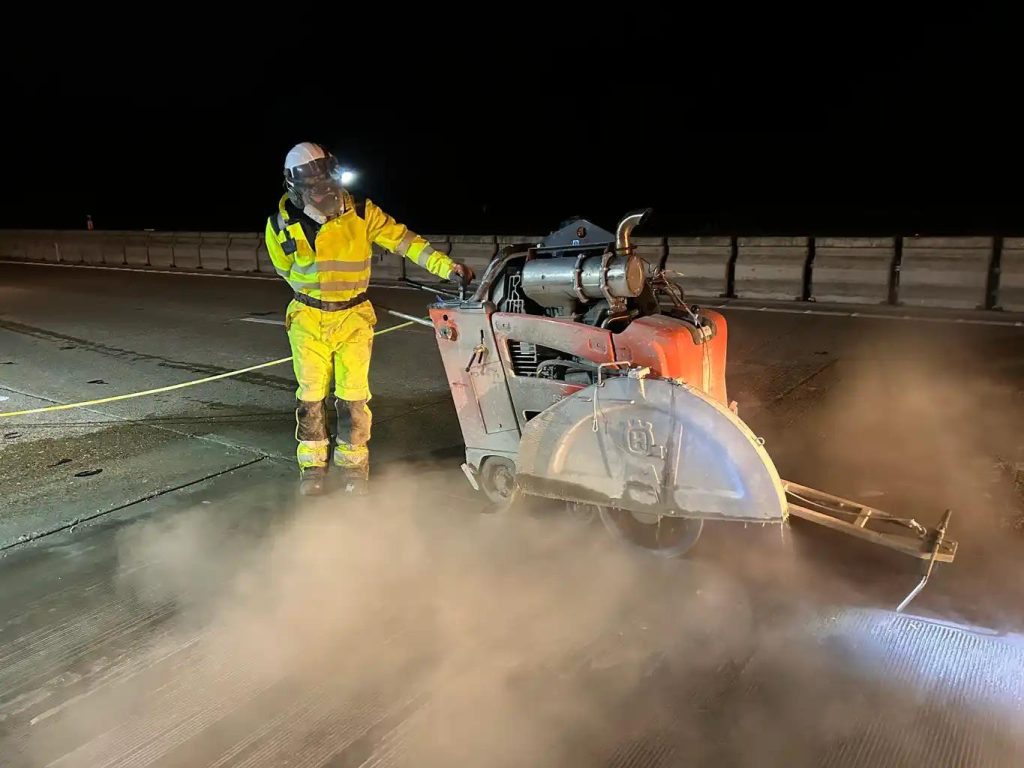
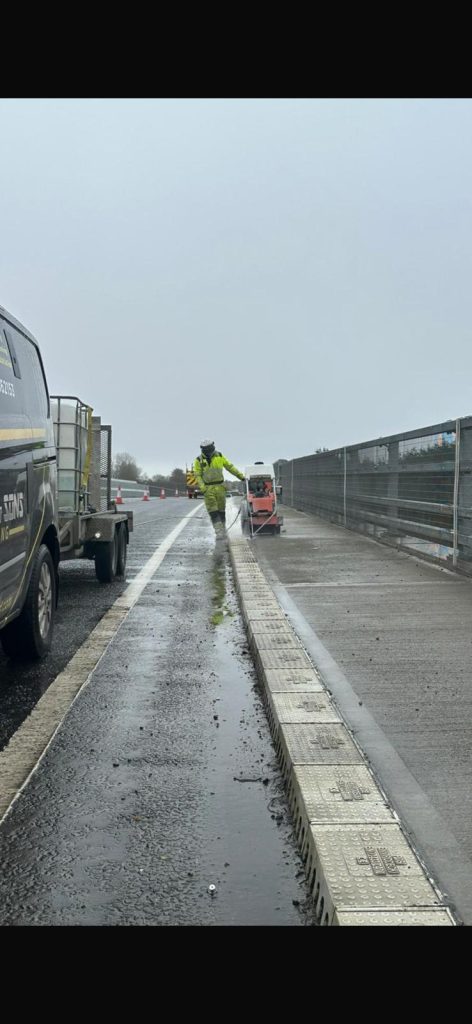
Cutting concrete releases respirable crystalline silica, which is hazardous to breathe. Feeding water onto the blade binds that dust at source so it cannot become airborne, while also cooling the blade and reducing friction heat. We have found water suppression combined with collection keeps the operation effectively dust-free, which matters as much for enclosed and occupied sites as it does for the operator.
What is the difference between wet and dry cutting blades?
Wet blades use a constant water feed to cool the blade and suppress dust, giving cleaner cuts, longer blade life and the ability to cut deep and continuously. Dry blades are segmented to shed heat and are used for short cuts where a water supply is impractical. In our experience, wet cutting works better than dry cutting for deep, continuous slab work because the water keeps the blade cool enough to run without the cooling breaks a dry blade needs, so the cut is faster and the edge is cleaner.
Why do I need to cut concrete?
Concrete is cut to form expansion and contraction joints that control cracking, to create openings for ducts, drainage and services, to remove damaged sections for reinstatement, and to form isolation cuts before demolition. We also widen existing joints by saw cutting in preparation for resealing, which links directly to our joint sealing work.
Can I cut through rebar?
Yes. Diamond tooling cuts cleanly through reinforced concrete, including the steel rebar within it, which is one of the main reasons diamond cutting is preferred over percussive methods on structural work.
Why is concrete cutting the future of construction?
Diamond cutting is low-vibration, non-percussive and precise, which means it protects surrounding structures, produces clean edges and works safely on live or occupied sites. As projects increasingly demand low noise, low dust and minimal disruption, we have found these controlled methods are replacing older break-out techniques on sensitive sites.
How can concrete cutting help improve your project?
Precise diamond cutting reduces the risk of damage to adjacent structures, speeds up work without losing accuracy, and keeps sites cleaner and quieter. That accuracy means less making-good afterwards, which we have found saves both time and cost across the wider programme.
What influences concrete cutting prices?
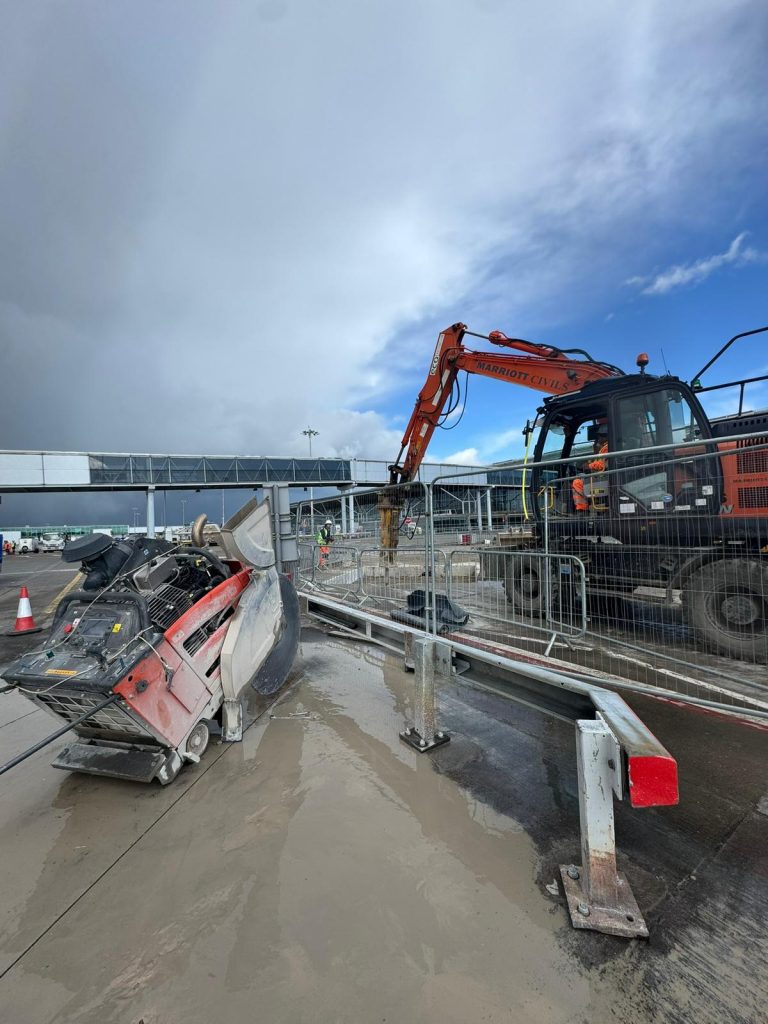
Price is driven by the depth and length of cut, the amount of reinforcement, access to the area, whether the work is live or out of hours, and the power source the site allows. Because access and reinforcement affect the method as much as the volume does, every price we give is based on the actual site conditions rather than a flat rate.
How long does it take to cut concrete?
Timing depends on the depth, the reinforcement and the access, so a clean single-pass slab cut is far quicker than a deep, heavily reinforced section needing multiple passes. We will give a realistic time based on the specific cut once we have the detail of the slab and the site.
How deep can we cut asphalt?
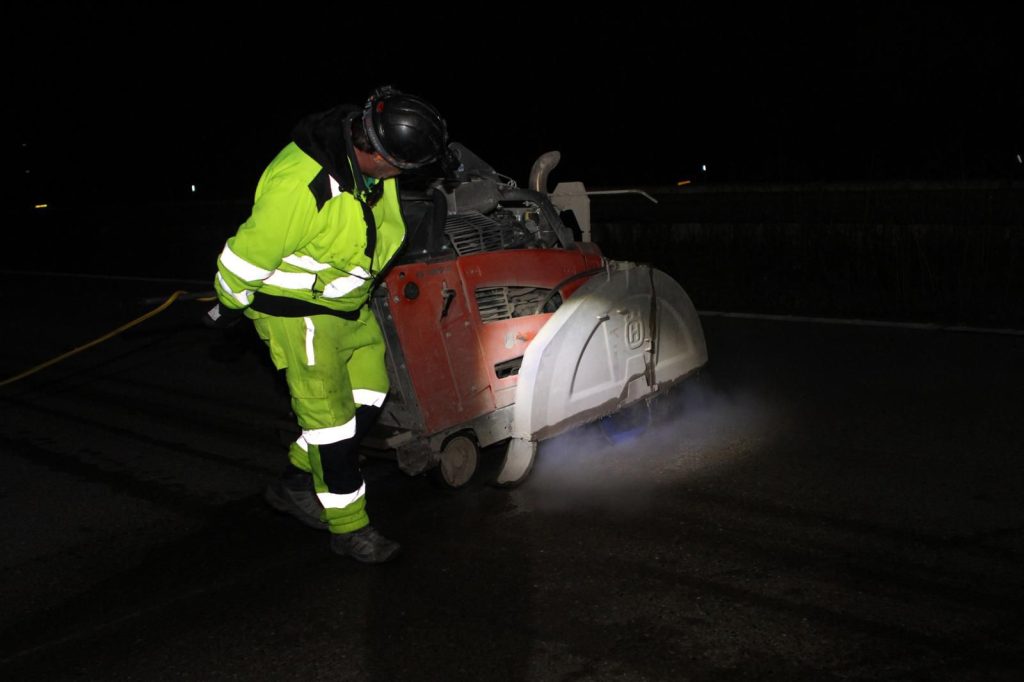
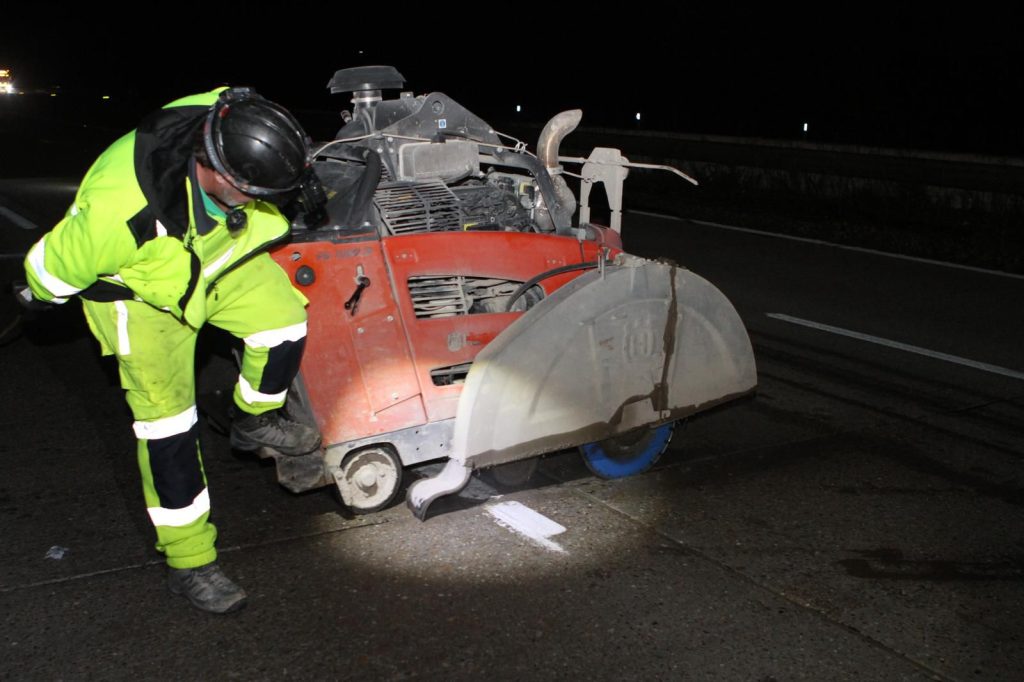
We cut asphalt to a maximum depth of 420mm, which is more than enough for full-depth surfacing layers and any bound base beneath. Because asphalt is softer than concrete, depth is rarely the limiting factor, and where a concrete base sits below the surfacing we step the cut down through it. In our experience, setting the depth to take the surfacing and the base in controlled passes works better than one deep cut because it keeps the blade cool against the bitumen and leaves a clean, sound edge to reinstate against.
How does water help when cutting asphalt?
Water cools the blade and damps dust just as it does on concrete, but on asphalt it does something else important: it stops the blade overheating and the bitumen softening, which would otherwise cause the cut to close up or the blade to clog. We have found a steady water feed keeps the cut open and the edge clean on warm-weather asphalt work.
What is the difference between wet and dry blades on asphalt?
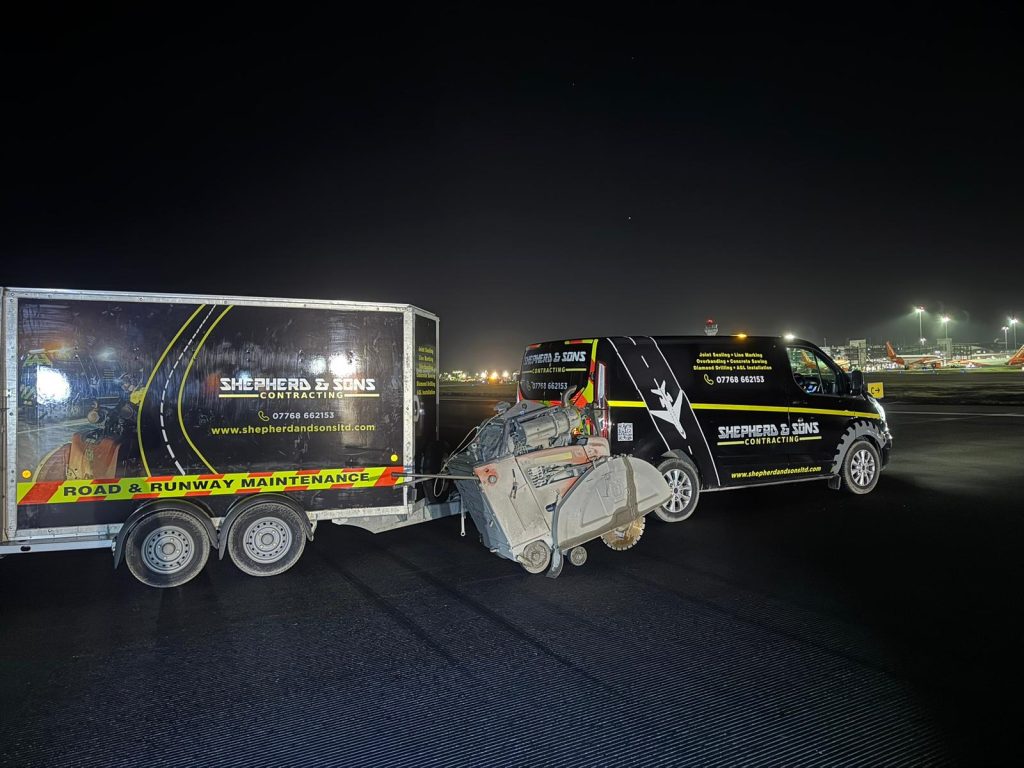
Wet cutting is the standard for asphalt because the water prevents heat build-up that softens the bitumen and binds the blade, while dry cutting is reserved for short cuts where water is not practical. Asphalt also calls for softer-bond blades suited to its abrasive aggregate. In our experience, wet cutting works better than dry on asphalt because the bitumen binder melts under friction heat, and only the water feed keeps the blade clear and the cut accurate.
Why do I need to cut asphalt?
Asphalt is cut to form clean edges for patching and reinstatement, to create trenches for services, to remove failed sections, and to form joints between new and existing surfacing. A clean saw cut gives a square, sound edge to seal or tie into, which lasts far longer than a broken or feathered edge.
Can I cut through reinforcement in asphalt?
Asphalt roads are usually unreinforced, but where steel mesh or a reinforced concrete base sits beneath the surfacing, diamond tooling cuts through it cleanly in the same pass. We confirm what is below the surface before we start so the right blade and depth are set.
Why is asphalt cutting part of modern construction?
Clean, low-vibration saw cutting gives the square, sound edges that modern patching and resurfacing specifications demand, with minimal disturbance to the surrounding surface. We have found that a properly cut edge is the difference between a repair that holds and one that ravels at the join.
How can asphalt cutting help improve your project?
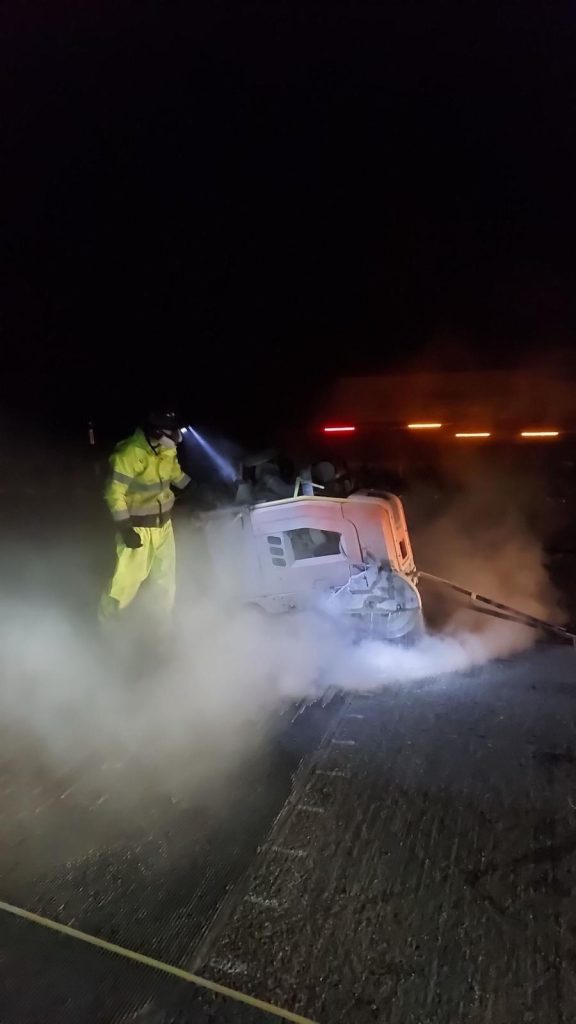
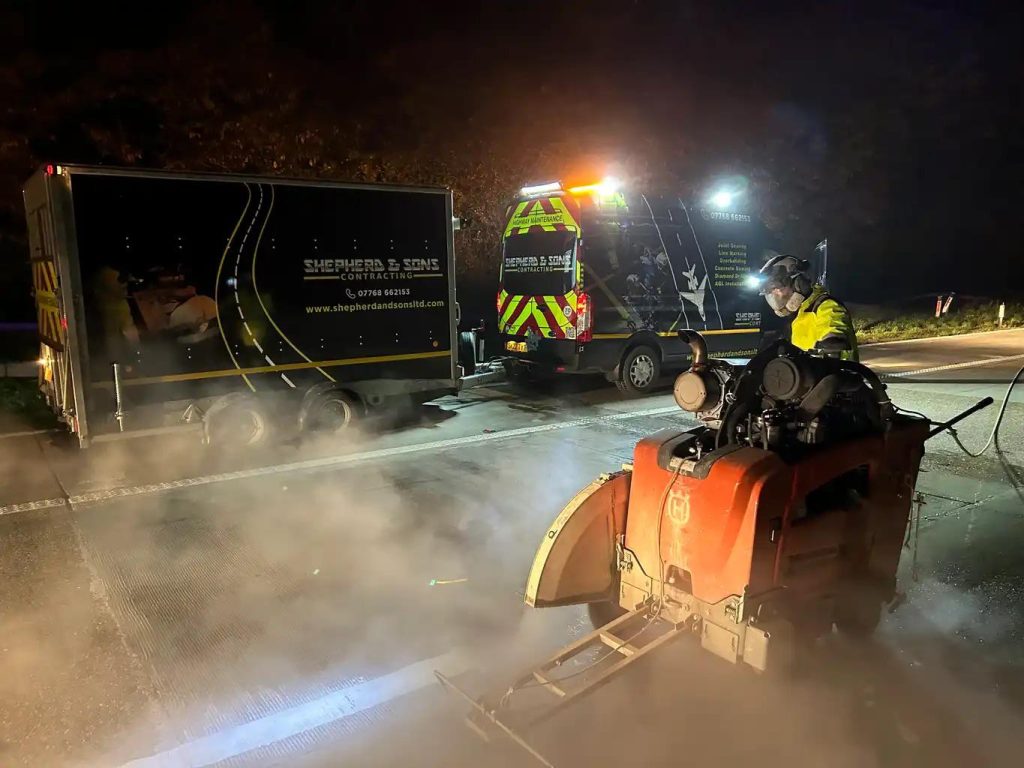
Accurate cutting produces clean joints and edges that bond and seal properly, reducing early failure at the join and the making-good that follows. That precision keeps both the programme and the long-term maintenance cost down.
What influences asphalt cutting prices?
Price depends on the depth and length of cut, whether there is a bound or reinforced base beneath, access to the area, and whether works run live or out of hours. As with all our work, the quote reflects the actual site conditions rather than a standard rate.
How long does it take to cut asphalt?
Asphalt generally cuts faster than concrete because it is softer, so a straightforward surface cut is quick, while sections over a reinforced or concrete base take longer. We give a realistic time once we know the build-up of the surface and the access on site.
How do professional sawing services assist my project?
Professional sawing gives you clean, accurate, low-vibration cuts that protect the surrounding structure and leave sound edges to build, patch or seal against. From working with clients across aviation, highway and ports projects, we have found that getting the cutting right at the start removes problems later, because a precise cut is what every reinstatement, joint and seal depends on.
Shepherd and Sons Contracting ltd
Contact Us
With a commitment to efficiency and excellence, we operate globally, round-the-clock, utilizing cutting-edge machinery and materials. Our services are competitively priced and flexible to accommodate your specific needs.
For fast, safe, and cost-effective solutions, contact us today to learn more about how we can assist you.