
Service
Joint Sealing
Shepherd and Sons Contracting LTD
Joint Sealing
Whether you require the renewal of existing or defective joint sealant in concrete and asphalt pavement joints, Shepherd & Son’s has the solution for you.
As proud members of The Extruded Sealants Association, we adhere to British standards and maintain high levels of safety in all our operations. Our teams are extensively trained in the application of Hot and Cold Applied sealants, and have been leading the nation’s standards for over 40 years!
Joint sealing is essential for pavement lifespan. When the outside temperatures fluctuate, this can cause the surface to expand and contract, making it susceptible to cracks.
Cutting and sealing joints into the concrete accommodates surface movement, preventing damage to the surface, prolonging the life expectancy and minimising band-aid repairs. The seal also provides a barrier preventing water and other contaminants from entering and destroying the subbase that the pavement is structured on.
When it comes to sealing, you have two common materials to choose from: Hot pour and colour sealants. The choice of sealant will depend on the type of surface, environment and resistance to oils.
Contact our team today with any questions.
In the UK, joint sealant must follow specifications laid out by:
- CAA (Civil Aviation Authority) – Airfield Specification
- MOD (Ministry of Defence) for military airfields Specification 033
- Concrete Pavement Joints MCHW Series 1000 (Roadways)
- Bridge expansion Joints MCHW Series 2300 (Roadways)
- Hot-Applied Sealants to Comply with BS 2499
The wrong technical specification of joint sealant, as minor as it may seem, could lead to millions of pounds in secondary ongoing repair costs or direct pavement replacement in a few short years after installation. Shepherd and Sons are known industry leaders for sealant knowledge and can be relied upon for guaranteed, quality results. Our team will question all technical and design aspects within our own expertise and help with open conversations to ensure that on your project, our sealant will last as long as it should! Preparation is Key!
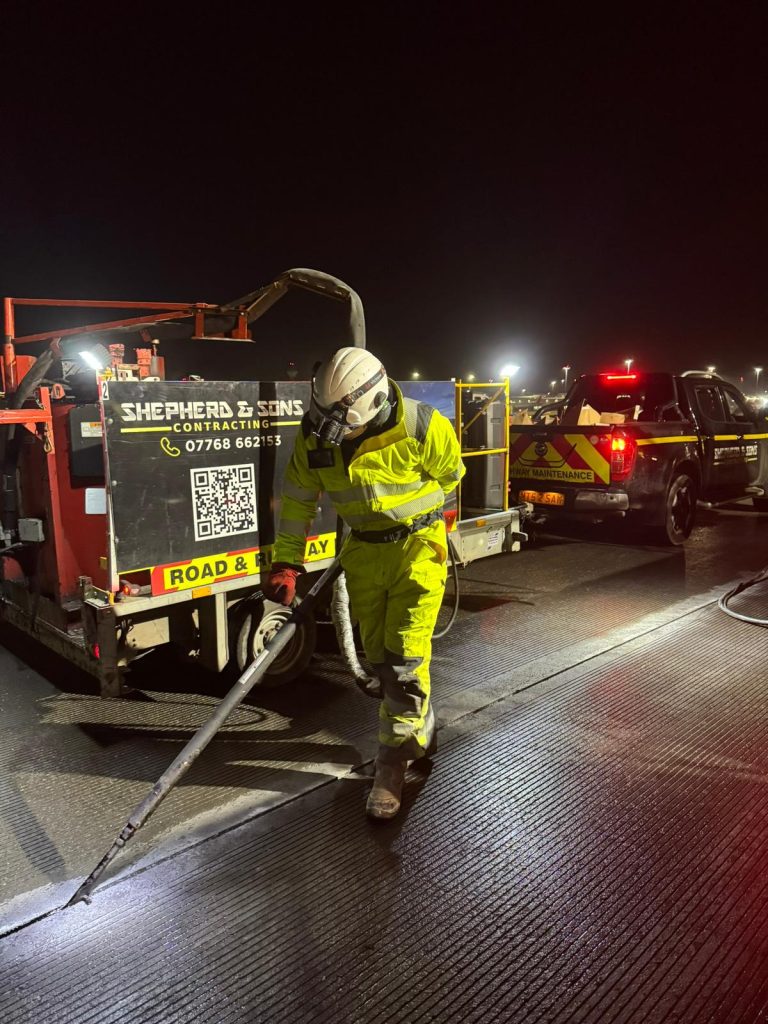
Airfield Joint Sealing
Airfield joint sealing is one of the most critical elements of pavement maintenance. Concrete airfield pavements are subject to constant stress — aircraft loading, jet blast, fuel spillage, and significant temperature fluctuation all take their toll. As temperatures rise and fall, concrete slabs expand and contract, making unsealed or poorly sealed joints a primary entry point for water, fuel, and debris that can rapidly destroy the subbase beneath.
Cutting and sealing joints in airfield concrete accommodates this surface movement, preventing structural damage, extending pavement life, and reducing the need for costly reactive repairs. A correctly specified and properly installed joint seal creates a watertight, fuel-resistant barrier that protects the integrity of the entire pavement system.
Airfield joint sealing requires a different level of precision and material knowledge compared to standard highway work. The sealant must cure rapidly to allow the airfield to return to operation quickly, withstand jet blast and fuel exposure, and remain stable across extreme temperature ranges. The two primary material categories are hot applied and cold applied sealants — the correct choice depends on the joint type, environment, fuel resistance requirements, and return-to-service timescales.
In the UK, joint sealing on airfields must follow specifications laid out by:
- CAA (Civil Aviation Authority)
- MOD (Ministry of Defence) for military airfields — Specification 033
Shepherd and Sons Contracting LTD
Contraction Joints
Purpose: To control cracking that occurs as concrete shrinks during curing and cooling. They create a weakened plane so that if the concrete cracks, it does so in a controlled, straight line.
Design: Usually sawn or formed into the slab shortly after placement (before shrinkage occurs). Shallow depth (about ¼ to ⅓ of the slab thickness).Typically, not filled with compressible material, but may be sealed to prevent water and debris ingress.
On Runways: Commonly spaced at regular intervals (e.g., 4.5m to 6m) depending on slab thickness. Often dowelled to allow load transfer across the joint.
Shepherd and Sons Contracting LTD
Expansion Joints
Purpose: To allow for thermal expansion of the concrete slab without causing stress or buckling.These joints absorb movement caused by temperature changes or moisture-related expansion.
Design: Typically include a compressible filler material (like foam, cork, rubber).Full-depth joint — goes through the entire thickness of the slab. May also include a sealant above the filler to keep out water and debris. Often occur at fixed points, like: Ends of a long slab where the pavement meets a structure (e.g., a building, drain, or fixed edge)
On Runways: Used more sparingly, often only where absolutely necessary. many expansion joints can weaken the pavement and increase maintenance needs.
Shepherd and Sons Contracting LTD
Our Joint sealing service options
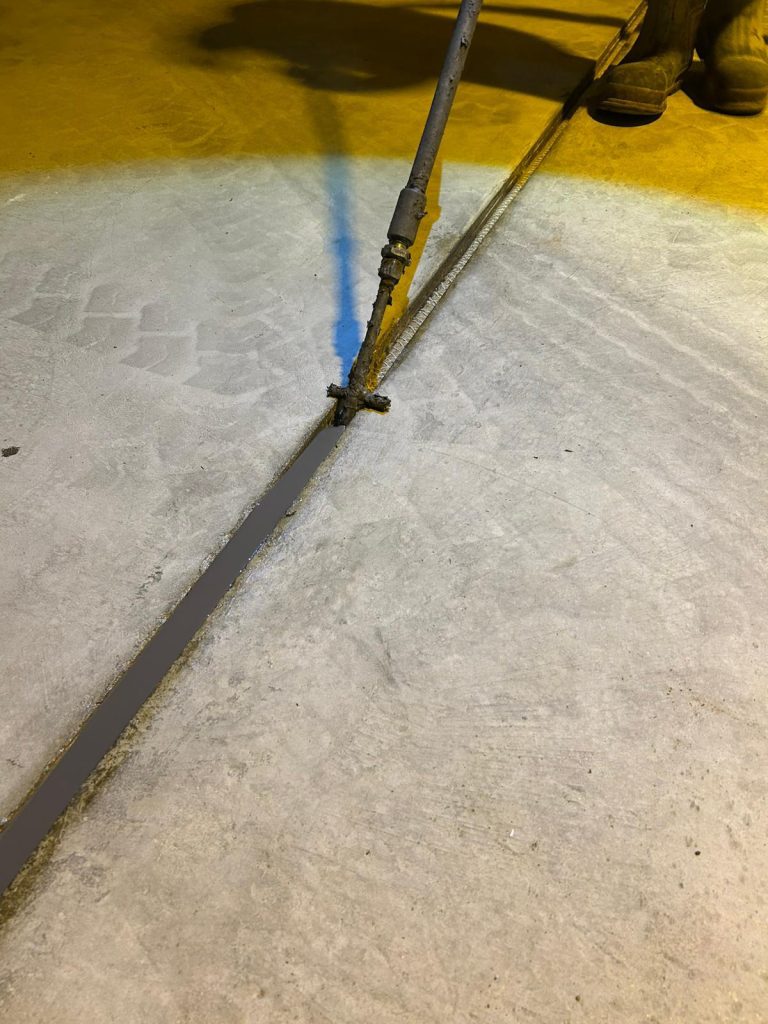
Cold Applied Joint Sealing
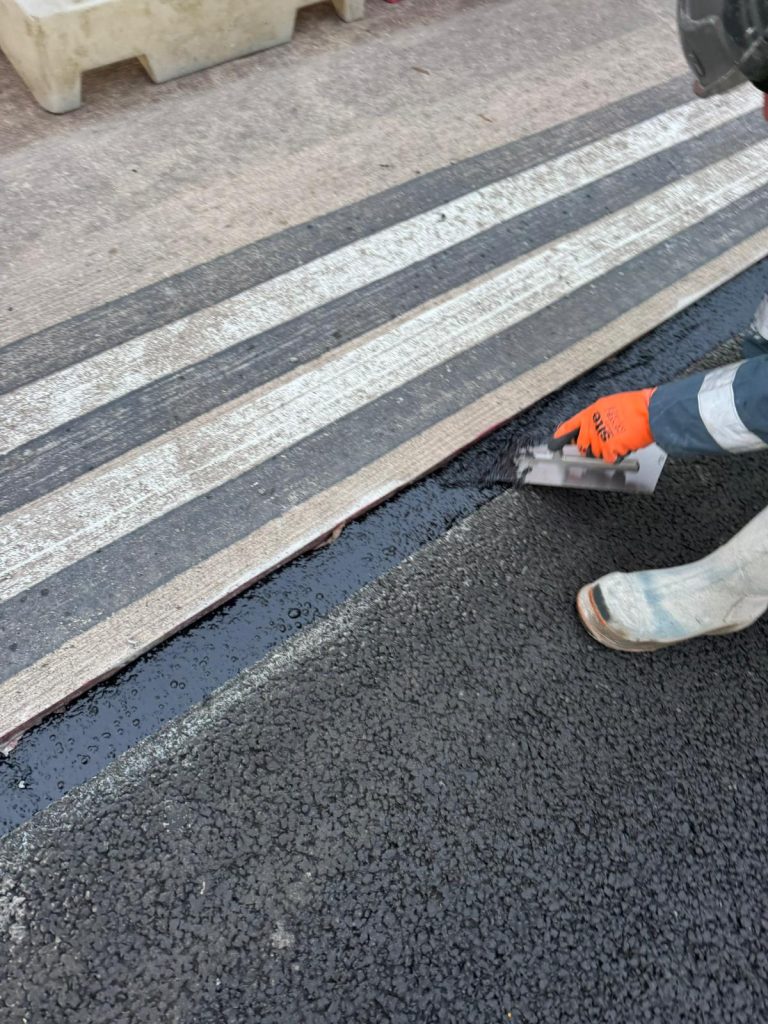
High Performance Joint Sealing
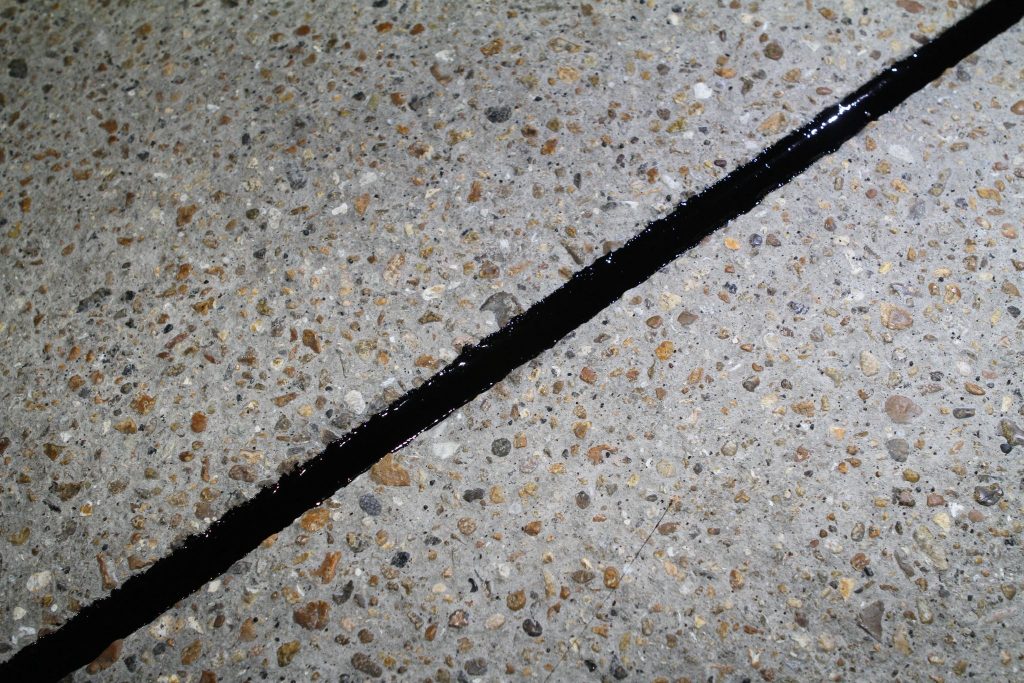
Hot Applied Joint Sealing
Shepherd and Sons Contracting LTD
Contact Us
Committed to safety and professionalism, our team adheres to stringent industry standards to ensure the protection of personnel, property, and the environment.
Trust Shepherd & Sons to be your partner in achieving success, reliability, and excellence in concrete cutting.