Professional Thioflex 555 Installers
If you’re looking for Thioflex 555 installers, the most important thing to understand is that Thioflex 555 is a specialist cold-applied polysulfide sealant that requires specialist application. It cannot be applied properly by a general joint sealing contractor. The product needs metered mixing equipment, primer-to-sealant timing controls, and operatives who understand polysulfide chemistry, fuel-resistance specifications, and the BS EN 14188-2 standards it’s certified to. Get the installer wrong and the sealant will fail inside two years, regardless of how good the product is.
At Shepherd and Sons, we’ve been installing Thioflex 555 across UK airfields, fuel terminals and concrete pavements for more than 40 years. We’re members of the Extruded Sealant Association, and our operatives are trained and experienced in both Machine Grade and Hand Grade application. We explain what proper Thioflex 555 installation looks like, what to ask any installer before you appoint them, and the points that determine whether the seal lasts a decade or fails in eighteen months.
Why Thioflex 555 needs specialist installers
Thioflex 555 is a two-component, polysulfide cold applied sealant manufactured by Fosroc. It’s specified for concrete pavements where fuel spillage is a real risk, including aircraft fuelling aprons, oil terminals, garage forecourts, runway hard standings, and aircraft parking and cargo areas. The product carries CE and UKCA marking and complies with BS EN 14188-2, BS 5212 Part 1, BS 8449, and US Federal Specification SS-S-200E for jet blast resistance.
That specification level is the reason it needs specialist installers. The chemistry is unforgiving on three points in particular.
Pot life is short. Once mixed, Machine Grade material cannot sit in the hose for more than five minutes at 20°C, or three minutes at 40°C, before it starts to gel. An installer without proper equipment and practiced workflow will waste material and leave gaps in the joint.
The priming window is narrow. Fosroc Primer 7E must be applied to the joint face, and the sealant has to go in between 20 minutes and 4 hours after priming. Beyond 24 hours, the cured primer has to be physically removed and the joint re-primed. Installers who don’t programme around this window end up cutting corners.
The mix ratio has to be right. It’s 1:1 by volume base to hardener for both Machine and Hand Grade. The ESA Code of Practice requires mix ratio checks at the start of every shift and when barrels are changed. A contractor who isn’t doing those checks isn’t installing a Thioflex 555 system. They’re just pouring liquid into a joint and hoping it cures.
What competent Thioflex 555 installation actually involves
We’ve installed thousands of linear metres of Thioflex 555 across UK projects in the past five years alone. Every successful installation follows the same six-step process. Skipping any step is where failures start.
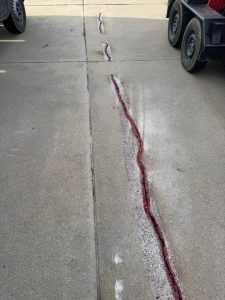
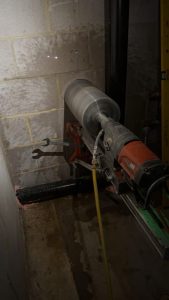
1. Joint slot formation and preparation. The slot must be dry, sound, clean and free from frost. Defective or contaminated slot faces are widened until you reach sound concrete. Grit blasting is the manufacturer-specified preparation method for both new and existing concrete substrates, followed by an oil-free compressed air blow-out to remove dust and laitance. We’ve found that installers who skip the grit blast and rely on wire-brushing alone are the ones who get warranty calls.
2. Backer rod installation. A heat-resistant Expandafoam cord is caulked tightly into the base of the slot. This controls sealant depth, creates the correct width-to-depth ratio (1:1 to 1.5:1 for Thioflex 555), and prevents three-sided adhesion, which is the single most common cause of cohesive failure in cold applied sealants.
3. Priming with Fosroc Primer 7E. The hardener tin is emptied into the base, shaken for two minutes, and applied to the joint face with a clean dry brush or by spraying. Pooling at the bottom of the joint is avoided because it compromises sealant performance. Mixed Primer 7E has to be used within one working day. Splitting packs is not permitted.
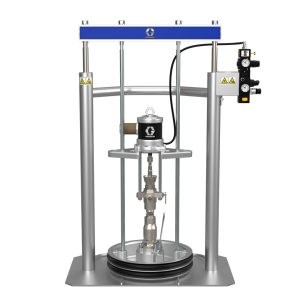
4. Mixing. Machine Grade goes through a metered 1:1 volume mixing machine. Mix ratio checks are documented at the start of each shift. Hand Grade is mixed for three minutes with a 300 to 500 rpm slow-speed drill and a Fosroc Sealant Mixing Paddle, scraped down, then mixed for a further two minutes. Air must not be mixed in. Material at the bottom of the tin must be incorporated, or the sealant won’t cure properly.
5. Application. The mixed sealant is applied so the finished level sits 5 to 8mm below the pavement surface. For joints wider than 25mm, the recess increases to 7mm. In cold weather, recess depth increases to 10mm to allow for thermal expansion. Tolerance is ±2mm, measured from the lowest point of the texture if the surface is textured.
6. Cure protection. The joint is protected from traffic until cure. Machine Grade returns to service in 30 minutes at 20°C, 60 minutes at 10°C, and 90 minutes at 5°C. Hand Grade takes four hours at 20°C, twelve hours at 10°C, and 36 hours at 5°C. Putting traffic on the joint before cure is one of the most common installation failures we’re called in to repair.
What to ask a Thioflex 555 installer before appointing them
Five questions tell you whether an installer is competent or out of their depth.
Are they ESA members? The Extruded Sealant Association sets the UK Code of Practice for joint sealing. Members commit to following it. There aren’t many ESA-member contractors in the UK, and even fewer based in Kent and the South East. Membership is a clear quality signal because the bar to entry is genuine specialist competence.
Do they have metered mixing equipment for Machine Grade? Without a 1:1 volume metered mixing machine, an installer cannot apply Machine Grade Thioflex 555 properly. They’ll be limited to Hand Grade work, which is fine for small jobs but not for fast-return-to-service runway, apron or fuel terminal applications.
Can they demonstrate primer-to-sealant timing control? Ask how they programme around the 20-minute to 4-hour priming window. A competent installer will explain exactly how they sequence priming and sealing across a multi-joint shift. An incompetent one will be vague.
What’s their mix ratio QC process? Mix ratio checks at the start of every shift are required by the ESA Code of Practice. Ask to see the records. If the answer is “we just trust the machine,” walk away.
Have they applied Thioflex 555 in fuel-exposure environments specifically? General joint sealing experience isn’t the same as Thioflex 555 experience on fuelling aprons. Ask for project references where the substrate was exposed to Jet A-1, Skydrol, or kerosene.
In our experience, ESA-member installers with Machine Grade equipment work better than general joint sealing contractors on fuel-exposure projects because the metered mixing accuracy and primer-window discipline are what determine 10-year sealant performance, not just product selection. We’ve been called in to remediate Thioflex 555 work installed by general contractors on three separate occasions in the past two years, and in every case the failure traced back to either skipped priming, incorrect mix ratio, or three-sided adhesion from a missing backer rod.
Where Thioflex 555 installation goes wrong
We’ve assessed dozens of failed Thioflex 555 installations over the years. The failure patterns are predictable.
Adhesive failure at the joint face. Sealant pulls cleanly away from the concrete. Cause: missed or expired priming. The fix is full removal and re-installation.
Cohesive failure mid-bead. Sealant tears through the middle. Cause: three-sided adhesion from a missing or poorly installed backer rod. The fix is full removal, backer rod installation, and re-installation.
Soft, uncured sealant. Sealant remains tacky weeks after installation. Cause: incorrect mix ratio or contamination of components. The fix is full removal because uncured polysulfide cannot be salvaged.
Sealant flowing along the joint on slopes. Cause: ignoring the ESA Code of Practice guidance for crossfalls steeper than 2.5%, which requires thin-layer application with stiffening between layers, or use of Hand Grade with a slower set time.
Stone and grit pickup. Sealant surface looks contaminated within months. Usually a symptom of insufficient recess depth. The sealant is sitting too high in the joint and traffic is grinding debris into it.
Sectors where Thioflex 555 is specified
Thioflex 555 is specified across the sectors we cover. For aviation clients, we apply it to fuelling aprons, hard standings, parking aprons and cargo areas where Jet A-1 spillage is routine. For highway authorities and Tier 1 contractors, it’s specified at HGV fuelling stations, MSAs and toll plazas. For port operators, it’s used in fuel storage hard standings and bunker fuel handling areas. For public sector clients, it shows up in council-operated bus depots, fire and rescue training facilities, and military fuel installations.
In every case, the underlying requirement is the same: a cold applied joint sealant that resists fuel and chemical exposure, accommodates 35% joint movement, and returns to service quickly. Thioflex 555 meets that brief. The installer either does or doesn’t.
Booking a properly specified Thioflex 555 installation
A competent Thioflex 555 quote will specify grade (Machine or Hand), linear metres, joint dimensions, primer requirement, programme constraints, and cure-window protection. A quote that just lists “Thioflex 555 sealant, £X per metre” tells you nothing about whether the installer knows what they’re doing.
If you’re specifying or commissioning Thioflex 555 work, get in touch. We’ll come and assess the substrate, discuss the right grade for your return-to-service requirement, work through the programme, and quote against the actual specification. You can see recent project work on our LinkedIn and Instagram.