So, What is Cold Applied Joint Sealing?
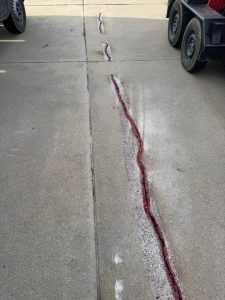
Cold applied joint sealing is the process of sealing joints in concrete or asphalt pavements using a chemically-curing sealant that cures at ambient temperature, without the need for heating. The sealant is mixed on site (usually a two-part base and hardener) and either machine-extruded or hand-poured into the prepared joint slot. It cures over hours rather than minutes, and it’s the standard specification for any environment where a hot melter can’t be used. That includes warehouses, multi-storey car parks, port buildings, fuel-spillage areas, and any indoor or fire-restricted site.
At Shepherd and Sons, we’ve delivered cold applied joint sealing across more than 200 projects in the past six years, ranging from chilled distribution warehouses in Kent to oil terminal hard standings and aircraft fuelling aprons. We’re members of the Extruded Sealant Association, and we work to the ESA Code of Practice and BS EN 14188-2. We cover what cold applied joint sealing actually is, when to specify it over hot applied, the variants you need to know about, and the application points that determine whether it lasts ten years or fails in two.
How cold applied joint sealing differs from hot applied
The fundamental difference is curing chemistry. Hot applied sealants are bituminous or rubber-modified compounds melted at 180 to 200°C and poured into the joint, where they cool and solidify. Cold applied sealants are polymer-based products that cure through a chemical reaction at ambient temperature, typically polysulfide, polyurethane, or silicone-based.
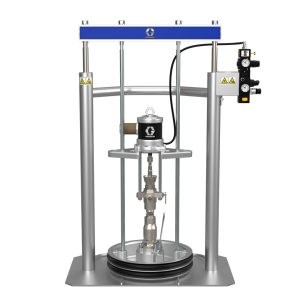
That difference drives everything else. Hot applied sealants cure in minutes and can take traffic the same shift. Cold applied sealants cure in hours, sometimes days, depending on grade and temperature. Hot applied requires a propane-fired melter on site. Cold applied needs a metered mixing machine for two-part products, or just hand-mixing for smaller jobs. Hot applied bonds aggressively to clean concrete and asphalt. Cold applied usually requires a primer, and the priming window is narrow.
Cold applied also opens up applications hot applied can’t reach. You can’t run a propane melter inside a chilled warehouse, a fuel storage facility, or a pharmaceutical clean room. Cold applied is the only sensible specification for those environments.
When cold applied joint sealing is the right call
There are five scenarios where cold applied is genuinely the right specification, not just the fallback option.
Fuel and chemical exposure. This is the biggest one. Cold applied polysulfide sealants like Thioflex 555 are tested under BS EN 14188-2 to handle aviation fuel, kerosene, Skydrol hydraulic fluid, glycols, diesel, petrol and de-icing salts without adhesion or cohesion failure. Hot applied N1 doesn’t handle that. Hot applied N2 has limited fuel resistance. For aircraft fuelling aprons, oil terminals and HGV forecourts, cold applied is the spec.
Indoor environments. Warehouses, supermarkets, hospitals, food-grade facilities, multi-storey car parks. Anywhere a propane melter would be a fire or air-quality issue.
Fire-restricted sites. Some refinery, port and aviation works prohibit naked-flame plant on site. Cold applied is the only option.
Fresh or sensitive concrete. On newly poured concrete that hasn’t fully cured, the heat from a hot applied pour can stress the slab. Cold applied avoids that risk entirely.
Detail and remedial work. Hand applied cold sealants poured from a Fosroc ‘G’ Gun or similar are the right tool for awkward geometry, isolated joint repairs, or areas where mobilising a melter isn’t economic.
In our experience, cold applied two-part polysulfide works better than hot applied N1 on aircraft fuelling stands because the polysulfide chemistry maintains its 35% movement accommodation factor across the full -40°C to +70°C service range and resists Jet A-1 spillage, where N1 will soften and pick up grit. On a dedicated fuelling apron at a UK regional airport, that difference is the gap between a 10-year sealed joint and one that needs replacing in three.
The variants: two-part, one-part, and hand applied
Cold applied joint sealing isn’t one product. It’s a category, and the variants matter.
Two-part cold applied systems. The workhorse for pavement joints. A separate base and hardener are combined through a metered 1:1 volume mixing machine and extruded into the joint. Polysulfide chemistry (Thioflex 555) is the most common spec for fuel-resistant work. Polyurethane variants are used where higher modulus is needed. The two-part cold applied system is the standard for high-performance, BS EN 14188-2 Class B/C/D applications.
One-part cold applied systems. Pre-mixed sealants supplied ready to use, typically silicone or moisture-cure polyurethane. Faster to deploy because there’s no on-site mixing, but generally lower movement accommodation and shorter shelf life once opened. The one-part cold applied system is widely used in port and dock environments where Sikaflex and Sea-Kar products are specified for their chemical resistance and ease of application.
Hand applied cold sealants. Smaller pack sizes (typically 5-litre tins), mixed with a slow-speed drill and paddle, then poured directly or applied with a ‘G’ Gun. The right approach for joints under 15mm wide, detail work, and isolated repair sections.
What proper application actually looks like
Cold applied sealants are forgiving on chemistry but unforgiving on preparation. The ESA Code of Practice and the manufacturer technical data sheets are explicit about what’s required. We’ve seen the consequences of skipping any of these steps.
Joint slot preparation. Slots must be sound dense concrete or asphalt, dry, clean and free from frost. Defective or contaminated slot faces should be widened. Grit blasting is the manufacturer-recommended method for both new and existing concrete, followed by oil-free compressed air blow-out to remove dust and laitance.
Backer rod. A heat-resistant Expandafoam cord or equivalent must be caulked tightly into the base of the slot. This controls sealant depth, prevents three-sided adhesion, and stops the sealant flowing down into the joint cavity. Three-sided adhesion is the single most common cause of premature cohesive failure in cold applied work.
Priming. Most cold applied systems require a primer (Fosroc Primer 7E for Thioflex 555 on concrete; Nitoflor FC130 followed by Primer 7E on asphalt). Priming windows are tight. Sealant must be applied between 20 minutes and 4 hours after priming. Beyond 24 hours, the cured primer must be removed and the joint re-primed. Priming should not be carried out below 5°C and falling, but can commence at 3°C and rising.
Mixing. Two-part products go through a metered 1:1 volume mixing machine. Mix ratio checks must be done at the start of every shift and when materials are changed. Hand grade is mixed for three minutes with a 300-500 rpm slow-speed drill and paddle, scraped down, then mixed for a further two minutes. Air must not be incorporated into the mix.
Application and finish. The sealant should be recessed below the pavement surface to prevent traffic damage. The ESA Code of Practice specifies a minimum 5mm recess for transverse joints under normal vehicle traffic, 7mm for joints wider than 25mm, and 10mm if applied in cold weather. Tolerance is ±2mm. Where the surface is textured, the recess is measured from the lowest point of the texture.
Cure protection. The sealant must be protected from being trafficked until it cures. Machine grade Thioflex 555 reaches return-to-service in 30 minutes at 20°C. Hand grade takes four hours at 20°C, and 36 hours at 5°C. We’ve found that contractors who put cones out and reopen too early are the same contractors whose work fails inside a year.
Site testing and quality control
The ESA Code of Practice requires sample testing at three stages: at the factory, from packages on delivery, and on site at the point of application. For extruded cold applied sealants, samples should be taken at a rate of not less than one per 1,000m of joint, or one per day. Depth measurements must be taken at three locations along a transverse joint, or at 1m spacing, mid-width of the joint, to an accuracy of ±0.5mm using a metal ruler and 150mm straightedge. This level of QC is what separates ESA-member contractors from non-members.
Standards and compliance
Cold applied joint sealing in the UK works to:
- BS EN 14188-2 (System M two-component or S single-component, type sl self-levelling or ns non-sag, Classes A through D)
- BS 5212 Part 1 (cold applied joint sealant systems for concrete pavements)
- BS 10948:2020 (application and use of hot- and cold-applied joint sealant systems for concrete pavements)
- The ESA Code of Practice for Joint Sealing (Issue 3.0, November 2025)
For specifiers and clients, requesting ESA-member contractors and BS EN 14188-2 conformity certification is the clearest way to ensure the work meets specification.
Specifying cold applied joint sealing
The right cold applied specification depends on three things: the chemical exposure (fuel, hydraulic fluid, de-icers, none), the substrate (concrete, asphalt, fresh concrete), and the return-to-service requirement (same shift, 24 hours, multi-day).
If you’re specifying or commissioning joint sealing work that needs cold applied systems, get in touch. We’ll work through the spec, the substrate, the cure window and the programme, and quote the work to a standard that holds up to scrutiny. You can also see recent project work on our LinkedIn and Instagram.