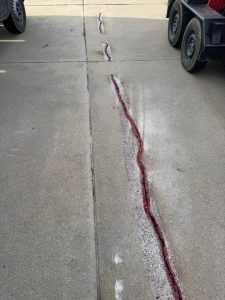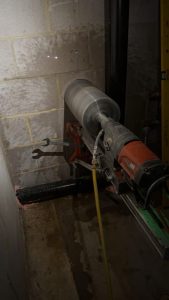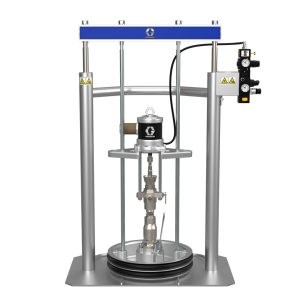
So, What is High Performance Joint Sealing?
High performance joint sealing is the specification of joint sealants engineered to handle demanding service conditions that would cause standard sealants to fail. That means fuel and chemical exposure, jet blast, heavy plant loading, extreme temperature ranges, high movement accommodation, and rapid return-to-service requirements. It’s the category of sealing used on airfield runways, fuelling aprons, port bunker areas, oil terminals, motorway joints, and any pavement where standard joint sealants won’t deliver a 10-year service life.
At Shepherd and Sons, we’ve been specifying and installing high performance joint sealants across UK airfields, ports and highways for more than 40 years. We’re members of the Extruded Sealant Association and we work to the BS EN 14188 standards that define the high performance category. We cover what makes a sealant “high performance” in technical terms, when it’s the right specification, the products that meet the standard, and the application points that matter.
What separates high performance from standard joint sealing
The phrase “high performance” gets used loosely in marketing. In specification terms, it has a clear meaning. A high performance joint sealant is one that meets the upper-tier requirements of BS EN 14188-1 (hot applied) or BS EN 14188-2 (cold applied), with proven resistance to one or more of the following: fuel and chemical exposure, jet blast, heavy traffic loading, large movement accommodation, or extreme service temperature.
Standard joint sealing handles water and grit ingress on lightly trafficked surfaces. High performance joint sealing does the same job under conditions that would destroy a standard product within months.
Four characteristics define the category:
Chemical resistance. Tested against aviation fuel, kerosene, Skydrol, glycols, diesel, petrol, hydraulic oil and de-icing salts under BS EN 14188-2 Test Fuel I and Test Fuel II protocols, with no adhesion or cohesion failure.
Movement accommodation. Typically 25% to 35% under BS 8449. That allows a 20mm joint to flex up to 7mm in each direction without failure.
Service temperature range. Operates across -40°C to +70°C without hardening in cold weather or softening in heat. Standard sealants narrow significantly outside that range.
Jet blast and high-stress resistance. Sealants used on aircraft fuelling stands and aprons are tested under US Federal Specification SS-S-200E for jet blast resistance. Standard sealants don’t carry this certification.
When high performance joint sealing is the right specification
There are five environments where high performance is genuinely required, not just preferred.
Airfield pavements. Runways, taxiways, aprons, hard standings. The hot applied 9525 specification and high performance cold applied polysulfide products like Thioflex 555 are standard here. The combination of fuel exposure, jet blast, aircraft tyre loading and CAA compliance requirements rules out anything lower.
Fuel and oil terminals. Anywhere kerosene, diesel, Jet A-1, hydraulic fluid or petroleum products are routinely handled. Standard hot applied sealants like N1 will soften and degrade under continuous fuel contact. High performance polysulfide is the only sensible option.
Heavy port and dockside areas. Bunker fuel handling zones, container yards, heavy plant operating areas. The combination of point loading, chemical exposure and marine atmosphere demands one-part polyurethane sealants like Sikaflex or Sea-Kar, or two-part polysulfide systems.
Motorway and trunk road joints in fuelling and HGV areas. Motorway service areas, HGV refuelling stations, weighbridges and toll plazas. Even on otherwise standard highway pavement, the localised fuel exposure pushes joints into high performance territory.
Specialist industrial floors. Pharmaceutical and chemical manufacturing facilities, certain food-grade production areas, and clean room environments where chemical wash-down regimes attack standard sealants.
In our experience, high performance polysulfide sealants like Thioflex 555 work better than standard hot applied N1 on fuel-exposed joints because they maintain 35% movement accommodation across the full service temperature range and show no adhesion or cohesion failure under Test Fuel I and II exposure, where N1 will soften and pick up grit within two seasons. On a fuelling apron at a UK regional airport, that difference is the gap between a 10-year sealed joint and one that needs replacing in three.
The products that qualify as high performance
There’s no single high performance product. The category includes both hot applied and cold applied systems, each suited to different environments.
Hot applied high performance sealants. 9525 is the high performance hot applied specification for airfield pavement joints, meeting the elevated standards required by aviation authorities. N2 is BS EN 14188-1 Type N2, fuel-resistant, used in fuelling areas and aircraft stands where heat application is permitted. Both are pumped hot at 180 to 200°C through a melter, bonding aggressively to clean concrete and asphalt.
Cold applied high performance sealants. Thioflex 555 is the workhorse polysulfide product, BS EN 14188-2 Class B/C/D certified, with 35% movement accommodation and full chemical resistance to aviation fuels, hydraulic fluid, de-icers and diesel. The two-part cold applied system is the high performance specification across most fuel-exposed concrete pavement work. One-part cold applied systems including Sikaflex and Sea-Kar are used widely in port environments where ease of application matters.
Specialist one-part systems for port and marine work. Polyurethane and silicone-based one-part products offer high chemical resistance and easier site logistics where two-part mixing isn’t practical.
The choice between these depends on substrate, exposure, return-to-service requirement, and whether a hot melter can be used on site. There isn’t a single “best” high performance product. There’s the right product for the specific application.
What proper high performance joint sealing application looks like
The performance of any high performance sealant depends on installation discipline. The ESA Code of Practice is explicit about the steps required. We’ve found that 80% of high performance sealant failures we’re called in to repair trace back to installation shortcuts, not product limitations.
Joint slot preparation. Slots must be sound dense concrete or asphalt. Defective faces are widened until you reach sound material. Grit blasting is the manufacturer-specified preparation method for both new and existing concrete, followed by an oil-free compressed air blow-out.
Width-to-depth ratio. High performance polysulfide sealants like Thioflex 555 require 1:1 to 1.5:1 width-to-depth ratios with a minimum 10mm sealant depth. A typical contraction joint is 15mm wide x 13mm deep. A typical expansion joint is 25mm wide x 20mm deep.
Backer rod. Closed-cell or heat-resistant backer rod is caulked into the slot to control depth, prevent three-sided adhesion, and stop sealant flowing into the joint cavity. Three-sided adhesion is the most common cause of premature cohesive failure in high performance cold applied systems.
Priming. Cold applied high performance systems almost always require priming. Sealant must be applied within the manufacturer-specified window after primer application (20 minutes to 4 hours for Thioflex 555 on concrete using Fosroc Primer 7E). Beyond 24 hours, cured primer must be removed and the joint re-primed.
Mix ratio QC. Two-part cold applied systems require 1:1 volume mixing through metered equipment, with ratio checks at the start of every shift. Without that discipline, the sealant either won’t cure or won’t perform.
Sealant recess. The finished sealant level must be recessed below the pavement surface to prevent traffic extrusion damage. Standard is 5mm below the slab surface, increasing to 7mm for joints wider than 25mm, and 10mm if applied in cold weather. Tolerance is ±2mm.
Cure protection. The joint must be protected from traffic until cured. Machine Grade high performance polysulfide returns to service in 30 minutes at 20°C. Hand Grade takes four hours at 20°C and 36 hours at 5°C.
Sampling, site testing and quality control
The ESA Code of Practice requires sample testing at three stages: at the factory, from packages on delivery, and on site at the point of application. For high performance cold applied sealants, samples should be taken at a rate of not less than one per 1,000m of joint, or one per day. Depth measurements must be taken at three locations along each transverse joint, mid-width, to an accuracy of ±0.5mm using a metal ruler and 150mm straightedge.
This level of QC is what separates high performance sealing as a discipline from generic joint pouring. We’ve completed high performance sealing on more than 220 projects across UK aviation, ports and highways over the past six years, and on every one we’ve maintained sample-and-test records that comply with the ESA Code of Practice. That documentation is what a properly specified high performance contract requires, and it’s what most generalist contractors simply don’t produce.
Sectors where high performance joint sealing is specified
Aviation clients make up the largest share of our high performance sealing work, including airside applications under CAA-compliant programmes. Highway authorities and Tier 1 contractors specify N2 and Thioflex 555 at MSAs, HGV fuelling stations and weighbridges. Port operators at Sheerness, Ramsgate and beyond use one-part Sikaflex and Sea-Kar systems for bunker handling and heavy plant areas. Public sector clients include council-operated bus depots, fire and rescue training facilities, and military fuel installations.
Specifying high performance joint sealing properly
A meaningful high performance joint sealing quote will specify the sealant grade (9525, N2, Thioflex 555, or equivalent), linear metres, joint dimensions, primer requirement, programme constraints, cure-window protection, and QC sampling rate. A quote that just lists “high performance sealant, £X per metre” isn’t a high performance specification. It’s a generic line item.
If you’re specifying or commissioning high performance joint sealing work, get in touch. We’ll assess the substrate, the chemical exposure, the programme, and quote against the actual specification. You can see recent project work on our LinkedIn and Instagram.