So, What is Hot Applied Joint Sealing?
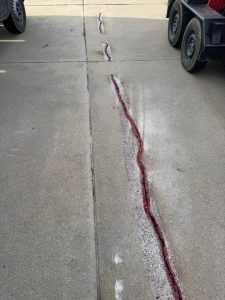
Hot applied joint sealing is the process of sealing joints in concrete and asphalt pavements using a thermoplastic sealant that is heated to a liquid pour state in a thermostatically-controlled melter, then extruded into the prepared joint where it cools and solidifies into a flexible, durable seal. The sealant is typically a bitumen-rubber compound supplied as solid blocks, melted at around 180 to 200°C, and pumped through a heated lance directly into the joint slot. Once cooled (usually within 30 to 60 minutes), the seal can take traffic. It’s the standard specification for motorway joints, A-road carriageways, airfield runways and taxiways, and any large-scale pavement work where fast return to service matters.
At Shepherd and Sons, we’ve been applying hot applied joint sealing across UK airfields, highways and ports for more than 40 years. We’re members of the Extruded Sealant Association, and we work to BS EN 14188-1 and the ESA Code of Practice. This article covers what hot applied joint sealing is, the products under the category (N1, N2 and 9525), when it’s the right specification, and what proper application actually involves.
How hot applied joint sealing works
The principle is thermal, not chemical. Hot applied sealants are solid at ambient temperature. Heated above their melt point, they become a pourable liquid. Once placed in the joint and allowed to cool, they re-solidify into a tough, elastic seal that bonds aggressively to clean concrete and asphalt.
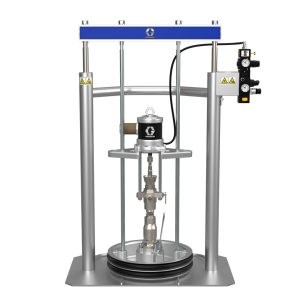
The sealant is supplied in solid block form, typically as 20kg or 25kg cartons. It’s loaded into a pre-heater (also called a melter or kettle) fitted with thermostatic temperature controls and continuous mechanical agitation. The agitation is critical. Without it, the sealant overheats locally, the bitumen chars, and the polymer chemistry breaks down. A charred sealant is a failed sealant before it even reaches the joint.
Once the material reaches the manufacturer-specified pour temperature (which varies by product but sits in the 180 to 200°C range), it’s pumped through a heated lance and extruded directly into the joint. The sealant flows into the slot, wets out the joint faces, and begins to cool. Within 30 minutes at typical UK ambient temperatures, the seal is tack-free and trafficable. That speed is the defining commercial advantage of hot applied work.
The two BS EN 14188-1 grades: N1 and N2
UK hot applied pavement sealants are classified under BS EN 14188-1 as one of two types.
N1: Elastic, High Extension. The standard specification for the majority of highway and pavement work. N1 is a polymer-modified bitumen with high elasticity and a movement accommodation factor typically around 25%. It’s the workhorse for motorway carriageway joints, A-road joints, airfield taxiway joints and large concrete pavement programmes. It’s not fuel-resistant.
N2: Normal, Low Extension. A fuel-resistant grade specified for areas where there is short-term exposure to spilled fuel. N2 is used at HGV refuelling stations, MSA forecourts, aircraft stand joints with limited fuel exposure, and weighbridge surrounds. The fuel resistance is more limited than two part cold applied polysulfide, but for many highway applications N2 is the right balance of cost, speed and chemical resistance.
9525. The high-performance hot applied specification for airfield pavement joints, used on runways, parallel taxiways and major aircraft pavements where the loading and movement accommodation requirements exceed standard N1. The 9525 specification carries the elevated performance requirements that aviation authorities demand.
In our experience, hot applied N1 works better than two part cold applied polysulfide on heavily trafficked motorway carriageway joints because the bond cures inside 30 minutes and the lane can reopen within the same overnight closure, where a two part cold applied system needs at least four hours and often longer in cool conditions. On an M20 carriageway joint reseal in Kent, that difference is the gap between one overnight closure and three.
That said, on aircraft fuelling stands where Jet A-1 and Skydrol routinely contact the joint, hot applied N1 will soften and degrade. The right answer depends on what the joint is exposed to, not just speed.
When hot applied is the right specification
Five scenarios push specification towards hot applied joint sealing.
Fast return-to-service requirement. Where the road, runway or taxiway has to reopen the same shift. Hot applied is the standard answer because cure is thermal cooling, not chemical reaction. A 30-minute cure window is achievable. Two part cold applied systems can’t match it.
Large linear quantities. Motorway carriageway joints, airfield aprons, large concrete pavement schemes. Hot applied extrudes faster than cold applied and lends itself to long, continuous joint runs.
External exposure. Outdoor work where rain, dust and temperature variation make cold applied curing windows hard to manage. Hot applied is less weather-sensitive once it’s in the joint.
Heavy traffic loading. A-roads, motorways, airfield taxiways. The polymer-modified bitumen chemistry stands up to heavy plant, HGV loading and aircraft tyre stress.
Cost-sensitive volume programmes. Hot applied material is generally cheaper per metre than two part cold applied polysulfide, and the application is faster, which reduces traffic management costs.
When hot applied is not the right specification
Equally important, there are environments where hot applied is the wrong call.
Indoor or fire-restricted sites. A propane-fired melter can’t be run inside a warehouse, multi-storey car park, food production facility, or any site with naked-flame restrictions. Cold applied joint sealing is the only sensible option.
Aggressive fuel and chemical exposure. Aircraft fuelling aprons, oil terminals, dedicated fuel handling pavements. The fuel resistance of N2 is limited and N1 has none. Two part cold applied polysulfide (Thioflex 555) is the specification.
Fresh or sensitive concrete. Pouring 200°C sealant onto a freshly laid concrete slab can stress the slab and damage the substrate. Cold applied is the safer answer.
Very small jobs or detail repairs. Mobilising a melter for 20 linear metres isn’t economic. Hand-applied cold applied work is more efficient.
What proper hot applied joint sealing involves
Hot applied joint sealing looks simple from a distance. Heat, pour, cool. The execution detail is anything but. The ESA Code of Practice is explicit about what’s required.
Joint slot preparation. Slots must be sound dense concrete or asphalt, dry, sound, clean and free from frost. Defective or contaminated slot faces are widened until you reach sound material. The slot is mechanically cleaned (wire brush, grit blast or routing) and then blown out with oil-free compressed air. Hot applied is more tolerant of slot preparation imperfections than cold applied, but only marginally.
Backer rod. A heat-resistant backer rod, specifically rated for hot applied work, is caulked into the base of the slot. Standard closed-cell polyethylene backer rod will melt under hot applied sealant. The ESA Code of Practice is explicit that the rod must be heat-resistant.
Sealant heating. The sealant is loaded into a thermostatically-controlled pre-heater with continuous agitation. The temperature must stay within the manufacturer-specified application range. The material must not be held at application temperature longer than the manufacturer permits, because extended hold times degrade the polymer.
Pour technique. The sealant is extruded directly into the joint through a heated lance. The pour rate has to match the joint geometry so the slot fills cleanly without voids or overflow.
Sealant recess. The finished sealant level is recessed below the pavement surface to prevent traffic extrusion damage. The ESA Code of Practice specifies a minimum 5mm recess for transverse joints under normal vehicle traffic, 7mm for joints wider than 25mm, and 10mm if applied in cold weather. Tolerance is ±2mm.
Cooling protection. The joint is protected from traffic until cooled. This is generally 30 to 60 minutes depending on ambient temperature, sealant grade and pour depth. Trafficking too early is one of the most common installation failures we’re called in to repair.
Crossfall management. On pavements with crossfall steeper than 2.5%, or on joints wider than 20mm, the sealant can flow along the joint before cooling. The Code of Practice requires placing material in thin layers, letting each layer stiffen before placing the next, and completing each joint within one working shift.
We’ve found that contractors who treat the melter as a simple heating tank, without active temperature monitoring and agitation discipline, are the contractors whose work fails inside two winters. Hot applied chemistry is forgiving on pour but unforgiving on heating discipline.
Re-melt rules and waste sealant
Some hot applied sealants are designated re-meltable. Others are not. The manufacturer’s technical data sheet specifies which. Non-re-meltable sealant left in the kettle at the end of a shift must be discarded. Re-meltable sealant can be retained and re-used within the manufacturer’s written guidance.
The ESA Code of Practice is explicit on this point because re-melting non-re-meltable material accelerates polymer degradation and compromises the next day’s work. We’ve seen this short-cut taken on programmes under cost pressure, and the failures show up reliably 18 to 24 months later.
Standards and compliance
Hot applied joint sealing in the UK works to:
- BS EN 14188-1 (Type N1 elastic high extension, Type N2 normal low extension)
- BS 10948:2020 (application and use of hot- and cold-applied joint sealant systems for concrete pavements)
- SHW Volume 1 Series 1000 (Specification for Highway Works, amended January 2020)
- Highways England Concrete Pavement Maintenance Manual V1.1
- The ESA Code of Practice for Joint Sealing (Issue 3.0, November 2025)
For specifiers and clients, requesting an ESA-member contractor and BS EN 14188-1 conformity certification is the clearest way to ensure the product and installation meet specification.
Sampling and site testing
The ESA Code of Practice requires sample testing at three stages: at the factory, from packages on delivery, and on site. For hot applied joint sealant, test samples should be retained at a rate of not less than one per 1,000m of joint, or one per day. Depth measurements must be taken at three locations along each transverse joint, mid-width, to an accuracy of ±0.5mm using a metal ruler and 150mm straightedge.
We’ve completed hot applied joint sealing on more than 250 UK projects across aviation, highways and ports in the past six years, and we maintain sample-and-test records on every one. That documentation is what a properly specified hot applied contract requires.
Sectors where hot applied joint sealing is specified
Highway authorities and Tier 1 contractors are the largest specifiers, using N1 on motorway and A-road carriageway joints and N2 in HGV refuelling and MSA areas. Aviation clients specify 9525 on runways, parallel taxiways and major airfield pavements. Port operators use hot applied on dockside concrete pavements where speed and load capacity matter. Public sector clients including councils and military operators specify hot applied on bus depots, vehicle yards and infrastructure programmes.
Specifying hot applied joint sealing properly
A meaningful hot applied quote will specify the grade (N1, N2 or 9525), linear metres, joint dimensions, primer requirement (if any), programme constraints, cooling-window protection, and QC sampling rate. A quote that just lists “hot applied sealant, £X per metre” tells you nothing about whether the contractor understands the discipline involved.
If you’re specifying or commissioning hot applied joint sealing work, get in touch. We’ll assess the substrate, programme, traffic management requirement and cooling window, and quote against the actual specification under the ESA Code of Practice. You can see recent project work on our LinkedIn and Instagram.