
Service
Concrete Airfield Repair
Shepherd and Sons Contracting LTD
Repairing the surface, not replacing the slab
Airfield concrete rarely fails all at once. It fails at the face. Frost gets into the top few millimetres, the surface spalls, fine cracks open, and loose material starts to lift. On a runway, taxiway or stand that loose material is the real problem, because anything a jet blast can pick up is foreign object damage waiting to happen.
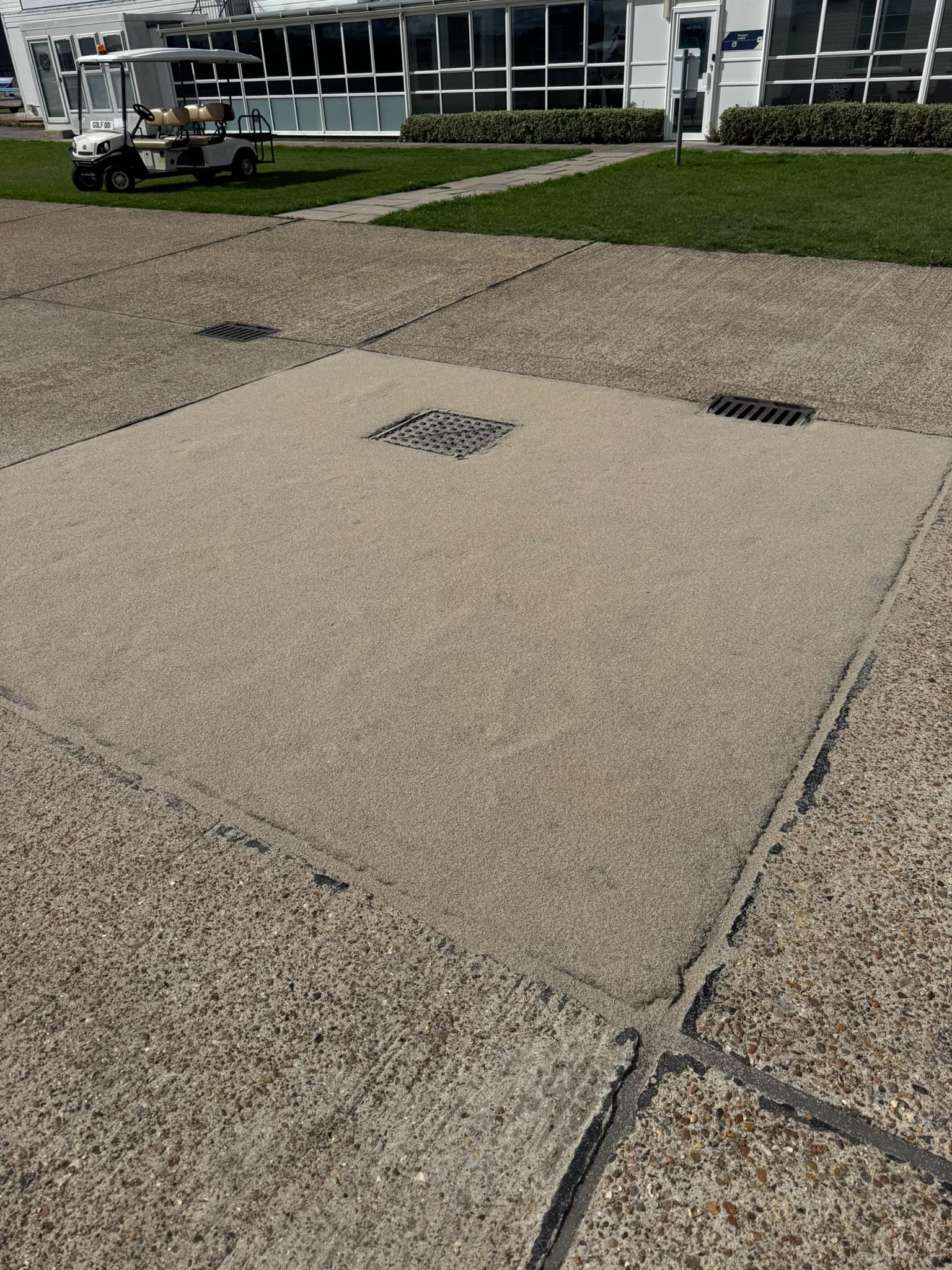
Concrete airfield repair treats that surface rather than breaking out and recasting the bay. A penetrating resin is drawn down into the concrete and locked in place with a hard wearing aggregate. It binds the loose face, seals the capillaries against water and de-icer, and leaves a trafficable surface behind. The slab stays where it is, which is what makes this surface work rather than reconstruction.
Preparation decides whether it lasts
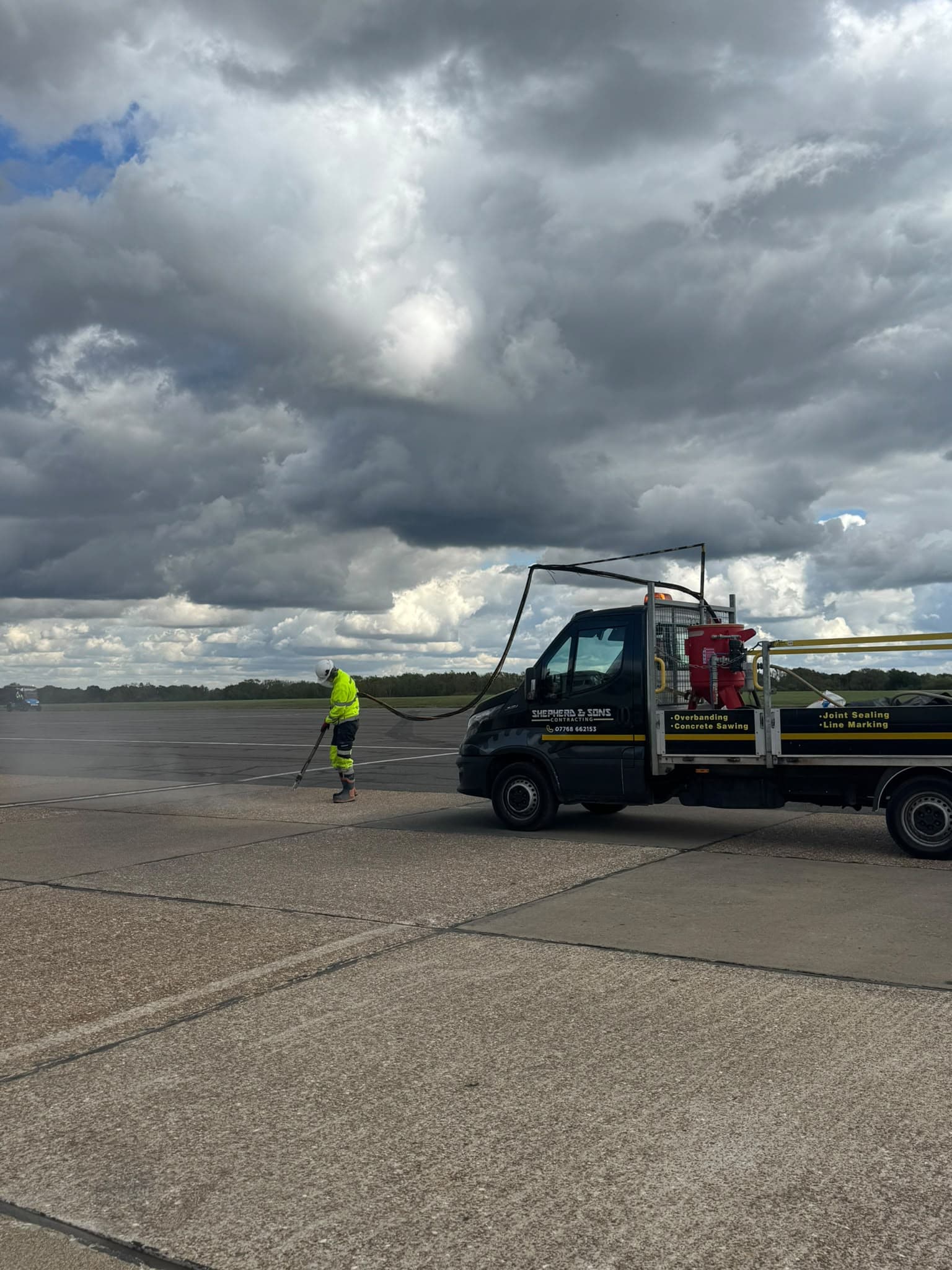
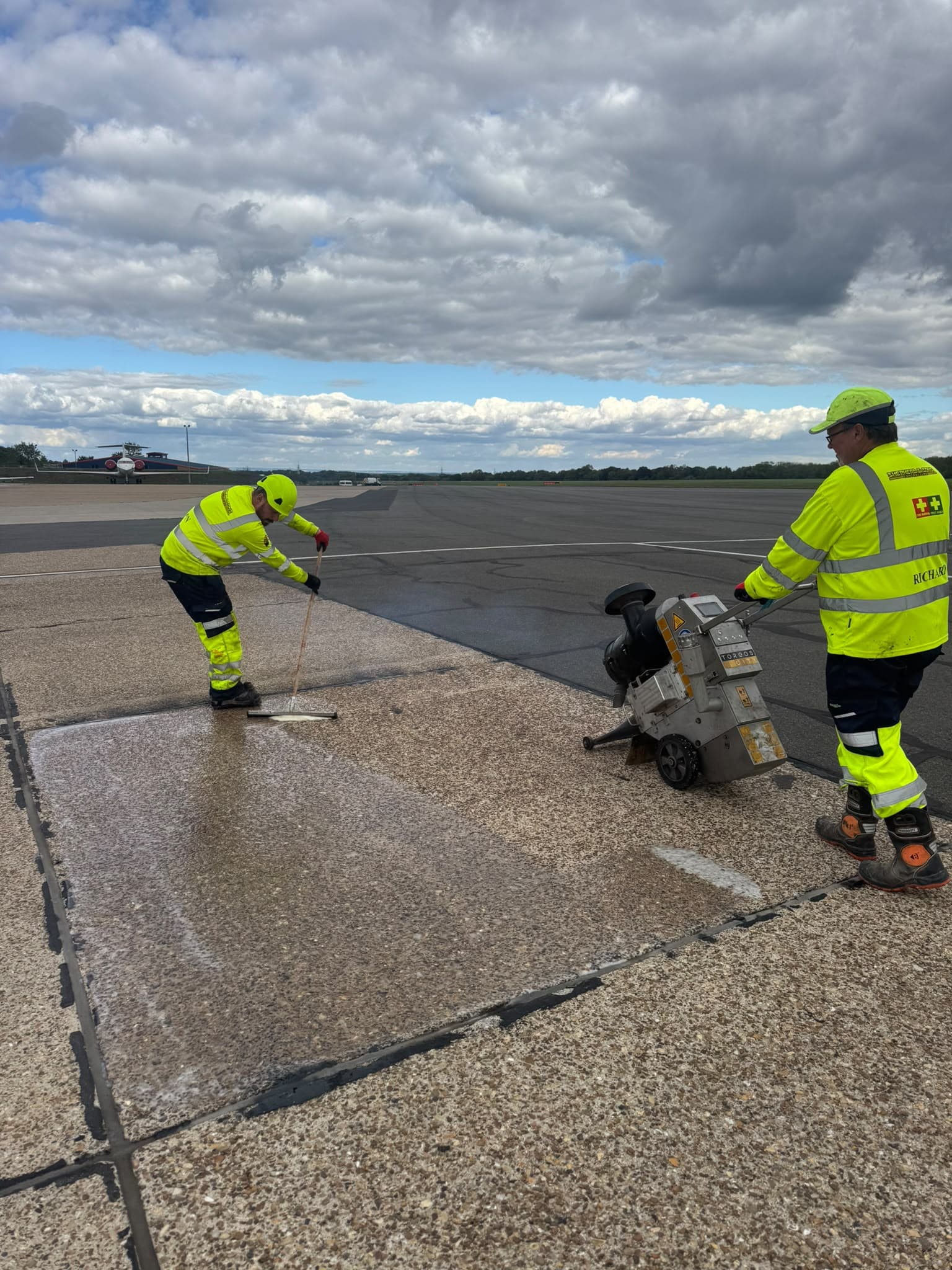
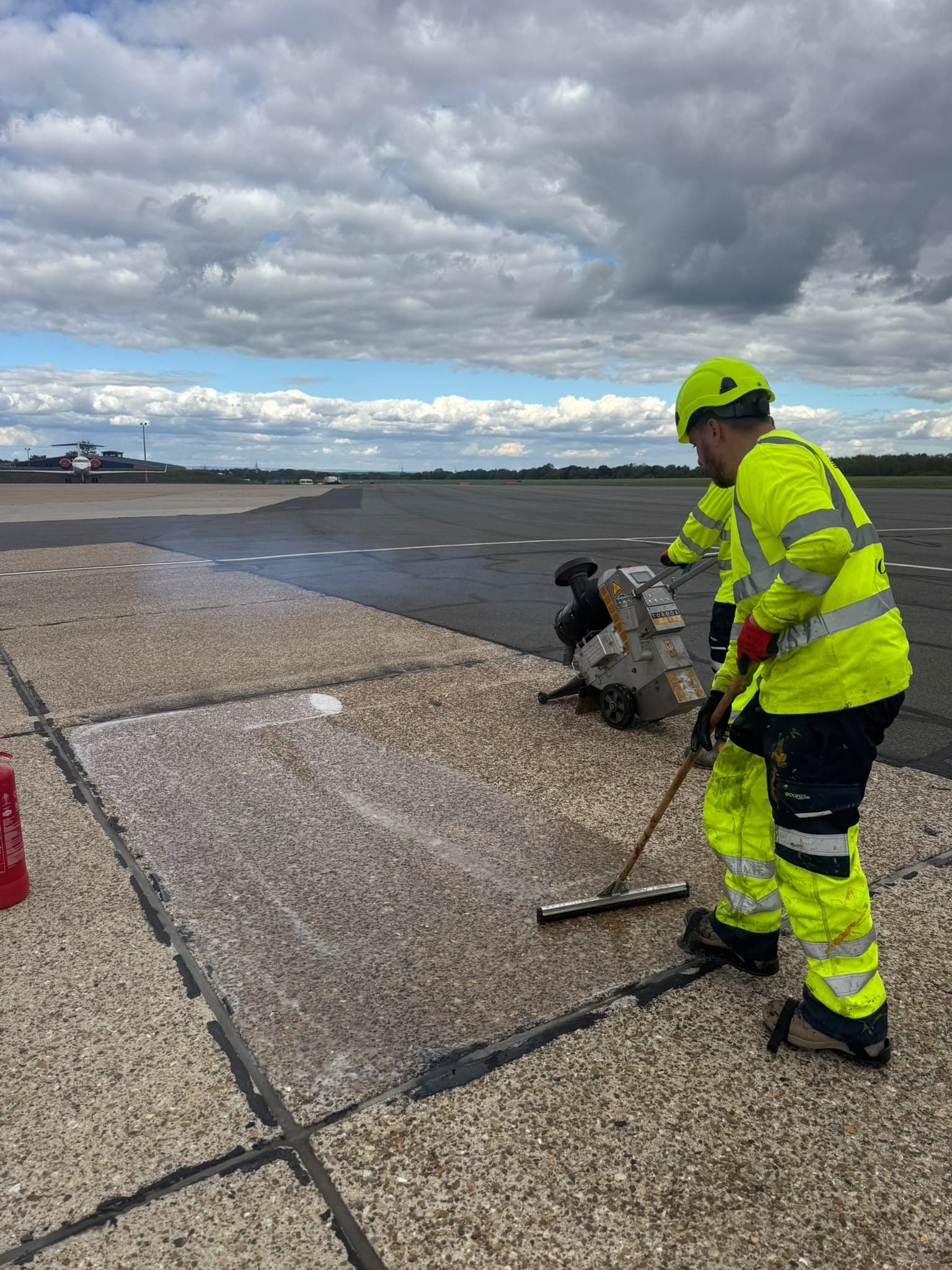
Concrete that looks dry usually is not. Water, fuel and de-icer sit in the capillary pores near the surface, and a resin laid over the top of them will not bond. The surface is treated first with hot compressed air, a controlled heat blast that drives those contaminants out of the top few millimetres and leaves the pores open.
The resin goes on while the slab is still warm and is drawn into those open pores as the concrete cools, penetrating two to three millimetres rather than sitting on the surface as a film. That is the difference between a surface bonded into the concrete and one stuck to it.
Shepherd and Sons Contracting LTD
What the system is built to treat
This is a treatment for surface deterioration, not for a slab that has failed structurally. Where the concrete underneath is sound, it is aimed at:
- Frost damage and freeze thaw scaling
- Spalling and general surface breakdown
- Fine surface cracking
- Alkali silica reaction showing at the face
- Loose material presenting an FOD risk
The manufacturer's published figures for the system put water absorption down from 4.19 per cent to 0.19 per cent, and an expected extension to pavement service life of ten to twenty years. Those are the system's test figures rather than measurements from any one of our jobs.
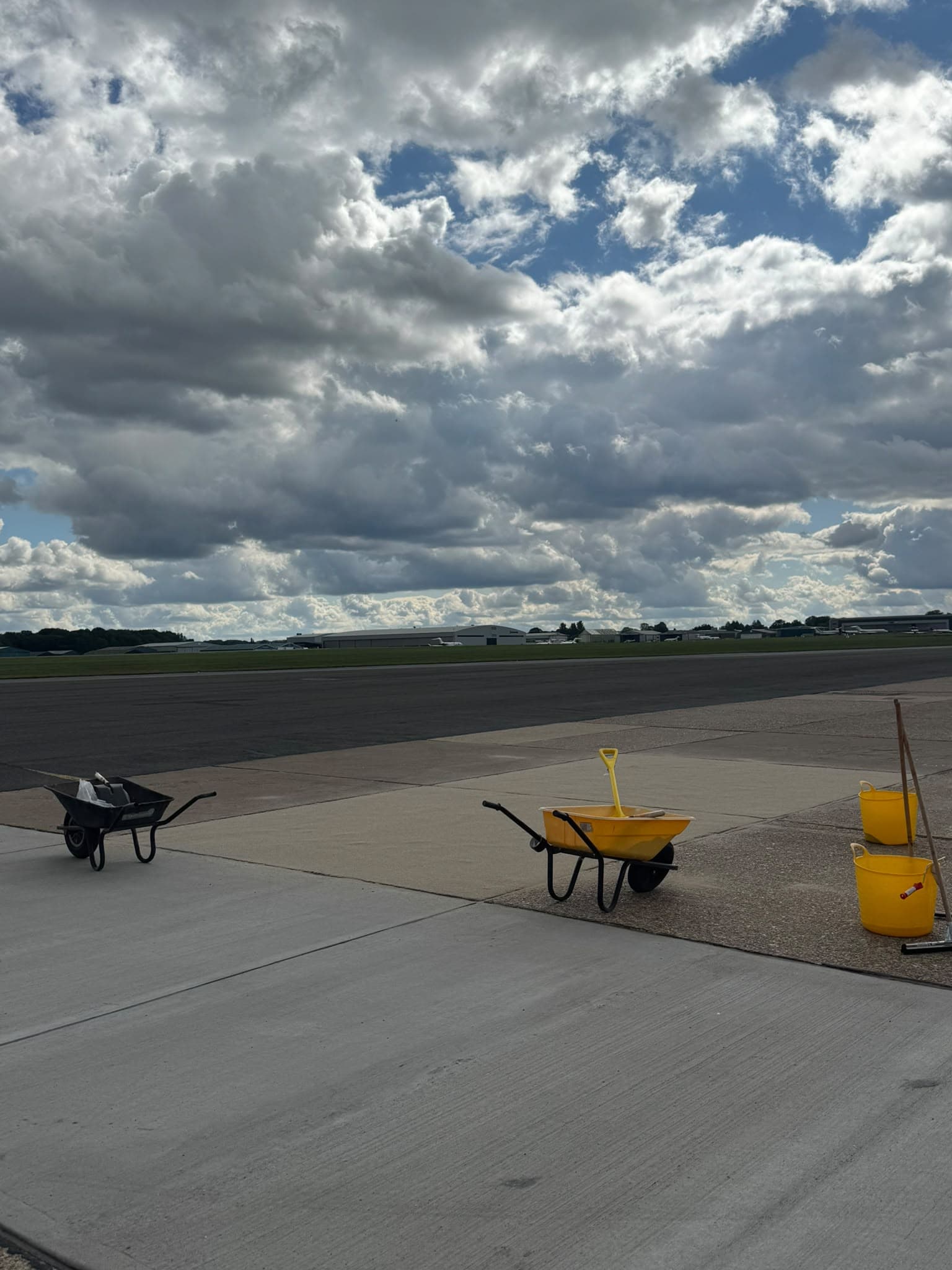
Working airside
Most of what makes an airside job work has nothing to do with the material. Access is escorted, possessions are short and fixed, and everything taken out onto the pavement has to come back off it. Tools are counted out and counted back in, and the compound is kept tight, because loose kit on an apron is the same hazard as loose concrete.
The airfield's rules set the programme, not ours. When a possession ends we come off, and the work is planned so that coming off never leaves a surface that cannot take traffic.
Shepherd and Sons Contracting LTD
Contact Us
Tell us the pavement, the area and the possession you can give us, and we will tell you what the surface needs and what we can get done in the window.