Service
Anti Skid Surfacing Contractors
Shepherd and Sons Contracting ltd
Anti skid surfacing for roads, crossings and car parks
We lay anti skid surfacing, the high friction coating that shortens stopping distances where braking and turning forces concentrate. From our base near Maidstone in Kent we work on road junctions and roundabout approaches, pedestrian crossings, bus stops, car parks and private roads. Road work is mostly at night under traffic management.
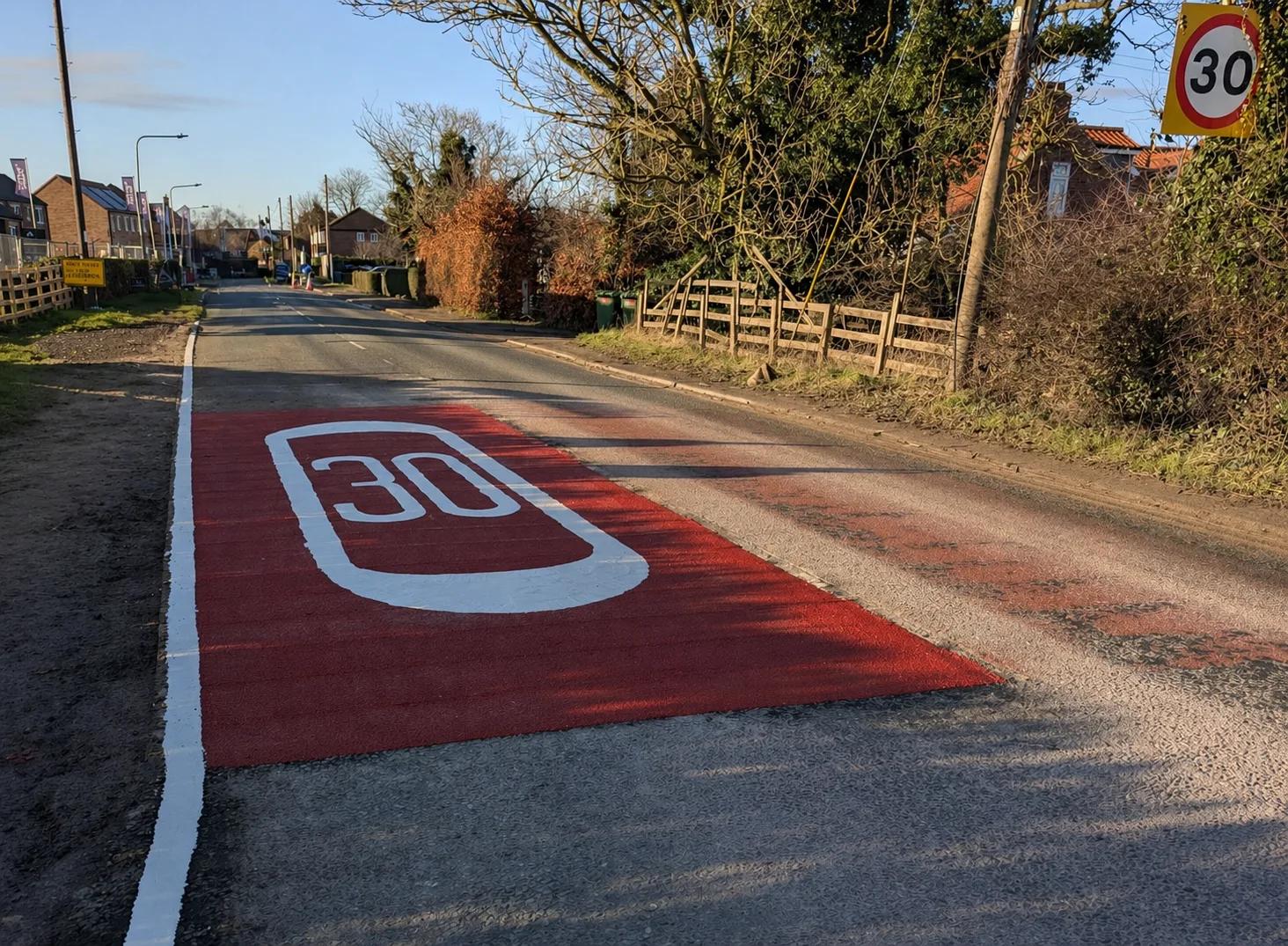
It is the yellow or red surface on the approach to a junction or crossing: a resin binder dressed with a hard, angular aggregate that gives a tyre something to grip. We lay both cold applied and hot applied systems, and the right one depends on the traffic and the site.
Choosing the right anti skid system
On public roads anti skid is specified as high friction surfacing under Clause 924 of the Specification for Highway Works, and HAPAS classifies certified systems as Type 1, 2 or 3 by the traffic they can take. On junction and roundabout approaches, Type 1 is rated for up to 3,500 commercial vehicles per lane per day, Type 2 for 1,000 and Type 3 for 250, each with an expected life of five to ten years at that limit. That makes choosing a type a decision based on the traffic count rather than on price.
Cold applied systems are laid as a resin binder with the aggregate broadcast onto it while it is still wet. Hot applied systems arrive with the resin, aggregate and fillers pre-mixed, are heated in a boiler and screeded out, so the aggregate is held within the material rather than scattered on top. Both depend on a sound, clean and dry surface, because a system laid on a weak or damp surface loses its aggregate in the wheel tracks first.
The aggregate and the certificate
The aggregate that does the work is normally calcined bauxite, chosen because it holds a polished stone value of 70 or more. A HAPAS certificate also requires installation by an installer the certificate holder has approved, so the certificate and the installer are two separate checks worth making on any tender. The detail is on our high friction surfacing page.
Where anti skid goes, and where it must not
Typical sites are the approaches to signalised junctions and roundabouts, pedestrian and school crossings, tight bends, steep gradients and the approaches to level crossings. Highway authorities pick them from measured skid resistance and collision history, so the extent of a scheme is usually settled before a contractor is asked to price it.
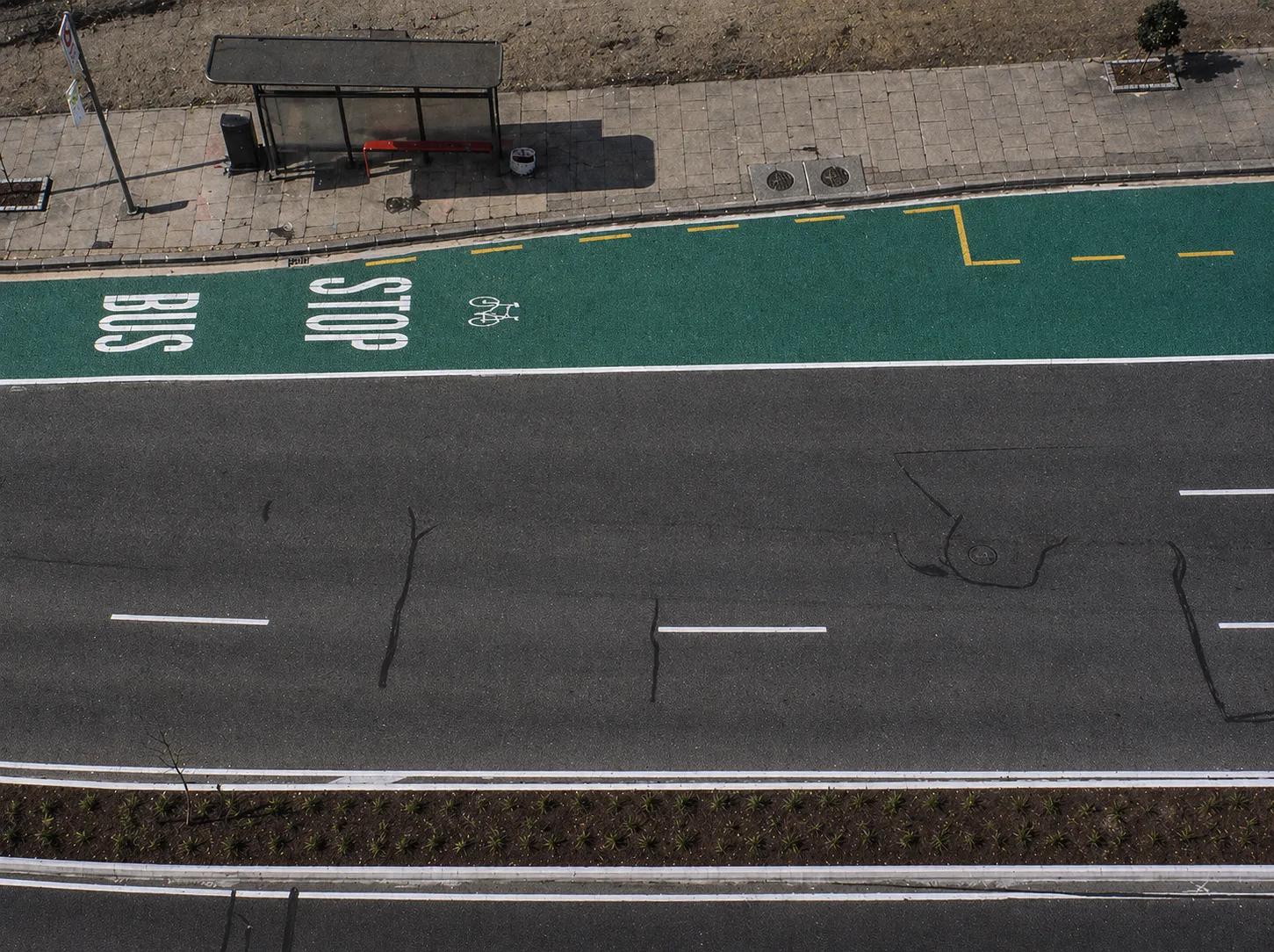
Two rules catch out well-meaning specifications. High friction surfacing must not be laid on the circulating carriageway of a roundabout, only on its approaches. And it must not be specified simply to colour a road: a coloured cycle or bus lane is a different product for a different purpose. There is more in what is high friction surfacing?
Car parks and private roads
Off the highway the material and the laying discipline are the same, but the owner decides where it goes rather than a highway authority. Ramps, bends, crossings and entrances where cars brake hard in the wet are the usual places, and the sensible standard to borrow is the highway one. There is more in anti skid surfacing for car parks and private roads.
Anti skid surfacing contractors in Kent and across the UK
We are based at Little Westerhill Farm near Maidstone in Kent and apply high friction surfacing to roads, junctions, bus lanes and approach zones nationwide. The material needs the surface dry and above temperature, so anti skid is one of the few things we programme around the forecast as closely as the closure. Day to day that means Kent, London, Sussex and Essex, with national mobilisation for extended programmes.