
Wire sawing cuts concrete with a continuous loop of diamond-beaded steel wire. The wire is pulled through the section under tension by a hydraulic drive unit. Because a wire has no radius, the thickness of the section is not what limits the cut. That is the whole point of it. A disc saw can only reach a little under half its blade diameter. Once a section is past that, the disc stops being an option.
At Shepherd and Sons we have completed more than 300 cutting and drilling projects across the UK in the past six years. From working with clients on bridges, quay walls and heavily reinforced structures, we've found wire sawing gets specified for two different reasons. Sometimes the section is simply too thick for anything else. Just as often the thickness is manageable and the real problem is vibration.
What the machine actually is
The wire is a steel core carrying diamond-impregnated beads. The beads sit along it, separated by springs or moulded rubber, and they do the cutting. Lengths are joined with crimped connections into a closed loop. That is why a wire can be made up to almost any length the job needs.
The loop runs over a drive pulley and a set of idler pulleys. It passes through the section being cut and is pulled steadily in one direction. The drive maintains tension as the loop shortens. It is not a reciprocating stroke and it does not cut in passes. The Drilling and Sawing Association Code of Safe Working Practice describes it in exactly those terms.
Water is not optional. The DSA Code says twice that water must always be used. It also says an adequate supply must be fed to the wire while it is cutting. A wire run dry destroys the beads and the cut with them.
Machine wire capacity is finite, which surprises people. Current wire saws carry something in the order of 10 to 16 metres of wire on the machine. That is ample for most sections, but it is a real number rather than an infinity.
Why depth is not the limit, and what is
The DSA puts it plainly. Virtually no concrete structure or cross-section is too large to cut. Their own accuracy tables run to sections over three metres thick, which tells you the trade means it.
The honest limit sits somewhere else entirely. You still have to get the piece out. A cut section of mass concrete is enormously heavy. The lifting and removal plan is usually what decides how a wire sawing job is broken up, not the sawing.
Accuracy is the second real constraint, and it degrades with thickness. The DSA tolerance bands allow five per cent deviation on angle below 1.5 metres. Between 1.5 and three metres that becomes ten per cent, and above three metres fifteen per cent.
The cut face follows the same pattern. Permitted evenness runs from around 10mm on thinner sections to 20mm on the thickest. If a face has to be true for something to bear on it, that matters far more than the depth does.
The vibration case, which is stronger than people realise
This is where wire sawing earns its keep on occupied and sensitive sites. HSE guidance on diamond wire cutting states that operators are not exposed to any vibration from the cutting at all. The machine is remote controlled and nobody is holding it.
Set that against a hand-held breaker. HSE puts those in the range of 5 to 20 metres per second squared. Under the Control of Vibration at Work Regulations 2005 that difference is not marginal, and HSE lists diamond wire cutting among the substitutions it actively recommends.
In our experience, wire sawing works better than percussive breaking on a structure that is already distressed. The cut puts no impact energy into concrete that is failing. Breaking out next to an existing crack tends to make that crack somebody's next problem.
Noise follows the same logic. A continuous pull is quiet compared with a breaker, which is why wire sawing turns up on hospital estates and in occupied buildings far more often than its cost alone would justify.
Getting the wire through
Where the cut is an opening inside a structure, the job starts with core drilling. Two holes are cored at the corners of the intended line. The wire passes through them and then follows the line those holes define. Inaccurate coring gives you an inaccurate cut before the saw has run.
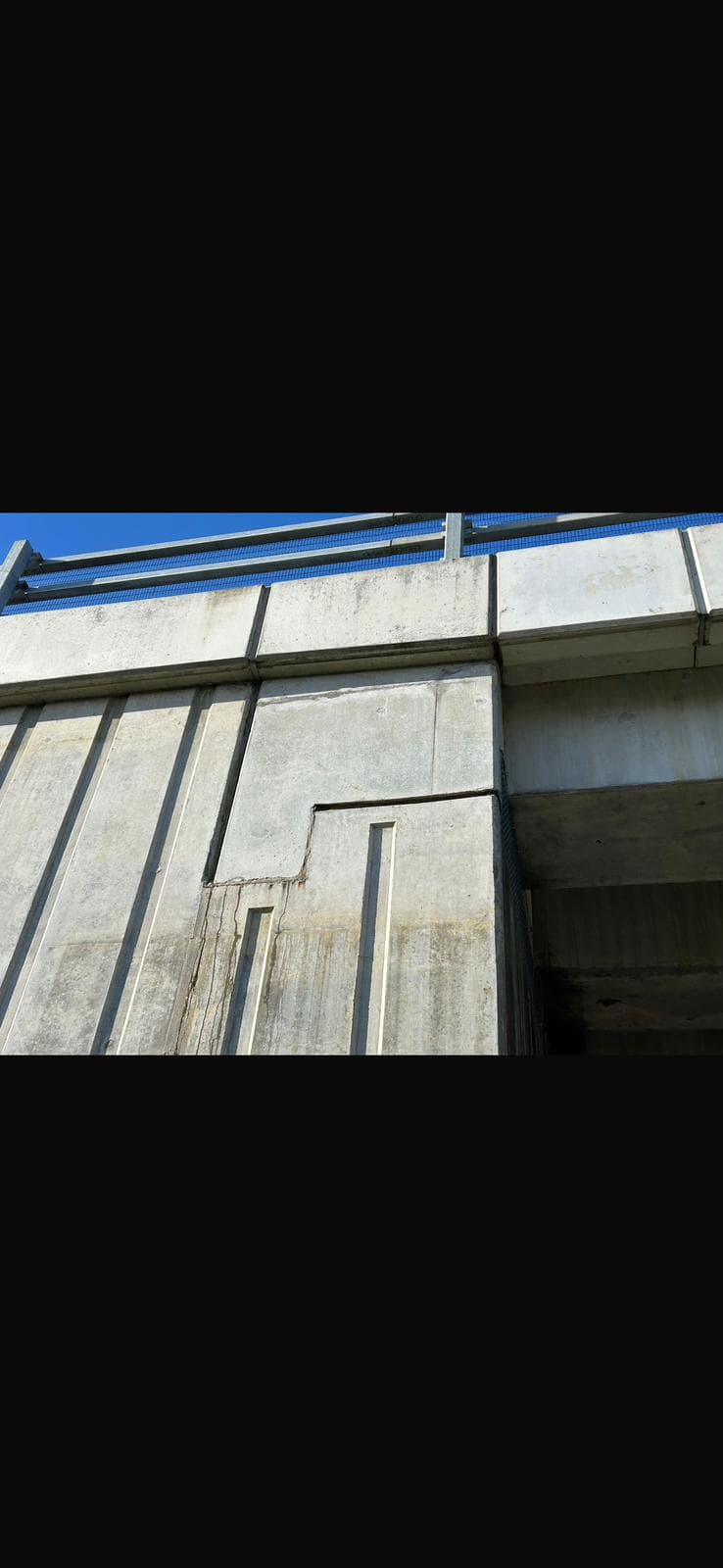
Where the element is free-standing, none of that is needed. A pier, a column or a bridge section can simply be wrapped. That is the wire saw's signature application, and the reason it is the tool of choice for structures work.
The hazard nobody should gloss over
A wire saw has no guard. The pulleys are exposed and so is the wire. The DSA Code is explicit that the working area must be isolated because of it.
Exclusion is the control, and it replaces guarding rather than supplementing it. That shapes how a job is set up more than any other single factor. The cordon, the sight lines and who may enter are agreed before the wire is threaded.
Wire sawing also carries its own training standard rather than sitting under general sawing competence. It is assessed separately, with a low candidate-to-trainer ratio for the practical work. Competence with a floor saw does not transfer to it.
Wire, or a disc?
The practical crossover is set by blade reach. The largest wall saws in common use take a 1,600mm blade and cut to around 730mm from one face. Cutting from both faces roughly doubles that. Depth on a floor saw follows the same arithmetic, and our own working maximum there is 625mm.
So the question is rarely which is better. It is whether the section can be reached by a disc at all. Then whether both faces are accessible. Then whether vibration or noise rules a disc out anyway.
Where the answer is no on any of those, it is wire sawing. Where it is yes, a wall saw is usually quicker and cheaper. There is no virtue in specifying the harder method.
Cost follows the same logic. A wire saw carries more setup: the rig, the pulleys, the coring and the exclusion zone. On a section a disc can reach, that setup buys you nothing. On a section it cannot, there is no alternative to compare it against.
What to ask before appointing anyone
- Has the lift been planned, and by whom? The cut is the easy half.
- Where do the corner holes go, and who is coring them?
- How is the exclusion zone set out, given the pulleys are unguarded?
- Is there a water supply on site, or is it being brought?
- Are operatives trained to the Drilling and Sawing Association standard for wire sawing specifically?
That last question is worth asking plainly. Wire sawing has its own hazards and its own assessment. A crew that saws floors competently has not necessarily been near a wire.
For concrete cutting and wire sawing on structures across Kent, London and the South East, get in touch with our team.
More on Concrete Cutting
 Concrete Cutting
Port Concrete Cutting in Kent
Read More »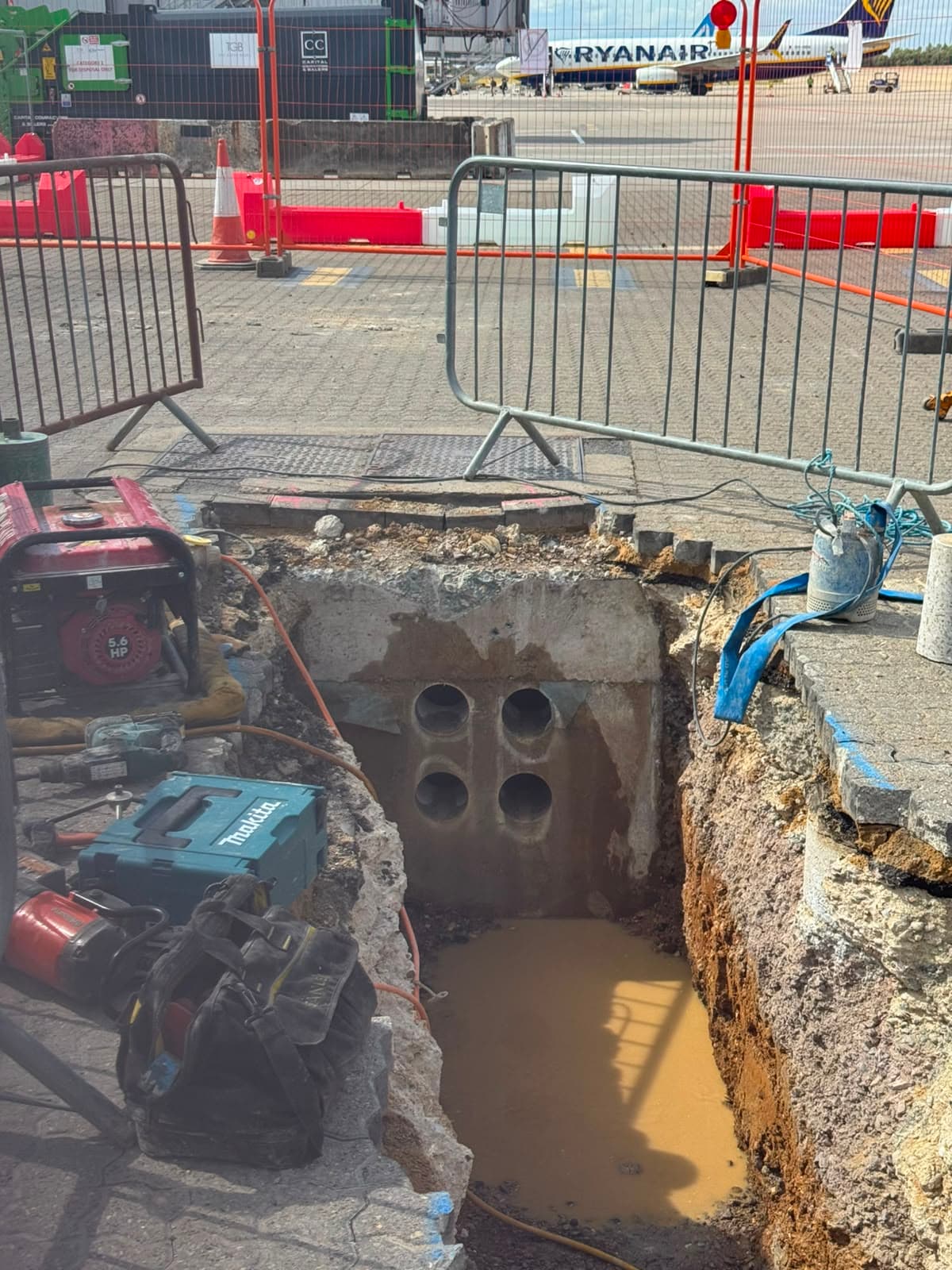 Concrete Cutting
What is Core Drilling?
Read More » Concrete Cutting
Floor Sawing Services in Kent
Read More »- Concrete Cutting
Concrete Cutting in London
Read More »  Concrete Cutting
What is floor sawing?
Read More »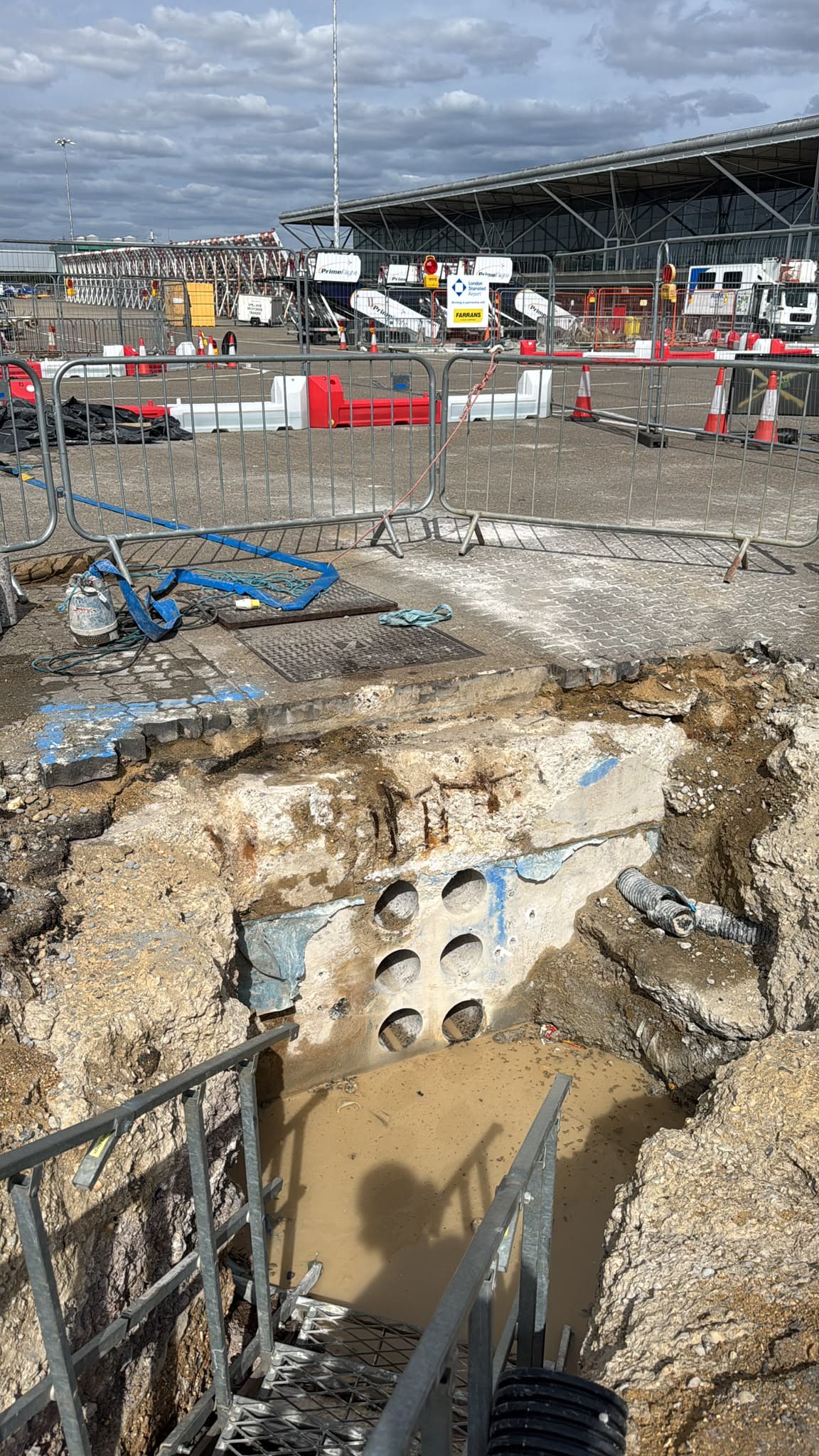 Concrete Cutting
Diamond Drilling Contractors in Kent
Read More »