
Shepherd and Sons Ltd
Floor Sawing Services in Greater London
By Jordan Shepherd, Director. Published .
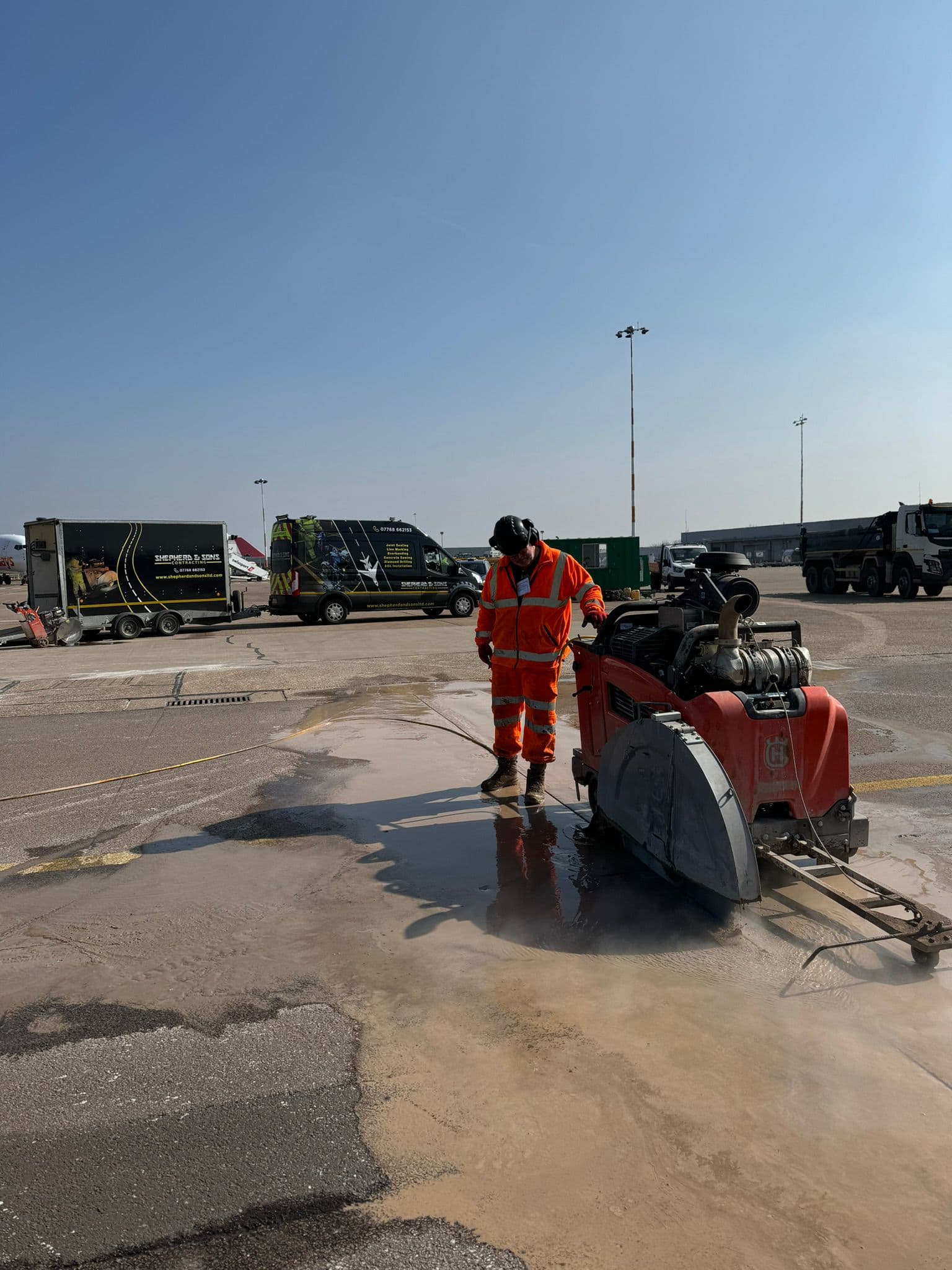
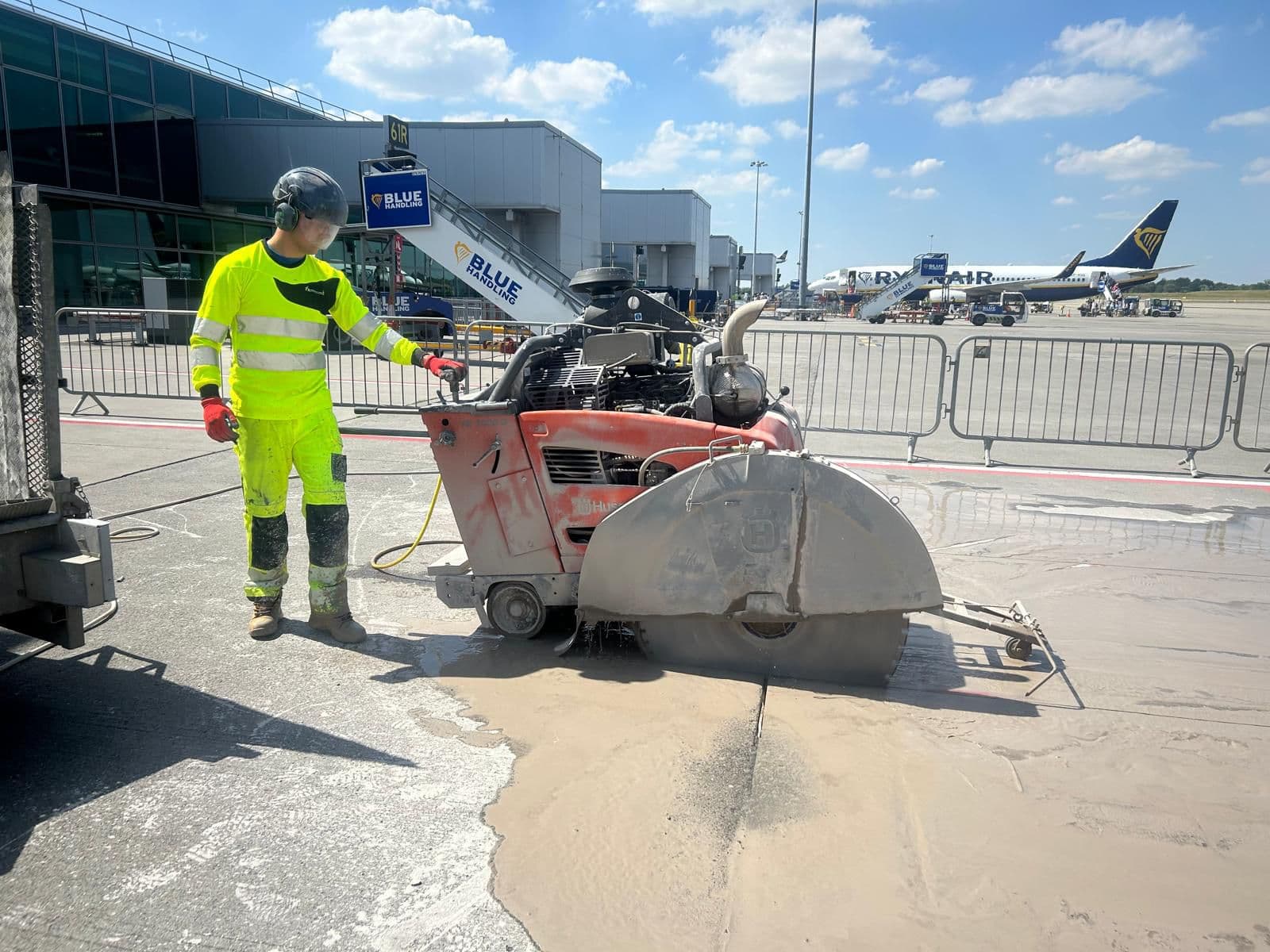
Floor sawing is the horizontal cutting of concrete and asphalt slabs using a diamond blade on a wheeled or self-propelled saw. We provide it across Greater London, cutting to 625mm in a single pass, in concrete and asphalt alike. On a London job the sawing is rarely what decides the programme. The plant rules, the permitted hours and the access do.
At Shepherd and Sons we have completed more than 300 cutting and drilling projects across the UK in the past six years. London and Kent are our two largest concentrations by a wide margin. From working with clients inside the M25, we've found the London questions arrive before the technical ones. This covers what floor sawing does and does not cover. It also covers when another method is the right call, and the three constraints that shape a London programme.
What floor sawing covers, and what it does not
A floor saw cuts downwards into a horizontal surface. Roads, hardstanding, industrial floors, bridge decks, aprons and taxiways all fall to it. The cut is straight, controlled and vibration-free compared with breaking. That is why it is the default where a slab must come out in sections without disturbing what surrounds it.
Depth follows blade diameter, at roughly just under half. A 500mm blade reaches about 180 to 200mm. A 750mm blade takes you to 300 to 350mm. A 900mm blade reaches 360 to 420mm. Our working maximum is 625mm, and that figure holds for concrete and asphalt alike.
Set that against what London slabs actually measure and the envelope makes sense. Industrial floors run 150 to 250mm. Highway concrete runs 200 to 350mm. Port hardstanding runs 250 to 400mm. Airfield taxiways and aprons run 300 to 500mm. That is the one category where the top end goes past a floor saw in a single pass. The mechanics of the method are the same whichever of those you are standing on.
When a floor saw is the wrong tool
Honest scoping saves money, so it is worth knowing where the method stops.
Vertical faces and soffits are not floor sawing. Those need wall or track sawing. Sections deeper than a blade will reach, or shapes a circular blade cannot follow, need wire sawing. Openings, penetrations and test cores are diamond drilling work.
There is also the case where no saw is permitted at all. Alongside a live high-pressure fuel main, we form the cut line as a row of overlapping cores and lift the sections out. That is stitch drilling, and on airside work it is often the only sanctioned way to take a slab out.
Reinforcement changes the blade, not the concrete
Most London slabs are reinforced, and the mesh or bar governs blade choice more than the concrete does. A blade cutting clean concrete and a blade cutting through 16mm bar are not the same consumable.
The rule of thumb runs against instinct. Hard aggregate needs a soft bond, because the bond has to wear away fast enough to keep exposing fresh diamond. Soft or abrasive material needs a hard bond, or the segment is gone long before the cut is finished. Get it the wrong way round and the blade either glazes over and stops cutting or disappears in a shift.
Reinforcement changes the rate as well. A cut through a heavily reinforced bay takes materially longer than the same depth in plain concrete. That difference belongs in the programme rather than surfacing on the night. Older London slabs often have no reliable drawings, and a scan before cutting is cheaper than hitting a service.
The three London constraints that decide the programme
Plant and emissions
Greater London operates a Low Emission Zone for construction machinery. Sites must log all non-road mobile machinery between 37kW and 560kW on the online register, and Stage IV is the minimum standard. Constant speed engines, generators among them, must meet Stage V. Stage V becomes the London-wide minimum on 1 January 2030.
Here is the part that gets missed. Most walk-behind and self-propelled floor saws sit below the 37kW threshold, so the saw itself often falls outside the register entirely. The generator powering the site, the larger tracked plant and the support machinery frequently do not. We've found the compliance gap is almost never the saw. It is the kit parked next to it. The plant rules across London are worth settling before anything is mobilised.
Hours and noise
Cutting is loud, and London boroughs set their own permitted hours. On highways and in occupied buildings the work often has to run at night. That brings prior consent for noise under section 61 of the Control of Pollution Act 1974 into play. Consent takes time to obtain. It is worth knowing early whether the client holds it or the contractor is expected to.
Access
Basement car parks, podium decks and narrow streets are the London norm rather than the exception. Machine size is therefore a site question, not a catalogue question. In our experience, a mid-sized saw making two passes works better than the largest machine that will physically fit. The big saw wins on paper. Then it loses half a shift to a basement ramp. Getting plant in and out is frequently the longest single item in the programme.
Slurry has nowhere to go in London
Floor sawing is a wet process. Water cools the blade, flushes the cut and suppresses silica dust, which is the control HSE guidance expects on this work. The by-product is slurry, and it is strongly alkaline.
Much of London runs on combined sewers, and discharge consent is not a formality. Slurry cannot go to a surface water drain. The controls are vacuum recovery at the blade and bunding. The disposal route needs agreeing before the first cut, not after it. On a confined city site this often governs how much cutting gets done in a shift.
Where we saw across Greater London
Highways work is the largest share, generally under night possession with the surface handed back before the morning peak. Public sector sites, schools and hospitals among them, come next, and they carry the tightest constraints on noise and hours. Riverside and dockside slabs run heavier sections than a typical city floor.
Aviation is the specialism underneath all of it. We have been sole contractor for the British Airport Authority since 2008, across all seven former BAA airports. Heathrow sits inside Greater London. Airside work sets the standard the rest is measured against. The possession is fixed, and the surface must come back swept and free of foreign object debris. That discipline is what we bring to a borough highway job. There is more on how the method fits the wider picture of cutting work in the capital.
What to check before appointing a contractor
- Which items of plant actually need to be on the site's NRMM register, and who is registering them?
- Where is the slurry going, and is the disposal route consented?
- Who holds the section 61 consent if the work runs at night?
- Are operatives NVQ Level 2 in cutting and drilling, with CSCS cards and Drilling and Sawing Association competence behind them?
- Can the same contractor seal or reinstate the joint afterwards, or does that need a second appointment?
That last question matters more than it looks. A cut left open is a route for water into the slab. For most cutting firms the follow-on work is a different trade. We deliver the cutting and the joint sealing with the same team, which removes a handover that tends to sit unresolved.
For floor sawing and concrete cutting anywhere in Greater London, get in touch with our team.
More on Concrete Cutting
 Concrete Cutting
Port Concrete Cutting in Kent
Read More »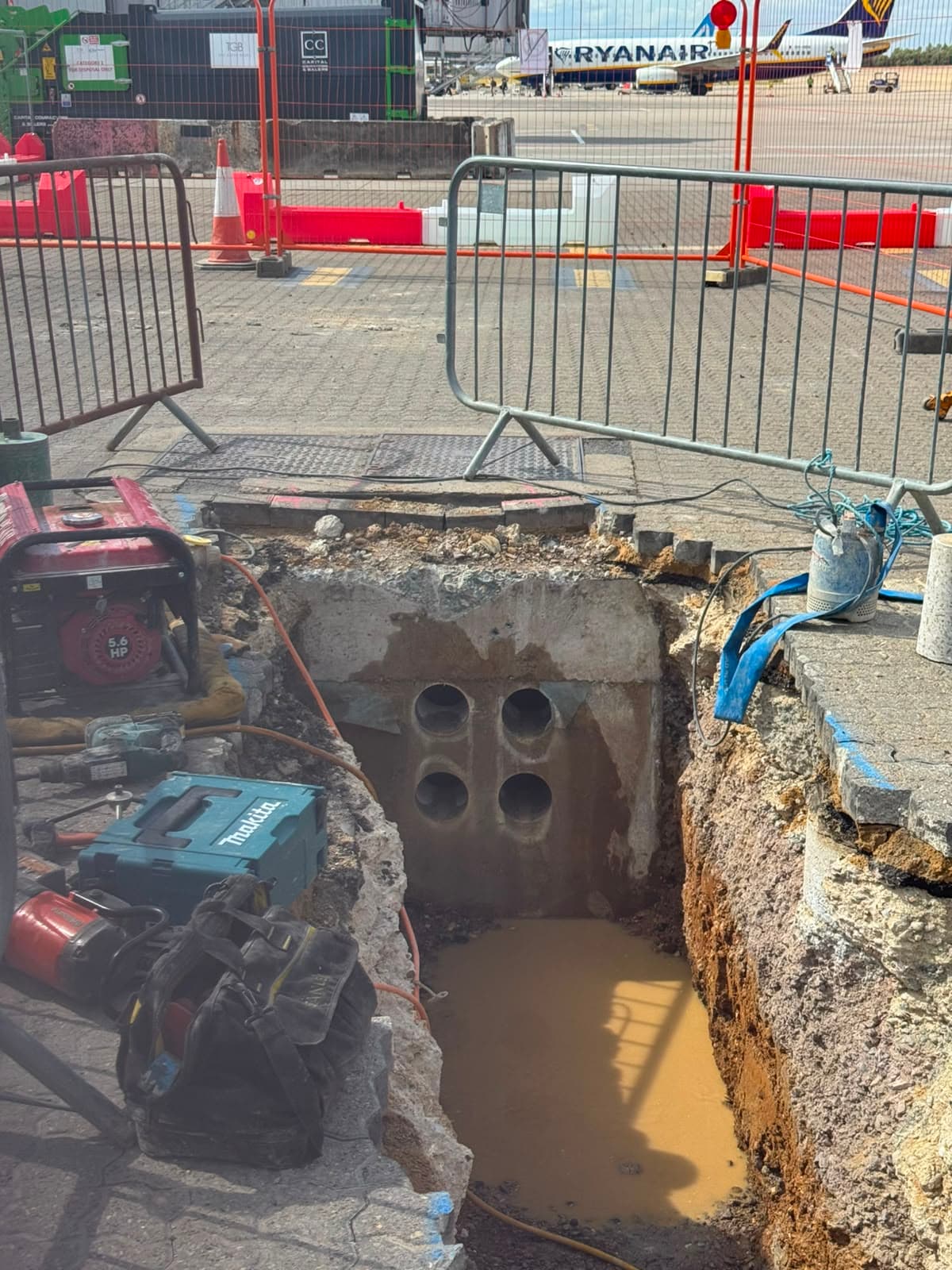 Concrete Cutting
What is Core Drilling?
Read More » Concrete Cutting
Floor Sawing Services in Kent
Read More »- Concrete Cutting
Concrete Cutting in London
Read More » 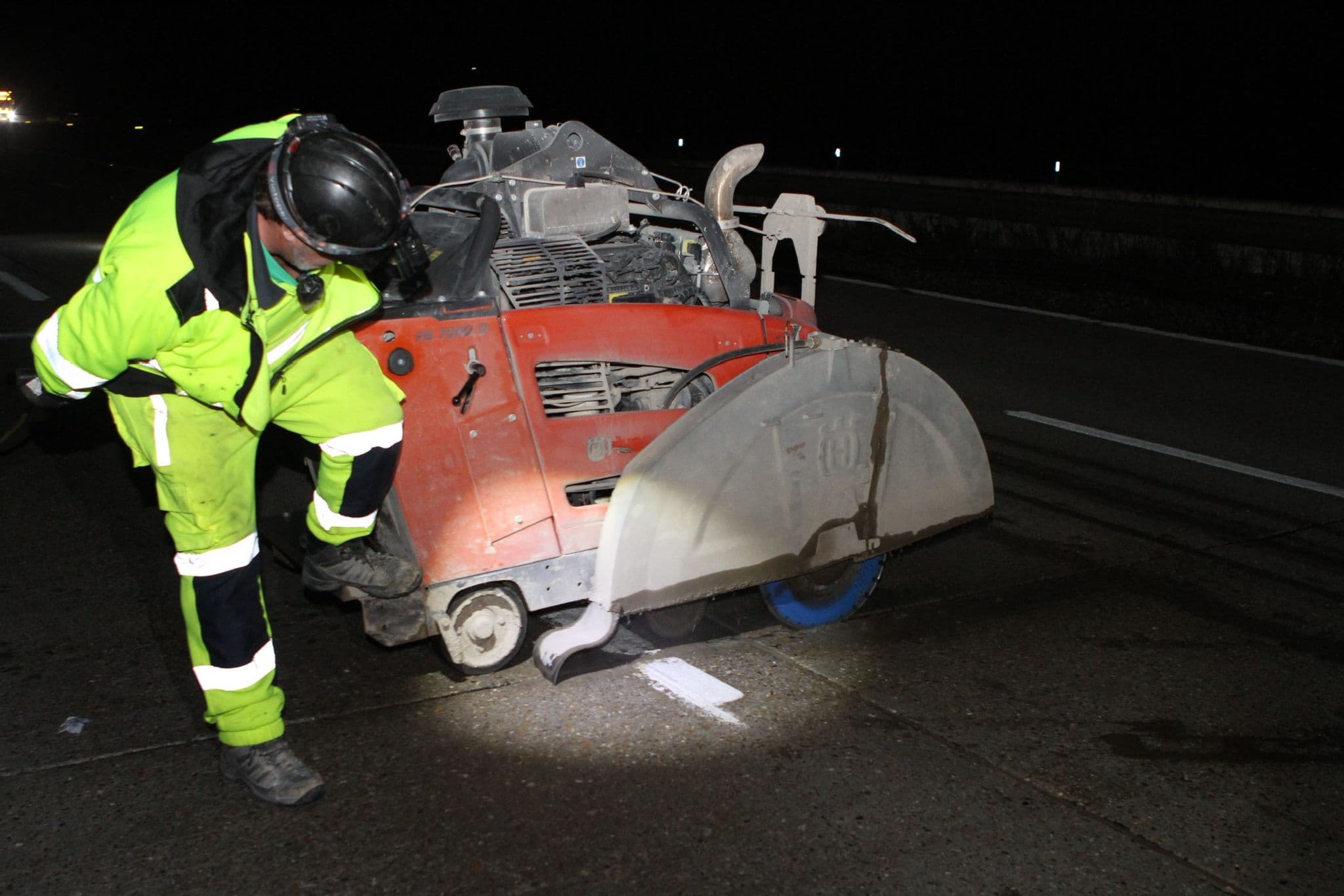 Concrete Cutting
What is floor sawing?
Read More »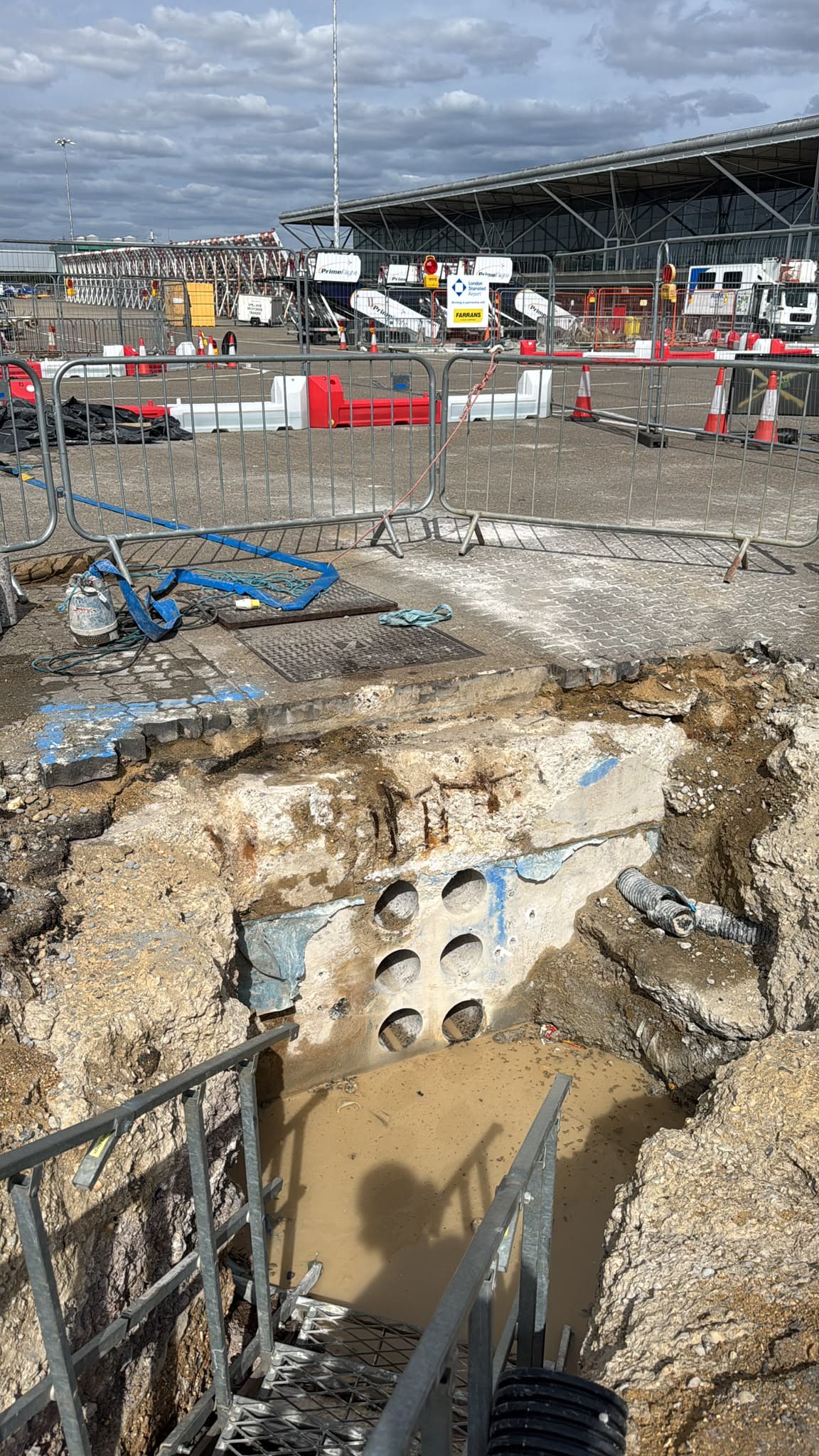 Concrete Cutting
Diamond Drilling Contractors in Kent
Read More »