
Shepherd and Sons Ltd
Concrete Cutting in Sussex
Concrete cutting in Sussex is shaped by two things that most counties do not have together. An international airport sitting inside the county boundary, and a working coastline. Gatwick is at Crawley in West Sussex. Newhaven and Shoreham are the two operating ports. Between them they account for most of what we are called into the county to cut.
At Shepherd and Sons we reach Sussex from our yard at Linton near Maidstone. From working with clients across the county, we've found it behaves as two working areas rather than one. East Sussex comes along the A21 and A272. West Sussex comes down the A23 and M23. Which route a job sits on changes the day more than the distance does.
Gatwick is the reason aviation dominates
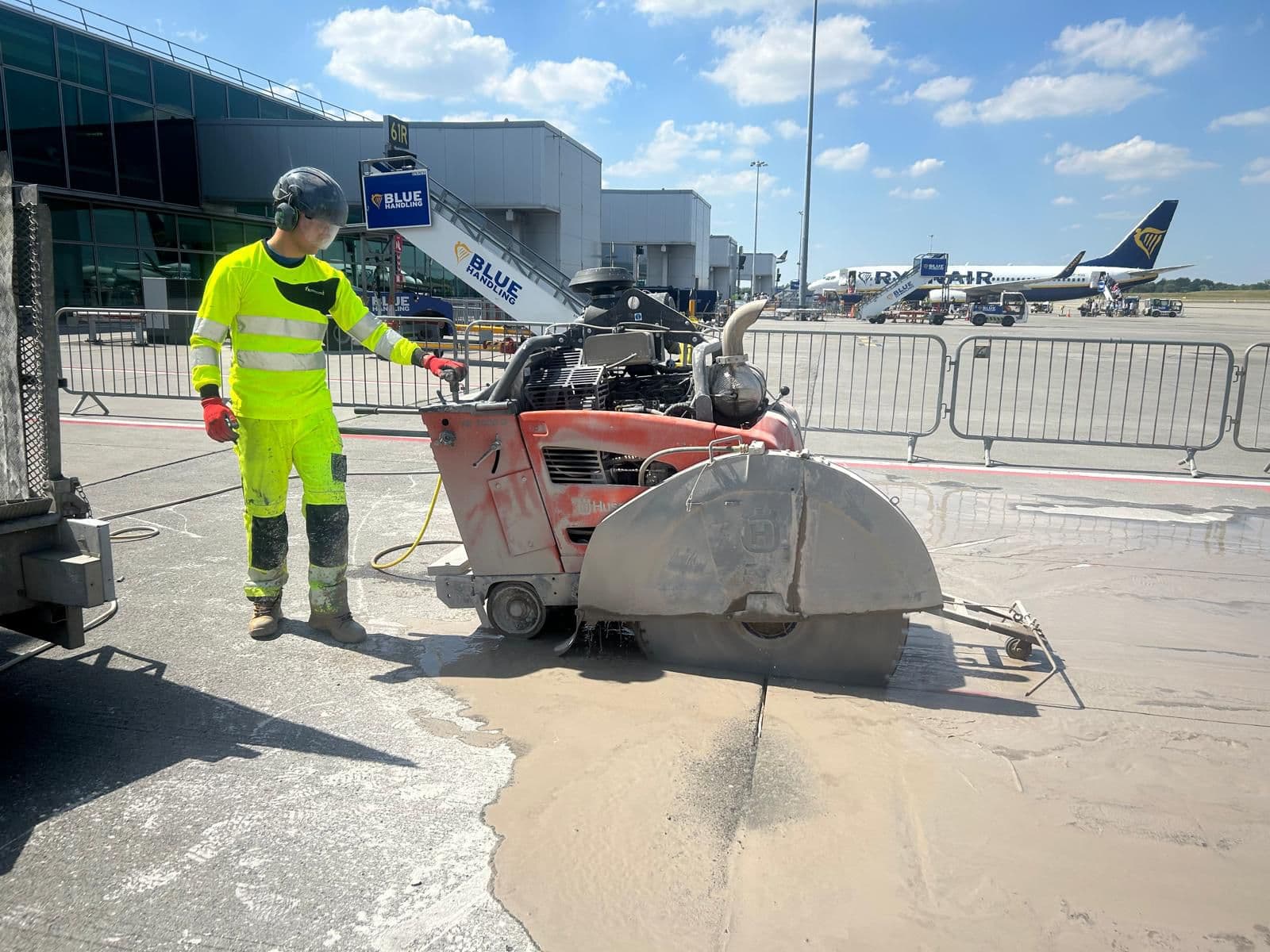
Gatwick is one of the seven former BAA airports we work across, as sole contractor for the British Airport Authority since 2008. It sits just inside West Sussex, which puts full airside discipline inside the county rather than beyond it.
Airside cutting is a different job from the same cut on a commercial site. The possession is fixed and does not move. The surface has to come back swept and free of foreign object debris. Every cut is planned around embedded services, because a runway carries fuel mains, airfield ground lighting circuits and drainage below the pavement.
Sometimes mechanical breaking is not permitted at all, which alongside a live fuel main it usually is not. The cut line is then formed as a row of overlapping cores and the sections lifted out. That is stitch drilling, and on airside work it is often the only sanctioned method.
Foreign object debris is the constraint that surprises people arriving from commercial sites. A fragment of concrete on a taxiway is not untidiness. It is a hazard to an engine, so the sweep at the end of the shift carries the same weight as the cut at the start. It also has to be programmed and resourced, not left to whoever is nearest the brush at 4am.
The habits that come from that work are what we bring to everything else in the county. There is more on how cutting at UK airports differs from ordinary pavement work.
The coast changes what the concrete has to survive
Newhaven and Shoreham bring port and marine-adjacent work, and coastal concrete has a problem inland concrete does not.
Salt. Water that gets into a cut on the Sussex coast is carrying chloride, and chloride attacks the reinforcement rather than the concrete around it. The steel corrodes, expands, and pushes the cover off from the inside.
That makes the reinstatement the part that decides how long a repair lasts, not the cut. A cut sealed properly keeps water out. A cut left open, or sealed with something that fails in a season, is a direct route to the bar.
Port hardstanding is also thicker than most people expect. It runs 250 to 400mm, because it is laid for the point loads of handling plant rather than for lorry axles. That is still inside a floor saw's range, but it is not the 150mm slab a general contractor may have priced for.
Access is the other coastal variable. A working port does not stop to suit a saw. The question that decides the programme is how much of the quay or the yard the operator will release, and for how long. That is agreed before mobilisation, not on the morning.
The A23 and M23 corridor
The corridor feeding Gatwick is the county's main artery, and it carries the familiar highway pattern. Night closures under Chapter 8, saw cutting for joint reforming and slab replacement, then crack chasing, overbanding and line marking once the surface is back.
The A27 along the south coast, and the A22, A24 and A26 inland, add the rest. Sussex has a lot of trunk road for its size, and a good deal of it is ageing.
Ageing surfacing is why the cutting is so often followed by crack chasing. A crack that is simply painted over reopens, because the movement that caused it has not gone anywhere. Chasing it out to a defined channel gives the sealant a reservoir with sound faces on both sides, and that is the difference between a repair that lasts a season and one that lasts.
The sequencing matters more than the individual operations. A joint that is sawn and left open overnight fills with water, and a wet joint face will not take a seal. It has to be dried again before anything can go into it, which means the drying is either inside the possession or it is a second visit. Programming the cut and the seal as one operation is what avoids that, and it is the single most common thing we are asked to put right on somebody else's work.
Structures, which Sussex asks for more than most
The one Sussex project on this site is the bridge jointing at Lyminster, near Arundel, delivered under Breheny Civil Engineering. That was jointing and saw cutting rather than cutting alone, so it is not a pure cutting reference. It is a fair illustration of the kind of work the county produces.
It needed two different sealants on one structure, because a bridge is not one condition throughout. Expansion joints take real seasonal movement. Surface saw cut joints take traffic and need a durable, level finish. The same logic governs where and how you cut a structure in the first place.
That is worth dwelling on, because it is where specifications most often go wrong. A single product chosen for the whole deck will be either too stiff for the expansion joints or too soft for the running surface. Matching the sealant to the movement each joint actually sees is the decision, and it has to be made before the saw arrives rather than after.
Where a section is beyond what a blade reaches from both faces, the answer is wire sawing rather than a bigger saw. Where the cut is vertical or overhead, it is wall sawing. On a structure that is already distressed, a continuous cut is chosen over percussive breaking for a specific reason. It puts no impact energy into concrete that is already failing.
What to check before appointing anyone
- Is the work airside, coastal or inland? Each has a different governing constraint.
- For coastal work, who is sealing the cut, and how soon after it is made?
- Has the slab been surveyed for embedded services, or is the depth assumed?
- Which route is the crew coming on, and does that match the start time you have asked for?
- Are operatives NVQ Level 2 with CSCS cards and Drilling and Sawing Association competence?
In our experience, deciding the reinstatement at the same time as the cut works better than treating it as a follow-on trade. On a coastal structure the seal is what the repair actually depends on. The cut is the quick part.
The fourth is worth asking out loud. A crew coming down the A23 and a crew coming down the A21 are working two different halves of the county, and a start time agreed without saying which one applies is a start time that will slip.
For concrete cutting across Sussex, from Gatwick to the coast, get in touch with our team.
Concrete Cutting in Sussex
- Concrete Cutting
Port Concrete Cutting in Kent
Read More » 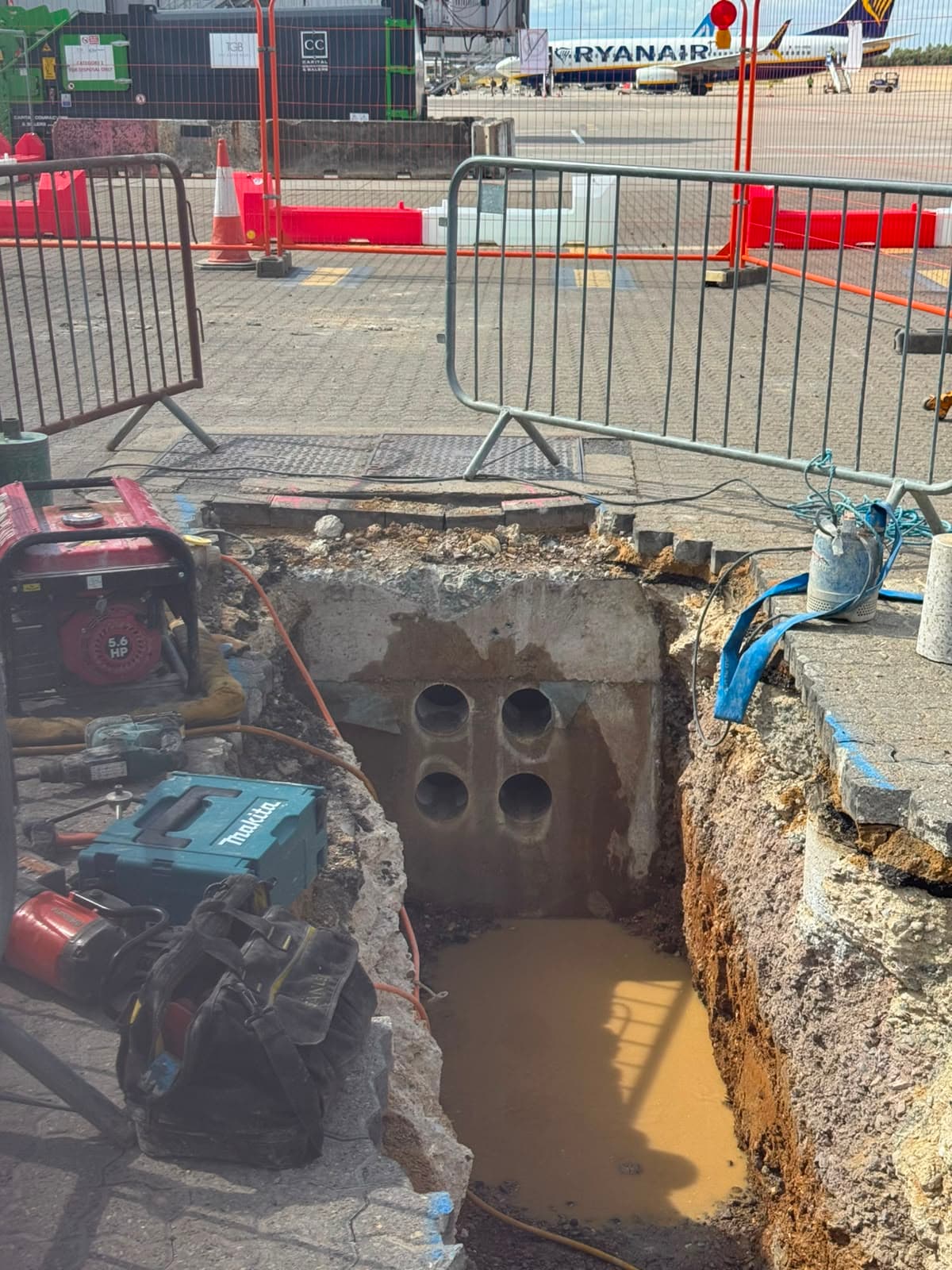 Concrete Cutting
What is Core Drilling?
Read More »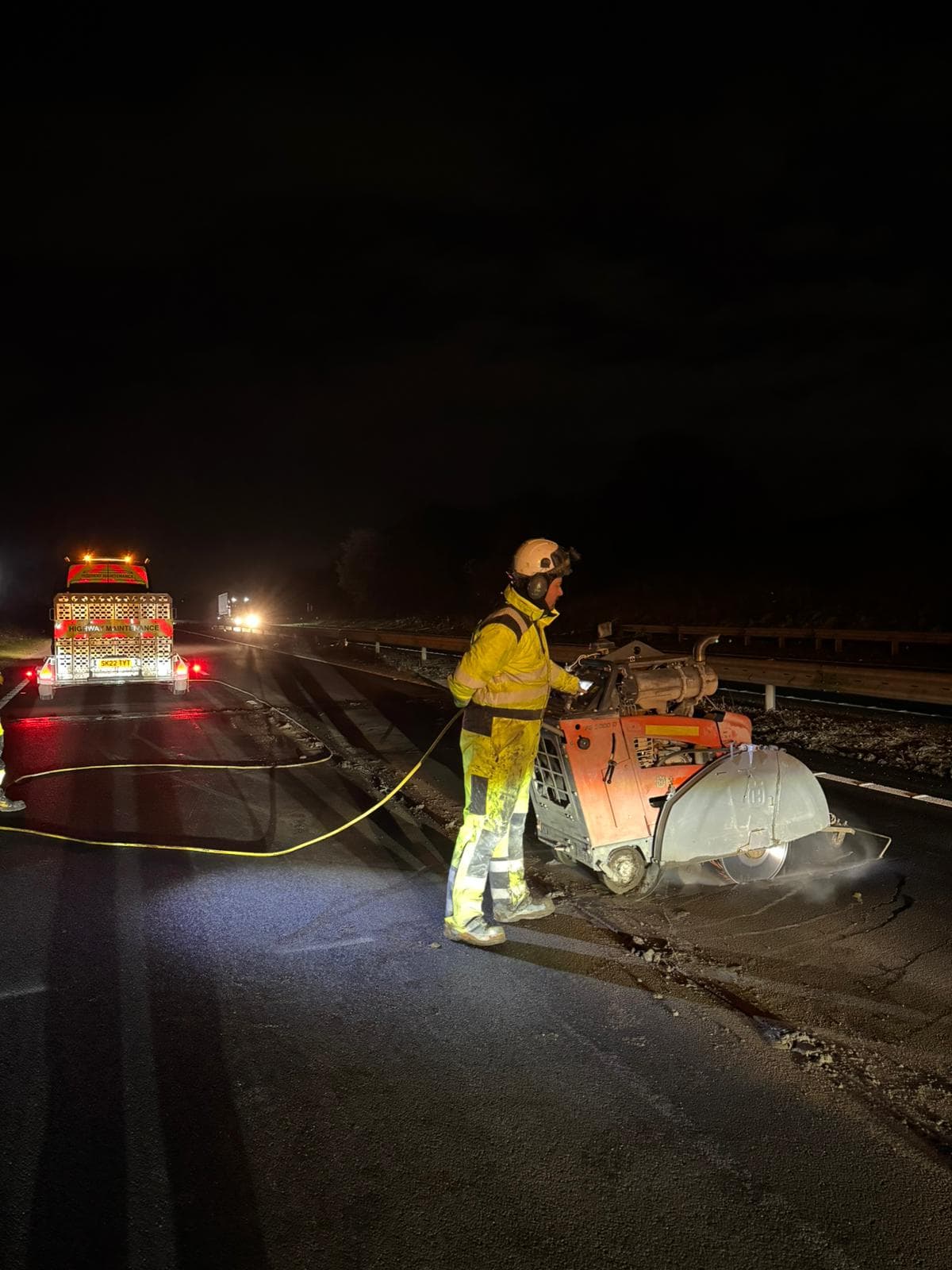 Concrete Cutting
Floor Sawing Services in Kent
Read More »- Concrete Cutting
Concrete Cutting in London
Read More »  Concrete Cutting
What is floor sawing?
Read More » Concrete Cutting
Diamond Drilling Contractors in Kent
Read More »