
Shepherd and Sons Ltd
What is floor sawing?
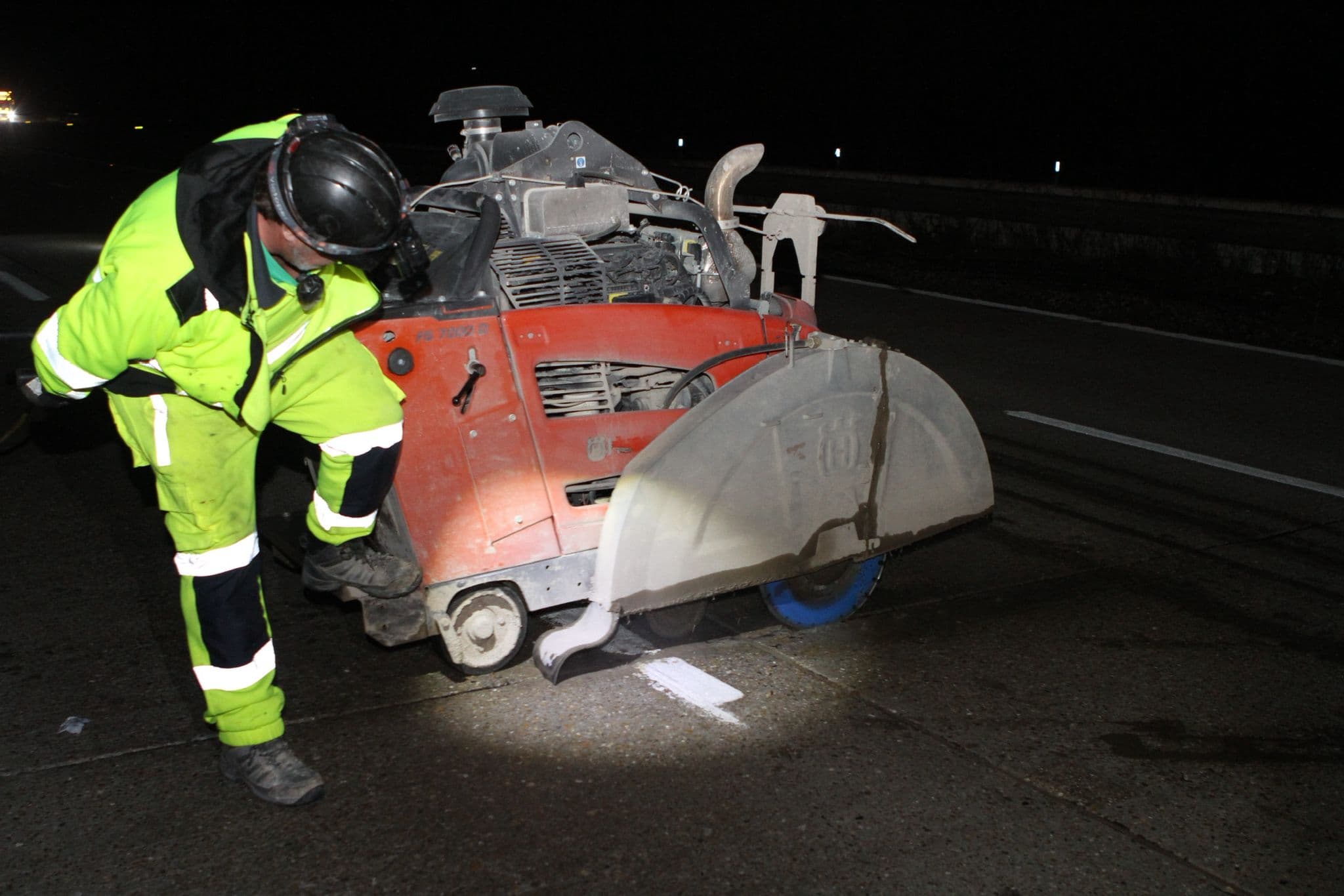
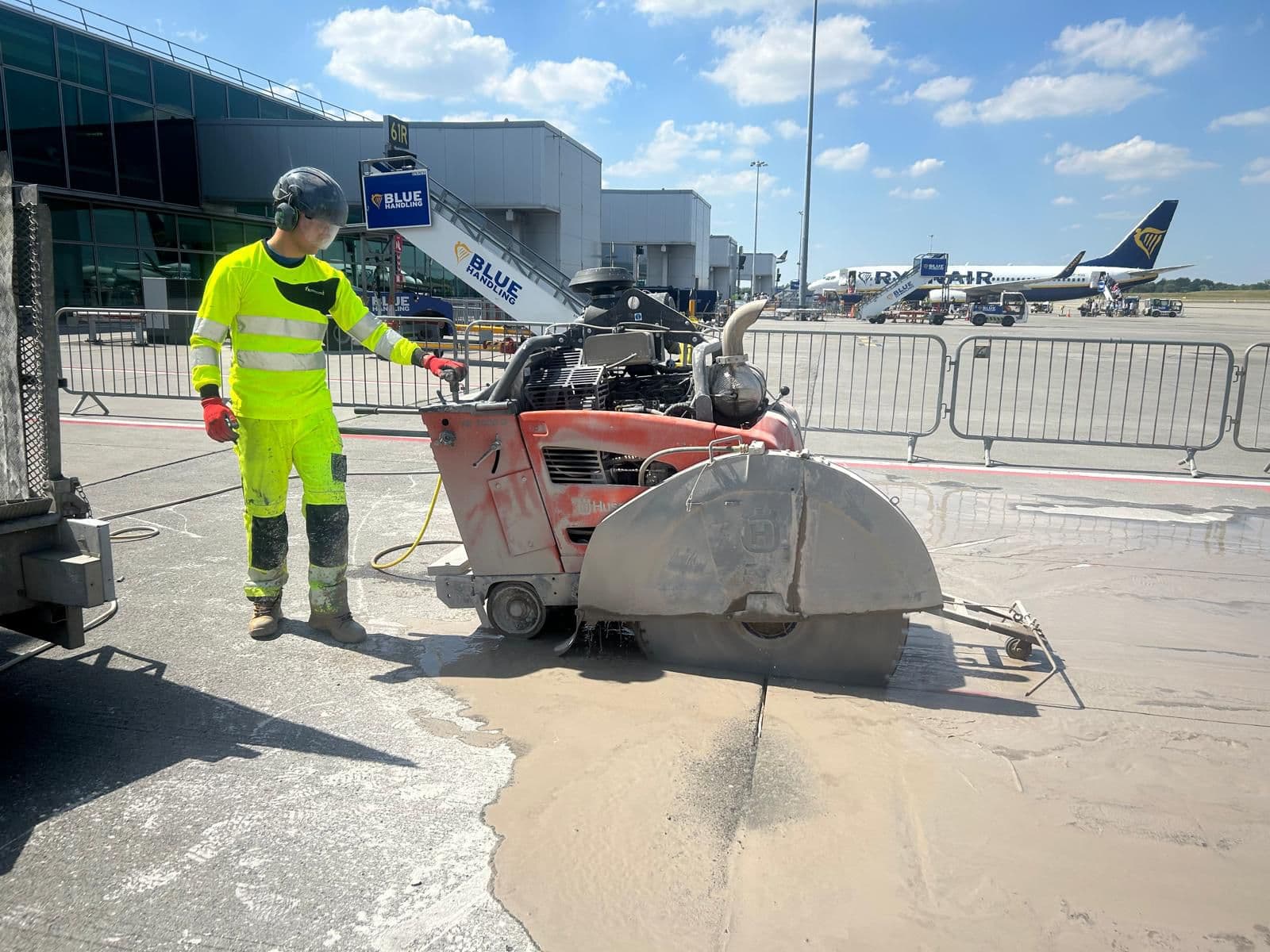
Floor sawing (also known as slab sawing) is a concrete cutting technique that uses a walk-behind saw fitted with a large diamond-tipped circular blade to cut horizontally through concrete floors, pavements and slabs. The blade rotates at high speed and grinds through the concrete as the operator advances the saw along a marked cut line. Depending on blade diameter and saw type, floor sawing can cut anywhere from 100mm to over 500mm deep, making it suitable for everything from expansion joint formation to full-depth slab removal. It’s the standard method for horizontal cuts in highway carriageways, airfield pavements, industrial floors, port hard standings and public sector concrete work.
At Shepherd and Sons, we deliver floor sawing as part of our concrete cutting service, with more than 40 years of experience across UK airfields, highways, ports and infrastructure. We’re based at Westerhill Farm in Kent, we hold SafeContractor and CHAS accreditation, and we’re members of the Extruded Sealant Association for the related joint sealing work that typically follows on from cutting. This article covers what floor sawing is, how it works, when it’s the right method, and what proper application involves.
How floor sawing works
Floor sawing uses the same fundamental principle as all diamond cutting: industrial diamonds bonded to the cutting edge grind through the concrete rather than fracturing it. The blade is mounted on a frame with drive wheels, an engine or motor, water feed, and a depth control mechanism. The operator walks the saw along the marked cut line, controlling the feed rate and cut depth as the blade advances through the slab.
Four things make floor sawing distinct from other concrete cutting techniques.
Horizontal orientation. The blade rotates in a vertical plane, cutting downwards into a horizontal slab. This makes it purpose-built for floor slabs, pavements, roads, aprons and any flat concrete surface. It’s the wrong tool for wall cuts or overhead work, where wall sawing or wire sawing takes over.
Blade sizes up to 1200mm+. Floor saws accept much larger blades than handheld cutting tools, which is what gives them their depth capability. Larger blades cut deeper but need more powerful drive units.
Walk-behind operation. The saw moves under its own power (self-propelled) or is pushed by the operator, at a controlled speed matched to the concrete strength and reinforcement.
Wet cutting as standard. Continuous water feed cools the diamond segments, suppresses dust at source, and lifts the concrete slurry clear of the cut. Dry cutting is possible for shallow work but wet cutting is the standard method for anything above about 50mm depth.
Depth capability in floor sawing
Cut depth is determined by the blade diameter and the saw’s clearance geometry. As a rough rule, the achievable cut depth is just under half the blade diameter, because the blade has to clear both the cut depth and the saw’s lower flange housing. Typical relationships:
- 500mm blade: roughly 180mm to 200mm cut depth
- 750mm blade: roughly 300mm to 350mm cut depth
- 900mm blade: roughly 360mm to 420mm cut depth
- 1000mm blade: roughly 400mm to 450mm cut depth
- 1200mm blade: roughly 500mm to 540mm cut depth
Our standard floor sawing kit gets us to 420mm cut depth, which handles the vast majority of UK highway carriageway, airfield pavement, port hard standing and industrial floor work. For deeper specialist cuts beyond conventional capacity, wire sawing or specialist deep-cut floor saws are the alternative. The blade-to-depth relationship and where each cutting method fits is covered in more detail in how deep can you cut concrete?, which walks through the practical depth limits.
Types of floor saw
Floor saws are grouped by power source, and each type suits a specific working environment.
Diesel floor saws. The standard for external work on highway, airfield, port and industrial yard sites. Diesel gives the torque needed for deep cuts through heavily reinforced concrete. Not suitable for internal work because of exhaust emissions.
Electric floor saws. Used internally and in enclosed environments where diesel emissions can’t be tolerated. Common in warehouses, food production facilities, hospitals, pharmaceutical plants and supermarket refit work. Power output is generally lower than diesel, so cuts are shallower or take longer per metre.
Petrol floor saws. Mid-range option for external work where a full diesel mobilisation isn’t economic. Common on smaller domestic and light commercial jobs.
Hydraulic floor saws. Heavy industrial applications where extreme cutting depth or unusual site power constraints rule out other options. Less common in general construction work.
In our experience, diesel floor sawing works better than electric for external highway and airfield cuts above 200mm depth because the torque delivered through the drive unit sustains the cut speed through heavy reinforcement, where an electric saw of equivalent blade size will slow significantly and reduce productivity per shift. That said, for internal warehouse floors and food-grade facilities, electric is the only sensible option regardless of what diesel could deliver.
When floor sawing is the right method
Five categories of work drive specification towards floor sawing.
Joint formation in fresh concrete. Contraction joints are cut into fresh concrete slabs within 12 to 24 hours of pouring, at a shallow depth (typically 25% of slab thickness) to control where the slab cracks as it cures. This is a specialist early-entry cutting operation with fine-tolerance depth control.
Full-depth slab isolation and removal. Cutting the perimeter of a damaged, contaminated or redundant section so it can be lifted out as a clean panel. This is where full depth concrete cutting is specified, and floor sawing is the standard method used for it.
Service trench cutting. Cutting two parallel lines to form a trench through concrete pavement for drainage, fuel mains, cable ducting or fibre-optic installation. The concrete between the cuts is broken out or lifted in sections, the trench is excavated to depth, the services are installed, and the concrete is reinstated.
Expansion joint formation and reformation. Cutting new expansion joints in existing pavements, or widening existing joints for reformation and resealing. Joint geometry is critical because the sealant that follows depends on it. The ESA Code of Practice Section 5.1 specifies joint slot faces should be within 10° of vertical, which is a cutting spec, not a sealing one.
Grooving and anti-skid cutting. Cutting shallow parallel grooves into runway or highway concrete to improve surface drainage and skid resistance. A specialist application using multi-blade floor saws.
What proper floor sawing involves
The mechanics of pushing a saw along a line look simple. The execution detail determines whether the cut delivers a job that works or one that has to be redone.
Pre-cut services survey. Before any cut is made, the slab is surveyed for embedded services. Live cables, fuel mains, post-tensioning tendons, water and gas pipes, and reinforcement layout all influence cut placement and method. On airside work, this means liaising with the operator’s services drawings and confirming live fuel main locations physically before cutting.
Setting out. Cut lines are surveyed and marked precisely with chalk lines or temporary marker paint. On airfield and highway work, tolerance is measured in millimetres because the cut has to align with existing slab geometry, joint patterns or service drawings.
Method statement and RAMS. Documented method statement covering blade specification, water feed, slurry management, section removal and edge protection. On live sites this includes traffic management or airside protocol around the cut zone.
Blade selection. The blade is matched to the concrete strength, reinforcement density and cut depth. Wider blades cut faster but shallower. Narrower blades cut deeper but slower. We’ve found that matching blade specification to the actual reinforcement type in the slab matters more than headline depth figures. A properly specified 400mm cut through heavily reinforced airfield concrete outperforms a theoretical 500mm capability that isn’t matched to the reinforcement.
Water and slurry management. Continuous water feed cools the blade and suppresses dust. Slurry is collected and removed before it dries and hardens on the surface. On highway, airside and port work, slurry containment matters because runoff into drainage or margins creates environmental compliance issues.
Controlled cutting. The operator advances the saw at a rate matched to the concrete strength and reinforcement. Pushing too fast glazes the diamonds and slows the cut. Cutting too slowly wears them prematurely. Multi-pass cutting is used for very deep cuts, with the depth increased on successive passes rather than attempted in one pass.
Section removal and clean-up. Cut sections are lifted by excavator, telehandler or vacuum lifting plant. Slurry is water-jetted and vacuum-extracted from the surface. Edges are cleaned ready for the next phase of work.
Wet cutting versus dry cutting
Almost all professional floor sawing is wet cutting. Water performs three functions: cooling the diamond segments, suppressing dust at source, and lifting the concrete slurry clear of the cut.
Dry cutting is used only in specific limited circumstances (shallow cuts, indoor demolition where water can’t be tolerated, or emergency work without water supply). It requires extraction ventilation, respiratory protection, and generates far more airborne silica dust than wet cutting. Under HSE guidance and the Control of Substances Hazardous to Health Regulations (COSHH), respirable crystalline silica exposure is tightly controlled, and wet cutting is the preferred method wherever practicable because it eliminates the dust hazard at source rather than managing it downstream.
Standards and compliance
Floor sawing in the UK is governed by:
- HSE guidance for diamond drilling and sawing operations
- The Drilling & Sawing Association (DSA) Code of Practice
- SHW Series 700 for highway pavement work
- CAA / ICAO / DIO standards for airfield applications
- CDM 2015 Regulations for construction projects
- BS EN 14188 series and ESA Code of Practice where floor sawing interfaces with joint sealing
- COSHH Regulations for silica dust control
Operator competence is governed by NVQ Level 2 in cutting and drilling, with operatives holding CSCS cards and supervisors holding SSSTS. For airside work, additional airside familiarisation and CAA-aligned method training is needed.
Sectors where floor sawing is specified
Aviation clients specify floor sawing on runway joint reformation, taxiway slab work, apron replacement programmes and airside civil pavement work. The combination of heavy reinforcement, embedded fuel services and closure-window discipline makes airport floor sawing some of the most technical work in the sector.
Highway authorities and Tier 1 contractors specify floor sawing on concrete carriageway joint reformation, slab replacement, drainage trenching and bridge deck work across the motorway and A-road network.
Port operators specify floor sawing for hard standing slab replacement, fuel handling area reinstatement and dockside service installation.
Public sector clients including councils, schools, hospitals, and government facilities specify floor sawing for depot floors, vehicle workshops, service yards and infrastructure projects.
We’ve delivered floor sawing work across these four sectors, with the largest volume in aviation and highway work.
Specifying floor sawing properly
A meaningful floor sawing specification will identify the slab thickness and reinforcement type, the cut linear metres and geometry, the required depth and width, the access constraints (internal versus external, live versus closed site), the services survey requirement, the saw type (diesel, electric, petrol), the water and slurry management approach, the section removal method, and the interface with any following work (joint sealing, concrete reinstatement, services installation).
If you’re specifying or commissioning floor sawing work, particularly where the sawing interfaces with joint sealing, embedded services or live operational sites, get in touch. We’ll assess the slab, the services, the access constraints and the follow-on works, and quote the full scope properly. You can see recent project work on our LinkedIn and Instagram.
If you are looking for the service rather than the explanation, we provide floor sawing services in Kent.
More on Concrete Cutting
 Concrete Cutting
Port Concrete Cutting in Kent
Read More »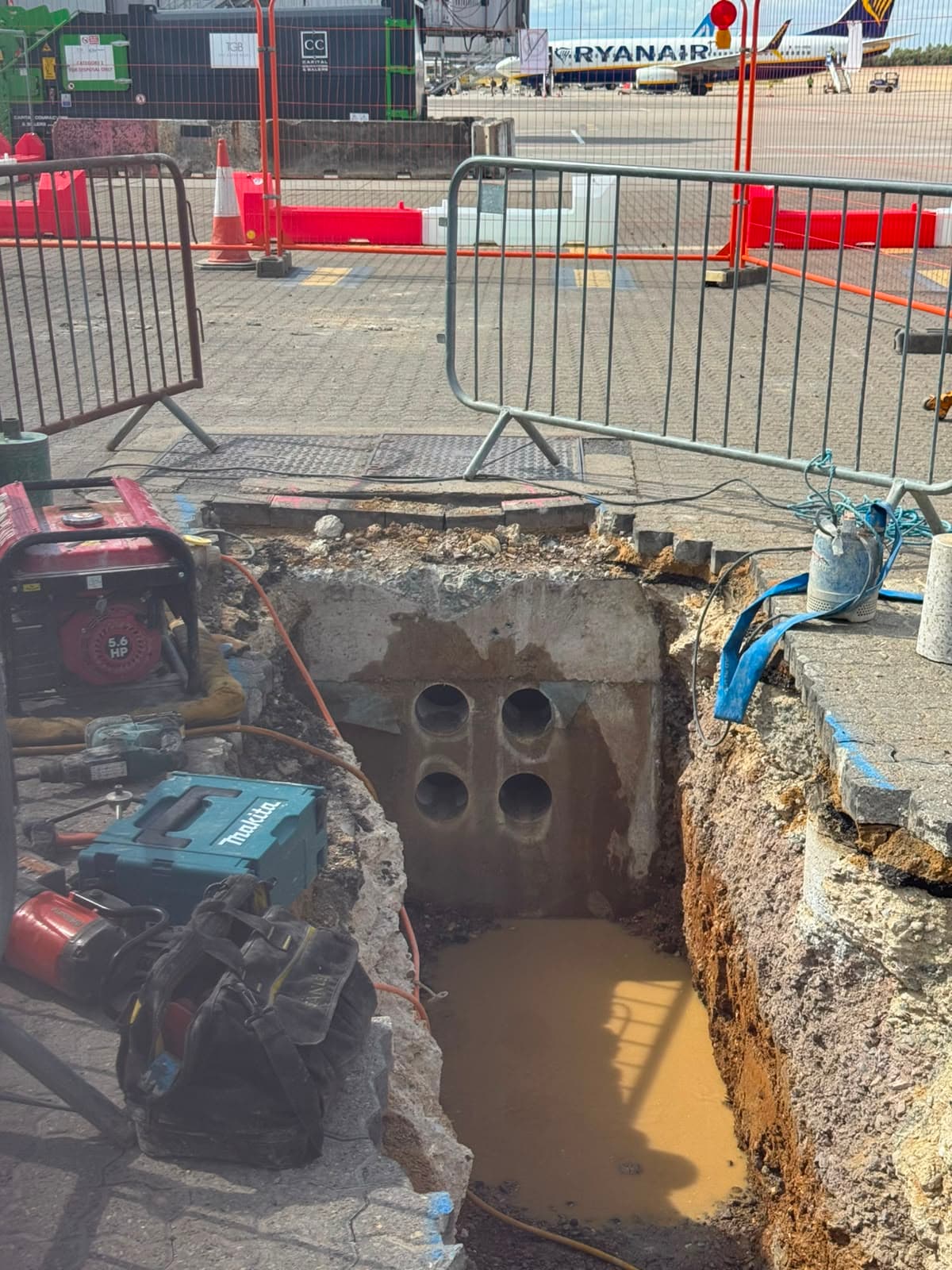 Concrete Cutting
What is Core Drilling?
Read More »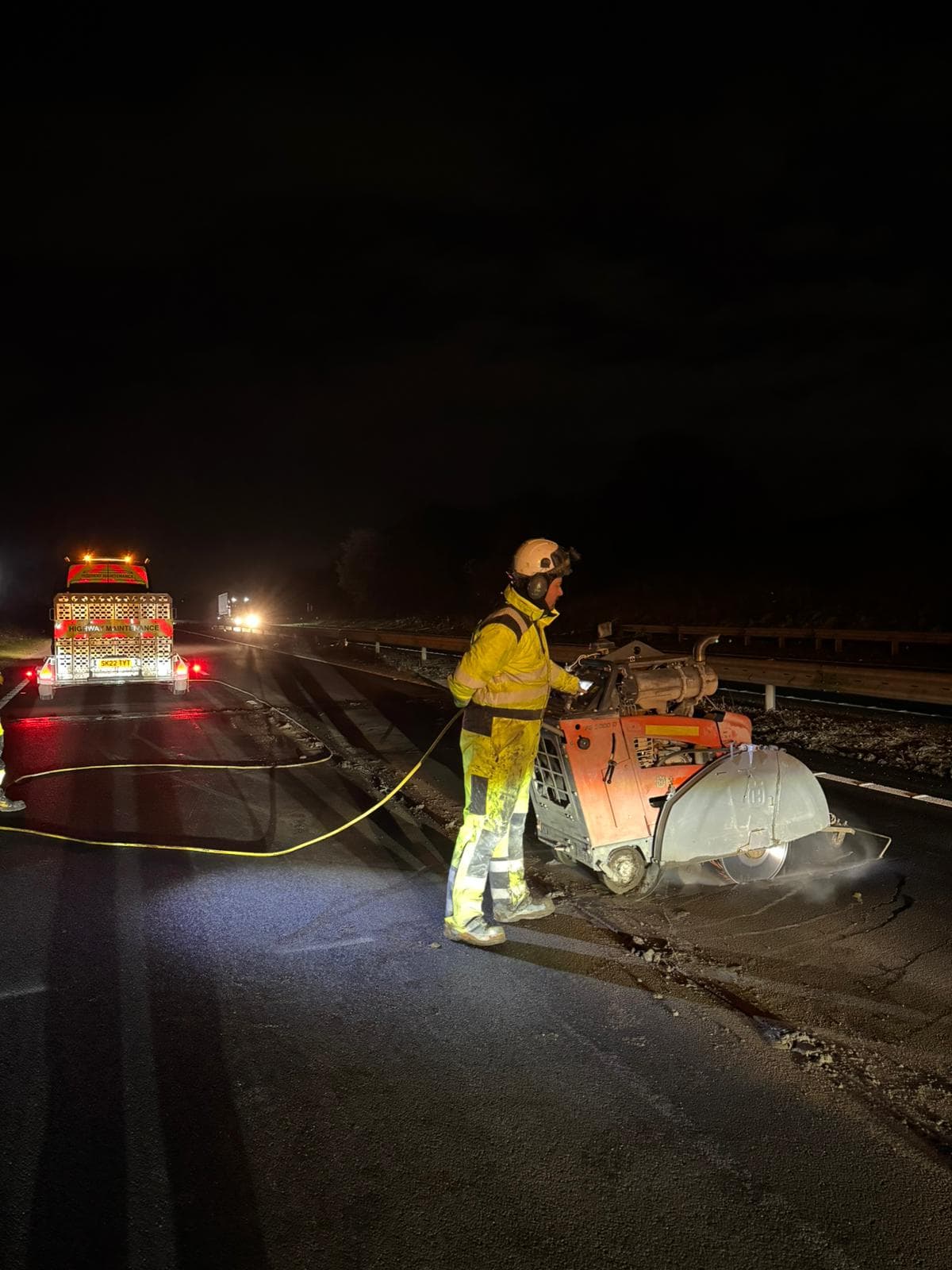 Concrete Cutting
Floor Sawing Services in Kent
Read More »- Concrete Cutting
Concrete Cutting in London
Read More »  Concrete Cutting
Diamond Drilling Contractors in Kent
Read More » Concrete Cutting
What is concrete cutting?
Read More »