
Shepherd and Sons Ltd
Diamond Drilling Contractors in Kent
By Jordan Shepherd, Director. Published , updated .
Diamond drilling cuts accurate circular holes through concrete, masonry and reinforced concrete using a hollow diamond-tipped barrel. The question that decides a drilling job is almost never how deep. It is how wide, and what the hole is for. A 12mm anchor hole and a 600mm service penetration are the same technique doing entirely different jobs.
At Shepherd and Sons we are based at Little Westerhill Farm in Linton, near Maidstone. Drilling is the service we are called on most often at short notice across Kent. From working with clients on the county's ports, highways and public sector estate, we've found the drilling itself is straightforward. Knowing what is inside the concrete first is the job.
What the diameter is actually for
Diameters run from around 10mm to over 1000mm, and the size tells you what the hole is doing.
- Small diameter, roughly 10 to 50mm: anchor and fixing holes, conduit, resin anchors, balustrade and gantry fixings.
- Mid range, roughly 50 to 200mm: service penetrations for drainage, cable and ventilation through slabs and walls.
- 100 and 150mm specifically: test cores taken for compressive strength, and for checking carbonation and chloride content.
- Large diameter, 300mm and above: manhole and shaft formation, and coring out seating pots for airfield lighting.
Depth is rarely the constraint, because barrels extend sequentially as the hole gets deeper. That is what separates drilling from sawing, where depth is capped by blade diameter. What limits a drilling job in practice is where you can stand and how the rig is anchored.
Knowing what is in the concrete before you start
Almost every drilling problem we are called to put right began with a hole drilled on the strength of a drawing.
Kent's public sector estate is a good illustration. Depot buildings, schools and workshops have often been altered several times, and the as-built record does not always follow the alteration. Conduit gets rerouted, drainage gets added, and a slab that was 200mm on paper turns out to carry a duct exactly where the new fixing is meant to go.
Scanning the element first is the answer, and it takes a fraction of the time the consequences do. It shows the reinforcement, so a hole can be positioned between bars rather than through one. It shows embedded services, which is the difference between a hole and an incident. On a post-tensioned slab it is not optional at all, because a severed tendon is a structural failure rather than a repair.
The output that matters is a marked-up surface. Positions set out on the concrete itself, agreed before the rig is anchored, so that what is drilled is what was designed.
Coring for information, not just for holes
Not every core is cut to make a hole. On an existing structure, cores are often taken to find out what the concrete actually is.
A test core goes away for compressive strength testing, and 100mm or 150mm diameter is the usual size. The same core can show carbonation depth, chloride content and whether the aggregate matches the records.
On the Kent coast the chloride result is frequently the one that decides what happens next. Salt attacks the reinforcement rather than the concrete around it. The steel corrodes, expands, and pushes the cover off from the inside, so a chloride figure is really a prediction about the next ten years.
The hole left behind still has to be made good. On a structural element that reinstatement is part of the job rather than an afterthought, and it should be priced with the coring.
When a line of cores replaces a saw cut
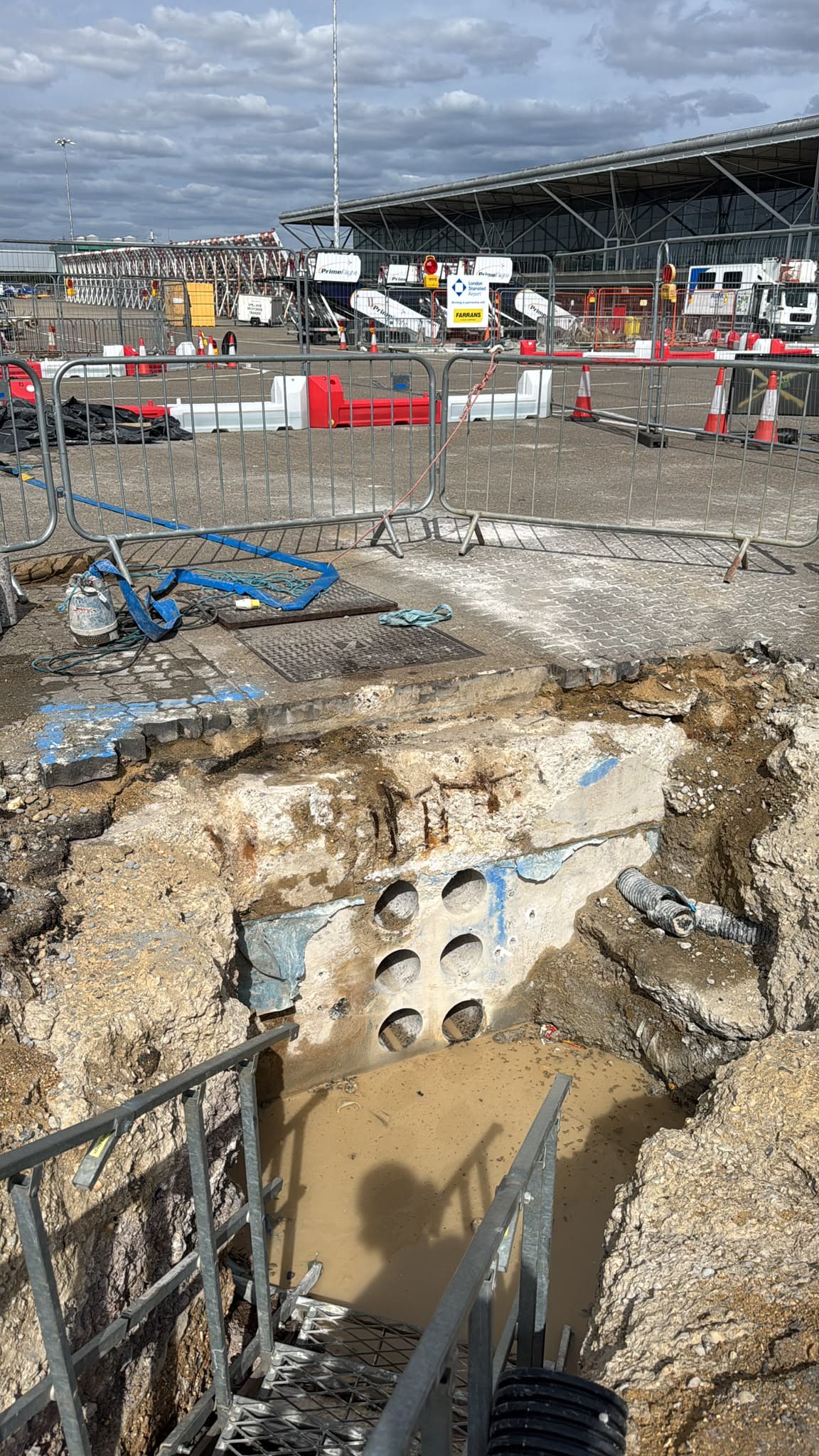
Where mechanical breaking is not permitted at all, the cut line is formed as a row of overlapping cores and the section lifted clear. That is stitch drilling.
It leaves the surrounding concrete undisturbed, which is the whole point on an element still carrying load. It is slower than breaking and it is often the only method a structural engineer will sign.
Alongside a live high-pressure aviation fuel main it is the standard approach. There is no percussive energy going into the ground, and the work can be stopped and made safe at any point.
In our experience, agreeing whether stitch drilling is required before mobilising works better than deciding on site. It changes the plant, the programme and the price by a large margin. A job priced as sawing and delivered as stitch drilling is a job that has already gone wrong.
Anchoring the rig, which decides more than people expect
A drilling rig has to be held to the surface, and there are three ways to do it.
A vacuum base is quick, but it needs a smooth, sound, non-porous surface to hold on. Airfield and highway concrete with a brushed or grooved finish does not reliably give one, and a seal that creeps mid-core binds the barrel.
A bolt-down base costs the time it takes to set anchors and buys certainty. On a surface that has to be handed back serviceable, that is usually the right trade.
A wedge or strut arrangement is the answer where neither works, typically overhead or in a confined shaft.
Soffit and overhead drilling inverts the water problem as well. Slurry runs back down the barrel toward the operator, so collection has to be arranged at the hole rather than below it. In an occupied building that is not a comfort issue. It is what stops an escape into the finished floor underneath, which routinely costs more than the opening did.
The Kent work this actually covers
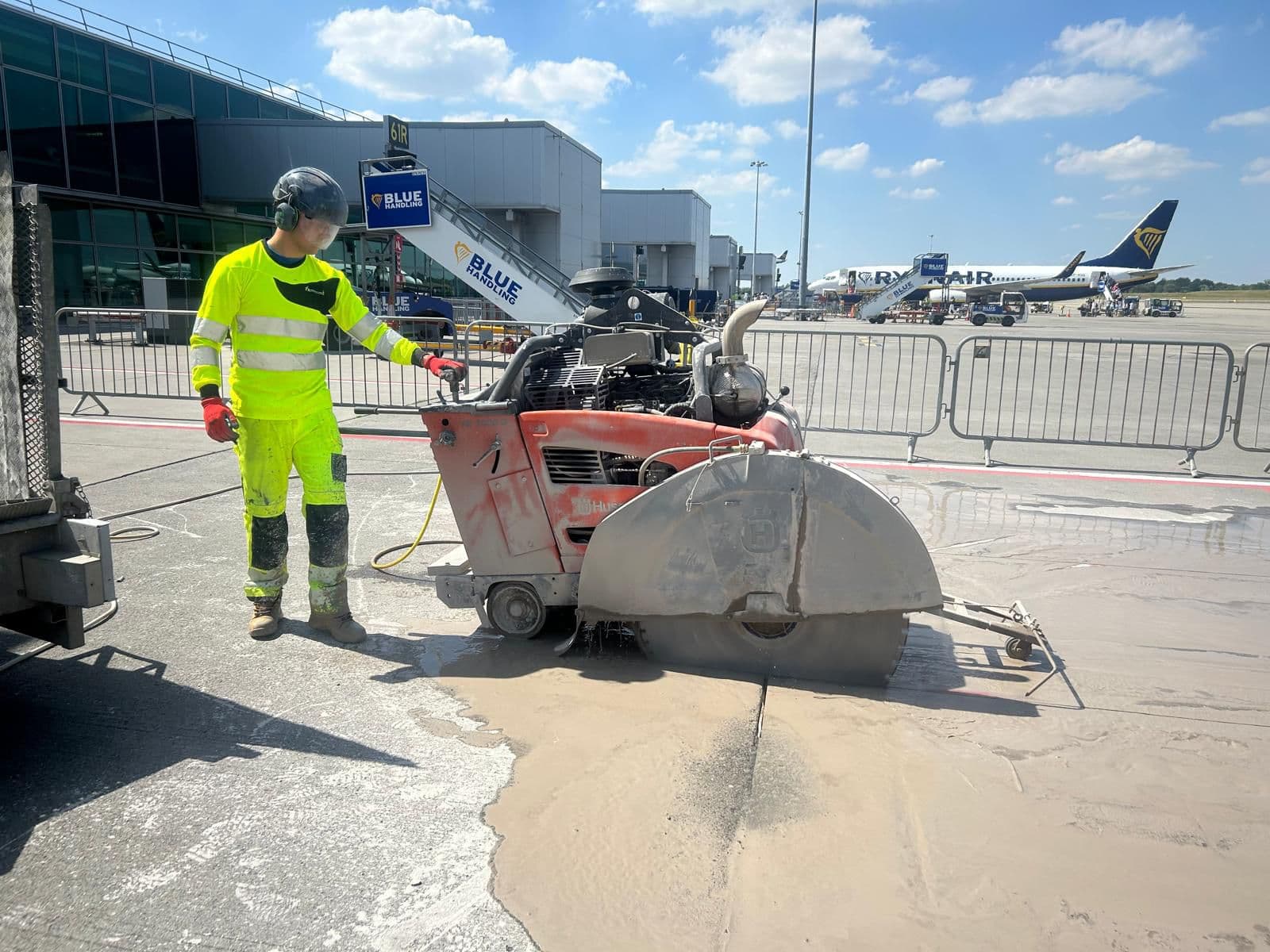
Ports first. Sheerness, Ramsgate and Dover bring heavy-duty hardstanding and marine-adjacent structures. Coring is used there both to form penetrations and to assess concrete that has been in a salt environment for decades.
Highway work brings drilling for gantry and sign foundations, drainage connections and dowel holes for joint repair, generally under night possession.
Aviation brings the tightest tolerances. We have been sole contractor for the British Airport Authority since 2008, across all seven former BAA airports. Airfield coring is measured in millimetres against fitting positions.
Public sector work fills the rest: penetrations through depot and school buildings, plant openings, and structural alterations in buildings that stay in use.
What to check before appointing anyone
- Has the element been scanned, or is the position coming off a drawing?
- Is there a permit to cut reinforcement, and who signs it?
- How is the rig anchored, and has the substrate been checked for it?
- Where is the water going, and what is underneath?
- Are operatives NVQ Level 2 in cutting and drilling, with CSCS cards and Drilling and Sawing Association competence?
The second question is the one people forget. Cutting a bar is sometimes acceptable and sometimes not. That is a decision for the structure's engineer rather than for the person holding the drill, and it needs to exist in writing before the barrel goes in. There is more on how diamond drilling works and on core drilling specifically.
The last two separate contractors quickly. A firm that has not asked where the water is going has not thought about the floor below the one it is standing on.
For diamond drilling anywhere in Kent, get in touch with our team.
More on Concrete Cutting
 Concrete Cutting
Port Concrete Cutting in Kent
Read More »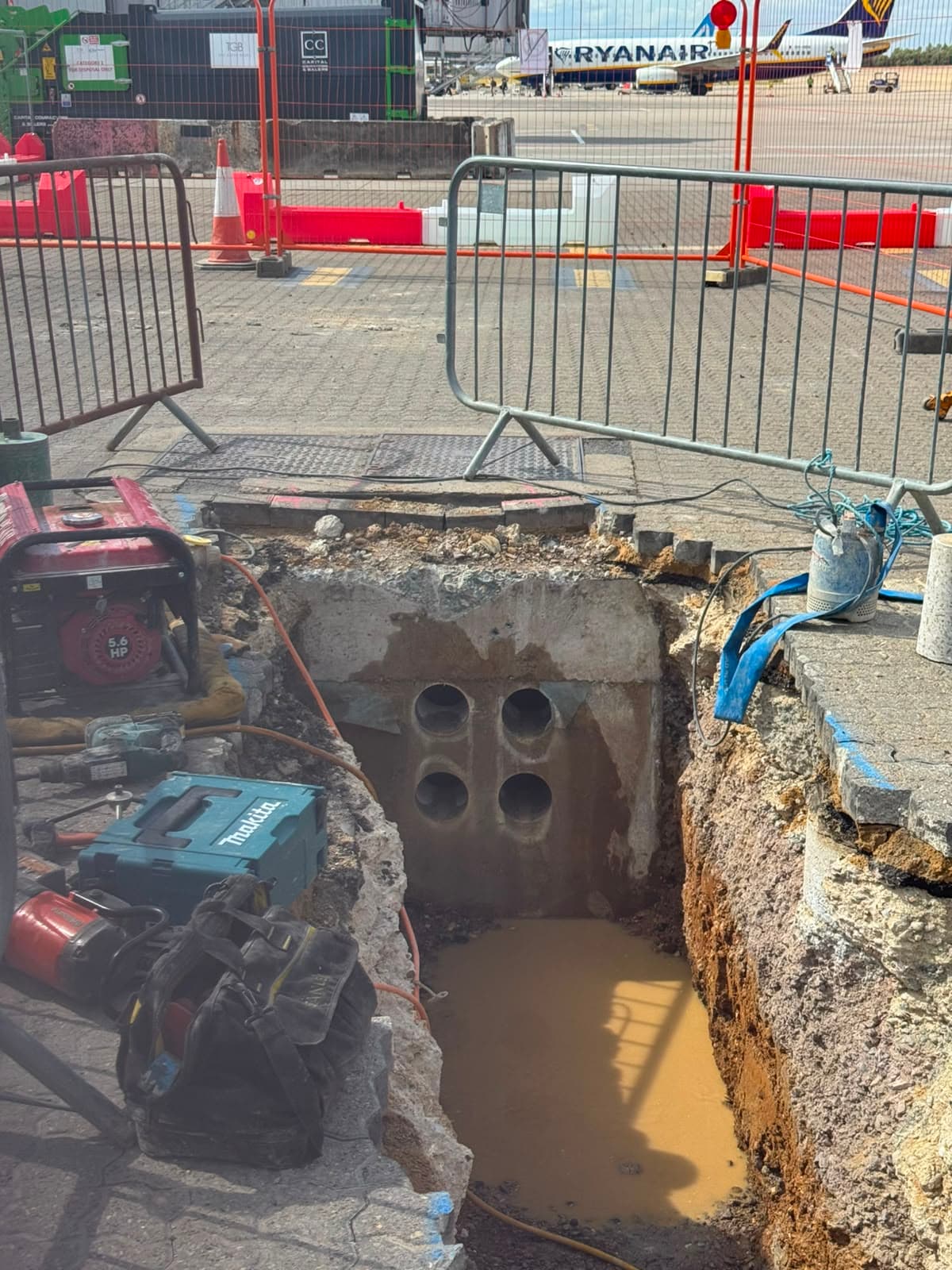 Concrete Cutting
What is Core Drilling?
Read More » Concrete Cutting
Floor Sawing Services in Kent
Read More »- Concrete Cutting
Concrete Cutting in London
Read More » 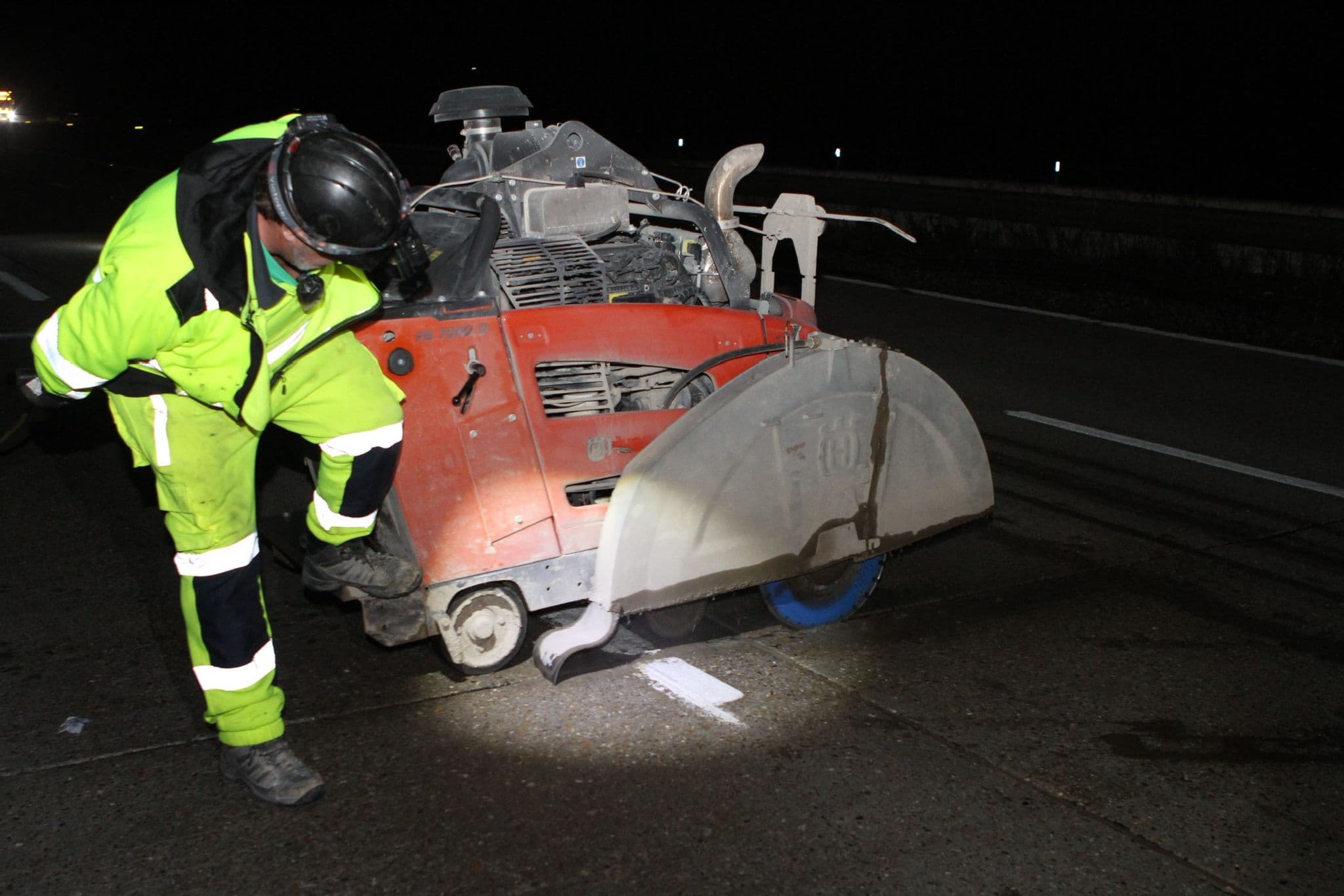 Concrete Cutting
What is floor sawing?
Read More » Concrete Cutting
What is concrete cutting?
Read More »