
Shepherd and Sons Ltd
Floor Sawing Services in Kent
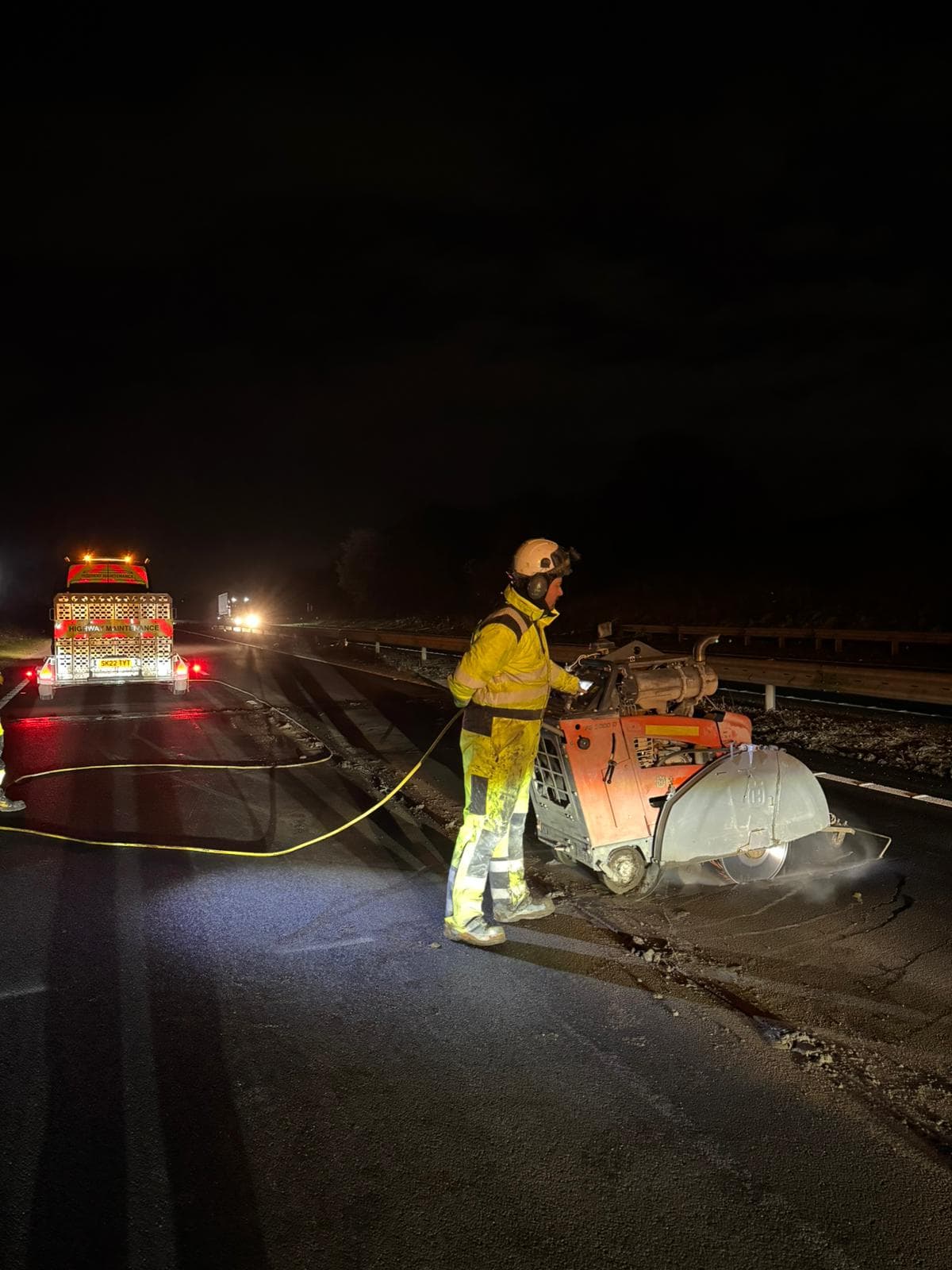
Floor sawing is the horizontal cutting of concrete and asphalt with a diamond blade on a wheeled or self-propelled saw. In Kent most of it happens at night, on concrete carriageway, inside a possession that is shorter than it looks on paper. The cut itself is rarely the constraint. The window is.
At Shepherd and Sons we work from our yard at Linton near Maidstone, which puts the M20 and the M2 within easy reach. From working with clients on the county's trunk roads, we've found the thing worth explaining is not how a saw works. It is what five and a half hours actually buys you.
Why a concrete carriageway needs sawing at all
A concrete road is a run of slabs, not a continuous surface. The joints between them are designed to open and close as the concrete expands and contracts with temperature.
The sealant in those joints has a service life measurably shorter than the concrete itself. It hardens, it debonds, or traffic simply ploughs it out.
Once it has gone, water reaches the sub-base through the joint. The support under the slab edge softens, the edges begin to spall, and what started as a maintenance item becomes a structural one.
Reforming the joint is the fix. The old sealant is removed completely, the reservoir is sawn back to a consistent width and depth, and a new seal goes in. The sawing is what gives the new sealant a defined shape to move in.
What a night possession actually gives you
The clearest example we can point at is the M20 between junctions 8 and 9, coastbound, covering roughly 20 kilometres of concrete carriageway.
The window was 10pm to 3:30am. That is five and a half hours on paper.
Traffic management goes in and comes out inside that window, so the productive part is shorter again. Every operation then has to be sequenced so that nothing is left open when the road reopens. A joint that has been sawn but not sealed is not a state you can hand back.
Across 20 night shifts that produced 23,304 linear metres of reformed and resealed joint. The arithmetic is what makes a job of that size a programme rather than a series of visits. A nightly rate has to be set and then held. A night that under-delivers is recovered from a later one, and there are only so many later ones.
It also explains why the sawing is not the thing to price against. Cutting 1,200 metres of joint in a night is comfortably achievable. Cutting only as much as can also be ploughed out, dried, blasted, backed and sealed inside the same window is a materially smaller number, and that is the one the programme runs on.
That same stretch is where Operation Brock is deployed when cross-Channel traffic backs up, with the contraflow running between junctions 8 and 9. Planning highway work in Kent means planning around a road that periodically changes shape, which is a genuinely local constraint.
The six steps, and why sawing is only one of them
Reforming a joint properly is a sequence, and the sawing sits in the middle of it.
- Ploughing out removes the old sealant completely rather than skimming it, because new material only bonds to sound concrete.
- Sawing reforms the reservoir to a consistent width and depth.
- Drying is a step rather than a pause. A joint that looks dry can hold enough moisture to break the bond.
- Grit blasting takes the faces back to clean concrete.
- Caulking sets the backer at the right depth, so the sealant bonds on two faces and is free on the third.
- Sealing is the last five minutes of a five-step preparation.
In our experience, programming the sawing and the sealing as one operation works better than treating them as two trades. A sawn joint left open overnight fills with water. It then has to be dried again before anything can go into it, so splitting the work across contractors simply doubles the drying.
Depth, and where a floor saw stops
Depth follows blade diameter, at roughly just under half. Our working maximum is 420mm, and that figure holds for concrete and asphalt alike. The limit is blade diameter rather than engine power.
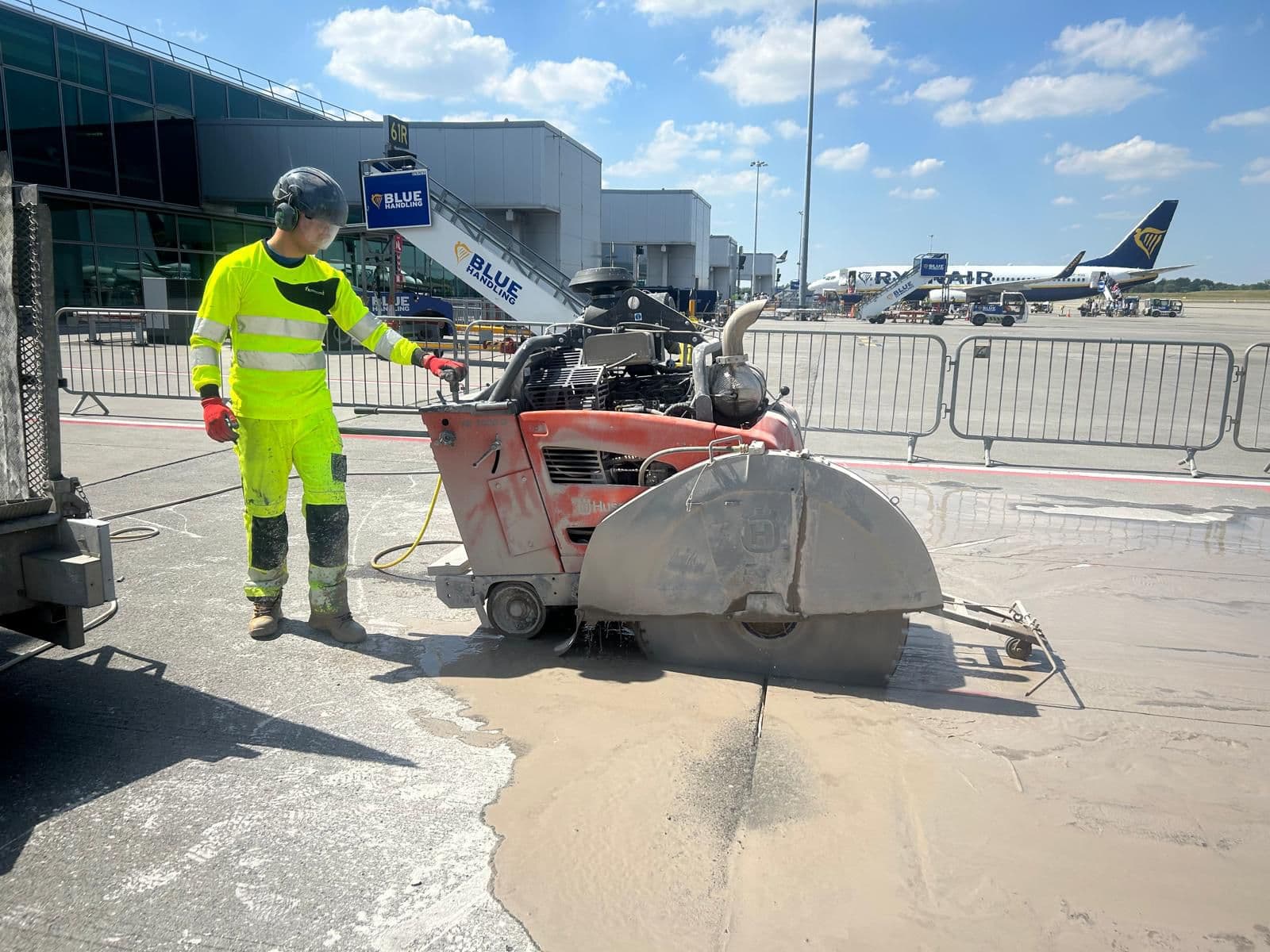
Set that against Kent's slabs and it covers nearly everything. Highway concrete runs 200 to 350mm. Port hardstanding at Sheerness, Ramsgate and Dover runs 250 to 400mm. Airfield taxiways and aprons run 300 to 500mm. That last one is the only category where the top end goes past a floor saw in a single pass.
Past that, the job becomes wire sawing or wall sawing instead. The same is true where the cut has to run in a plane a floor saw cannot reach. How floor sawing works is the same everywhere; what changes is what you are cutting into.
Worth saying plainly, because it comes up in tenders: a saw quoted as cutting deeper than about 420mm in one pass is not a floor saw. It is a different method under a familiar name, and it carries a different rate, a different crew and a different set of site requirements. Comparing the two on a per-metre basis is comparing nothing useful.
Reinforcement changes the rate, not just the blade
Most Kent highway slabs are reinforced, and heavy-duty concrete is usually laid in bays with dowel bars across the joints.
A dowel is a solid round bar sitting exactly where a joint cut wants to go. Hitting one unexpectedly slows the cut, consumes segments and can pull a blade off line. It also costs blade life, which on a 20 kilometre programme is a real line in the cost rather than a rounding error.
So the joint and dowel layout has to be established before cutting rather than discovered during it. On a night possession, a surprise costs the shift.
The slurry question is the other one that gets settled in advance. Sawing is a wet process, because water cools the blade, flushes the kerf and keeps respirable silica down. The by-product is an alkaline slurry that cannot go into a highway gully. Vacuum recovery at the blade and an agreed collection route are part of the method statement, not a detail for the night itself.
What to check before appointing anyone
- What is the actual possession window, and does it include traffic management in and out?
- What nightly rate is being committed to, and what is the recovery plan for a lost night?
- Is the sealing programmed with the sawing, or is it a separate appointment?
- Where is the slurry going, and has a disposal route been agreed?
- Are operatives NVQ Level 2 in cutting and drilling, with CSCS cards and Drilling and Sawing Association competence?
The first two decide whether a programme is real. A quote built on a five and a half hour window is a quote that will overrun on night one, unless it has allowed for traffic management going in and coming out inside that window.
The third is the one that quietly costs money. Sawing and sealing booked as two appointments means the joint is opened on one visit and sealed on another, with a night of weather in between, and the drying has to be paid for twice.
More on Concrete Cutting
 Concrete Cutting
Port Concrete Cutting in Kent
Read More » Concrete Cutting
What is Core Drilling?
Read More »- Concrete Cutting
Concrete Cutting in London
Read More » 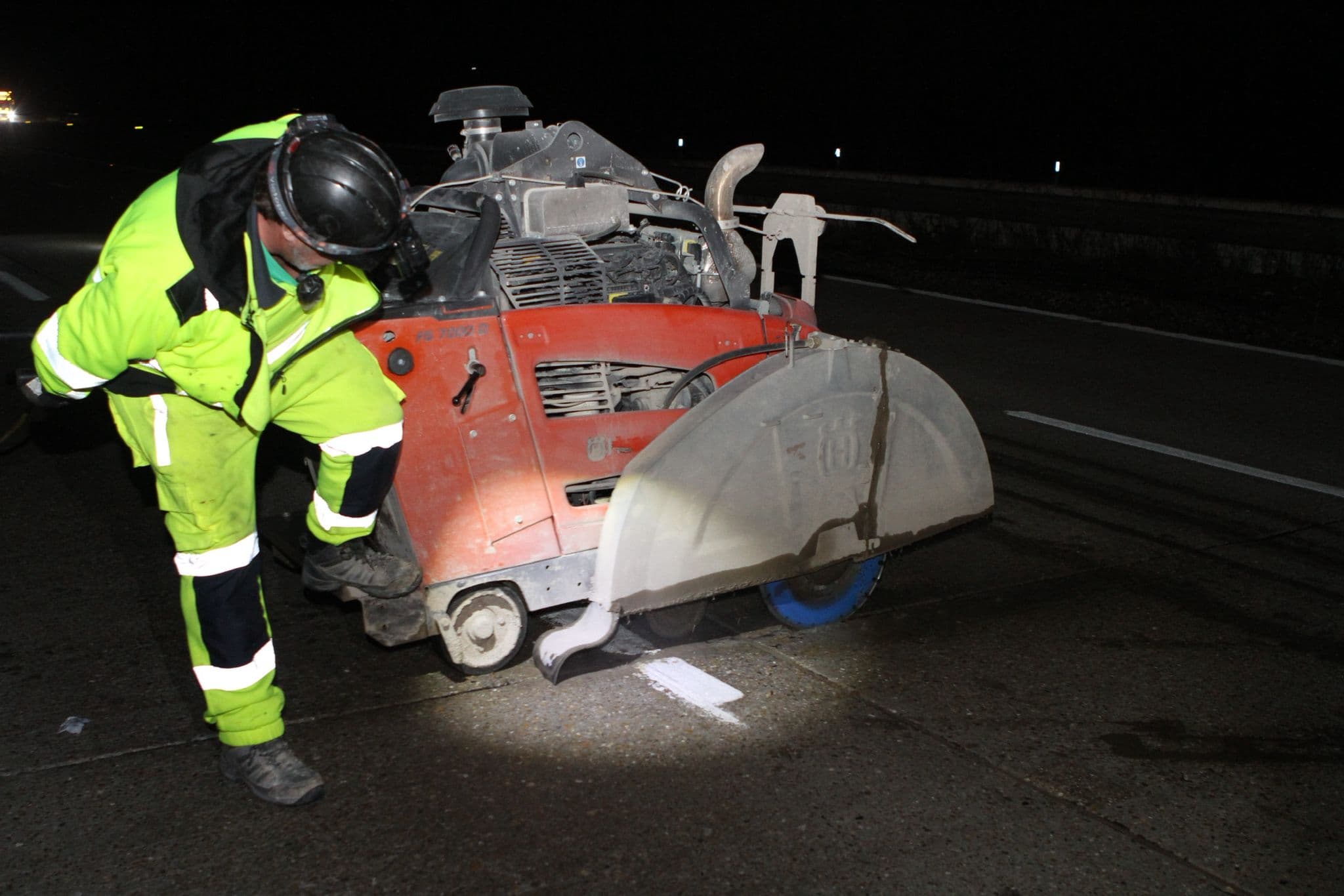 Concrete Cutting
What is floor sawing?
Read More » Concrete Cutting
Diamond Drilling Contractors in Kent
Read More »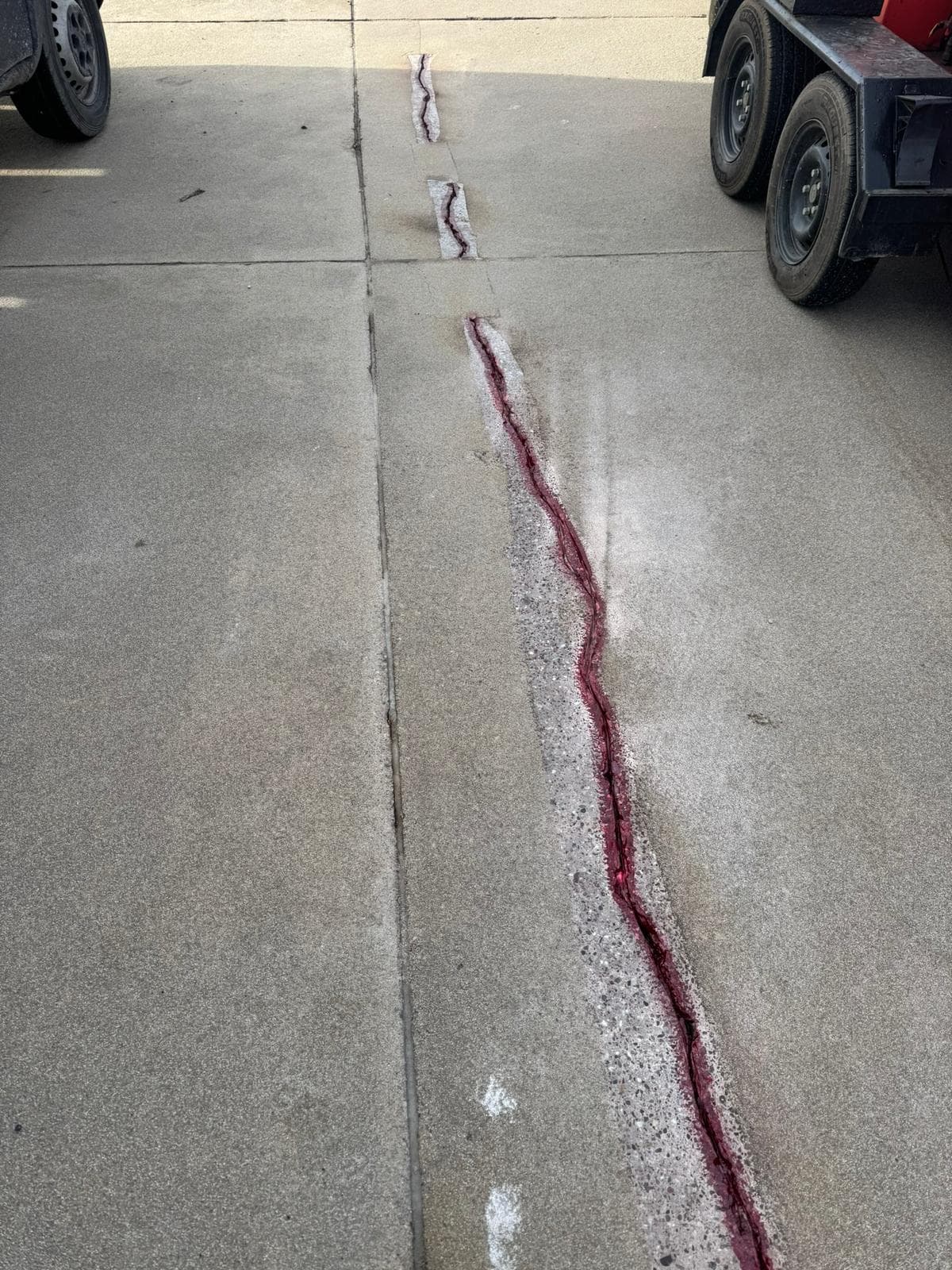 Concrete Cutting
What is concrete cutting?
Read More »