
Shepherd and Sons Ltd
Concrete Cutting in London
London is not one working environment. It is dozens, and the method changes with them. A basement in the City, a podium deck in Southwark, a night possession on a borough road, the airside edge of Heathrow. Four different jobs that happen to involve cutting concrete. Choosing the wrong technique for the constraint is what turns a two-night job into a week.
At Shepherd and Sons we have completed more than 300 cutting and drilling projects across the UK in the past six years. London is our largest concentration outside Kent. From working with clients inside the M25, we've found the useful conversation is almost never about price per metre. It is about which method the site will actually allow.
The method follows the constraint
Four constraints come up repeatedly in London, and each points at a different technique.
No room to swing a machine. Basement car parks, plant rooms and riser shafts rule out a floor saw on footprint alone. That work is wall and track sawing. The blade runs on a rail bolted to the surface, cutting in a plane a floor saw cannot reach.
Vibration is the problem, not the thickness. Next to sensitive equipment, in an occupied building, or on a structure that is already distressed, percussive breaking is unacceptable. Wire sawing is a continuous, low-vibration cut, and HSE lists it among the substitutions it actively recommends for reducing hand-arm vibration exposure.
The section is too thick for a disc. A wall saw reaches a little under half its blade diameter, so the largest in common use cut to around 730mm from one face. Cutting from both faces doubles that. Past it, the job becomes wire sawing rather than a bigger machine.
You cannot break out at all. Alongside a live service, or where the surrounding slab must stay intact, the cut line is formed as a row of overlapping cores and lifted clear. Diamond drilling does that work. It is also what forms the corner a circular blade cannot cut square.
Most London openings need more than one of those on the same day. A lift shaft opening in an occupied building is a good example. The corners are cored, the sides are wall sawn between them, the section is lifted out in pieces small enough for the access route, and the fixings for the new frame are drilled once the opening is formed.
Where the horizontal work is
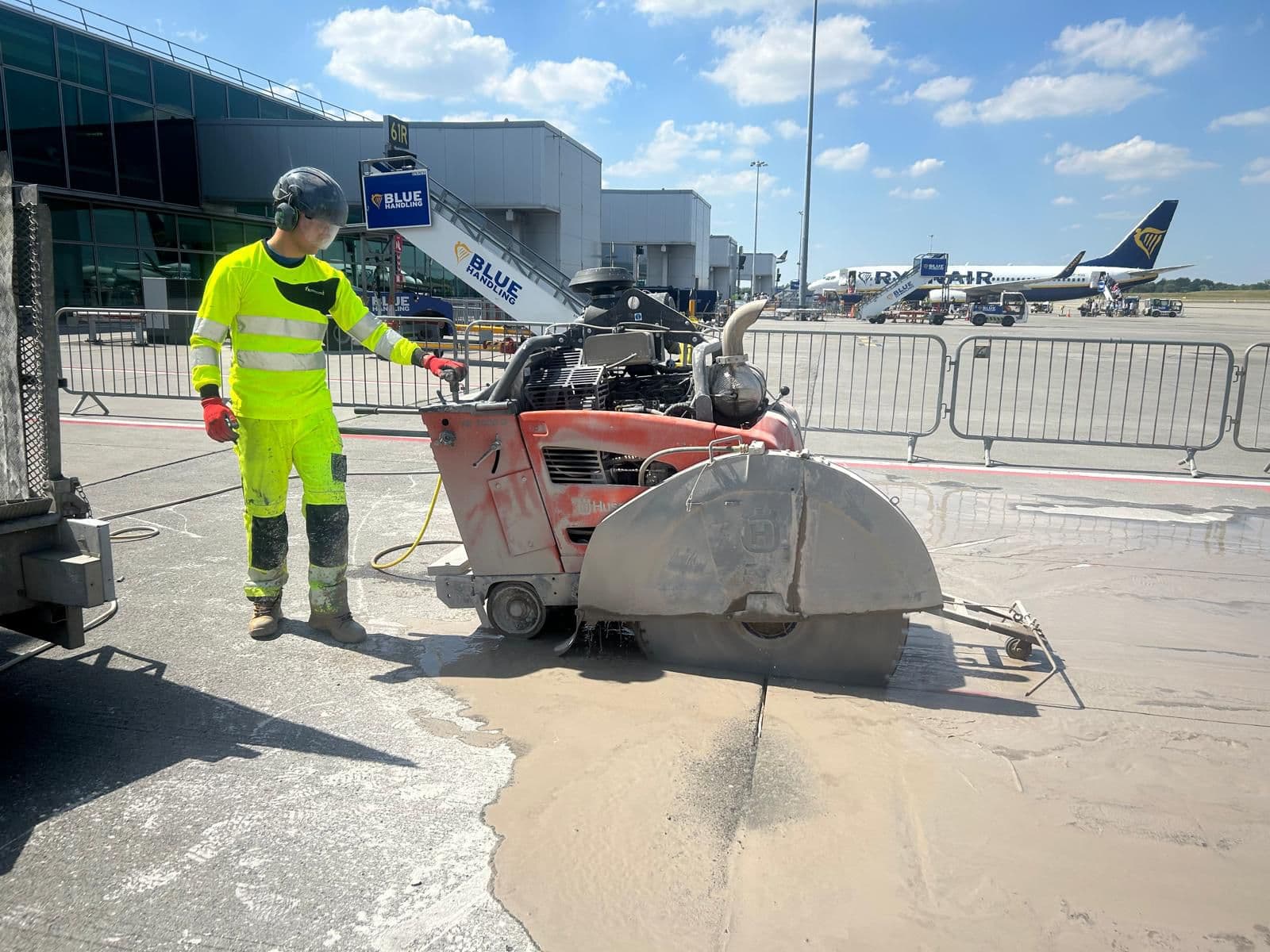
Most straightforward London cutting is still floor sawing: carriageways, industrial floors, decks and hardstanding. Our working maximum is 420mm. Set against what London slabs actually measure, that covers nearly everything.
Industrial floors run 150 to 250mm. Highway concrete runs 200 to 350mm. Bridge decks run 200 to 400mm. Only the heaviest terminal aprons and runway-thickness slabs go past a floor saw in a single pass.
The practical consequence is that depth is almost never the reason a London job needs a different machine. Access is, or vibration is, or the fact that the surrounding structure has to stay exactly where it is. A contractor who leads with cutting depth is answering a question the site was not asking.
Highway work runs at night, and the plant rules bite first
Borough highway work is night possession work, handed back before the morning peak. That part is familiar anywhere.
What is not familiar is the plant regime. Greater London operates a Low Emission Zone for construction machinery. Sites must log non-road mobile machinery between 37kW and 560kW on the online register. The thing that catches people out is the threshold. Most floor saws sit below 37kW, so the saw itself is often outside the register while the generator beside it is not. The plant rules across London are worth settling before anything is mobilised.
Noise and permitted hours are set locally too, borough by borough. A programme that works in one is not automatically deliverable in the next, and the consent is not something that can be obtained on the night.
The airside edge
Heathrow sits inside Greater London, in Hillingdon, and it is one of the seven former BAA airports we work across. That puts full airside discipline inside the capital rather than beyond it.
Airside possessions do not move for anything. The surface comes back at a stated time, swept and free of foreign object debris, whatever else is happening. That is the standard the rest of our London work is measured against.
Airfield pavement is also the one place in London where depth genuinely becomes the question. Taxiways and aprons run 300 to 500mm against the 150 to 250mm of an industrial floor. It is also where coring does work a saw cannot, forming the seating pots that airfield ground lighting fittings sit in, to a tolerance measured in millimetres.
Reinstatement is part of the job, not the next job
An opening in London is almost never handed over as an opening. Something goes back into it, or around it, and on most sites that has to happen before the space is usable again.
On a highway that means sealing the cut before the road reopens. On a deck or a basement slab it means making good around a new penetration so water has no route through. Either way, leaving a cut open is leaving a defect, and a cut that sits open through a wet night is a cut that has to be dried before anything will bond to it.
The practical version of this is simple enough. Ask at tender stage who is closing the opening, and when. If the answer is a different contractor on a different visit, the programme has a gap in it that nobody has priced.
Slurry has nowhere to go
Cutting is a wet process. Water cools the blade, flushes the kerf and suppresses silica dust, which is the control HSE guidance expects on this work. The by-product is slurry, and it is strongly alkaline.
Much of London runs on combined sewers and discharge consent is not a formality. Slurry cannot go to a surface water drain. Vacuum recovery at the blade, bunding, and an agreed collection route before the first cut are what keep a confined city site working.
On a basement or podium job the problem inverts. The slurry runs downhill into lift pits and service risers, and an escape into a finished floor below costs more than the opening did.
What to check before appointing anyone
- Which method is being proposed, and what constraint is driving that choice?
- Which items of plant need to be on the site's NRMM register, and who is registering them?
- Where is the slurry going, and is the disposal route consented?
- Who holds the noise consent if the work runs at night?
- Can the same contractor seal or reinstate the cut afterwards?
In our experience, appointing one contractor who runs every method works better than shortlisting per technique. A single London opening frequently needs coring for the corners, wall sawing for the sides and drilling again for the fixings. Splitting that across firms adds interfaces without adding capability.
For concrete cutting anywhere in Greater London, on highways, basements, decks or airside, get in touch with our team.
More on Concrete Cutting
- Concrete Cutting
Port Concrete Cutting in Kent
Read More » 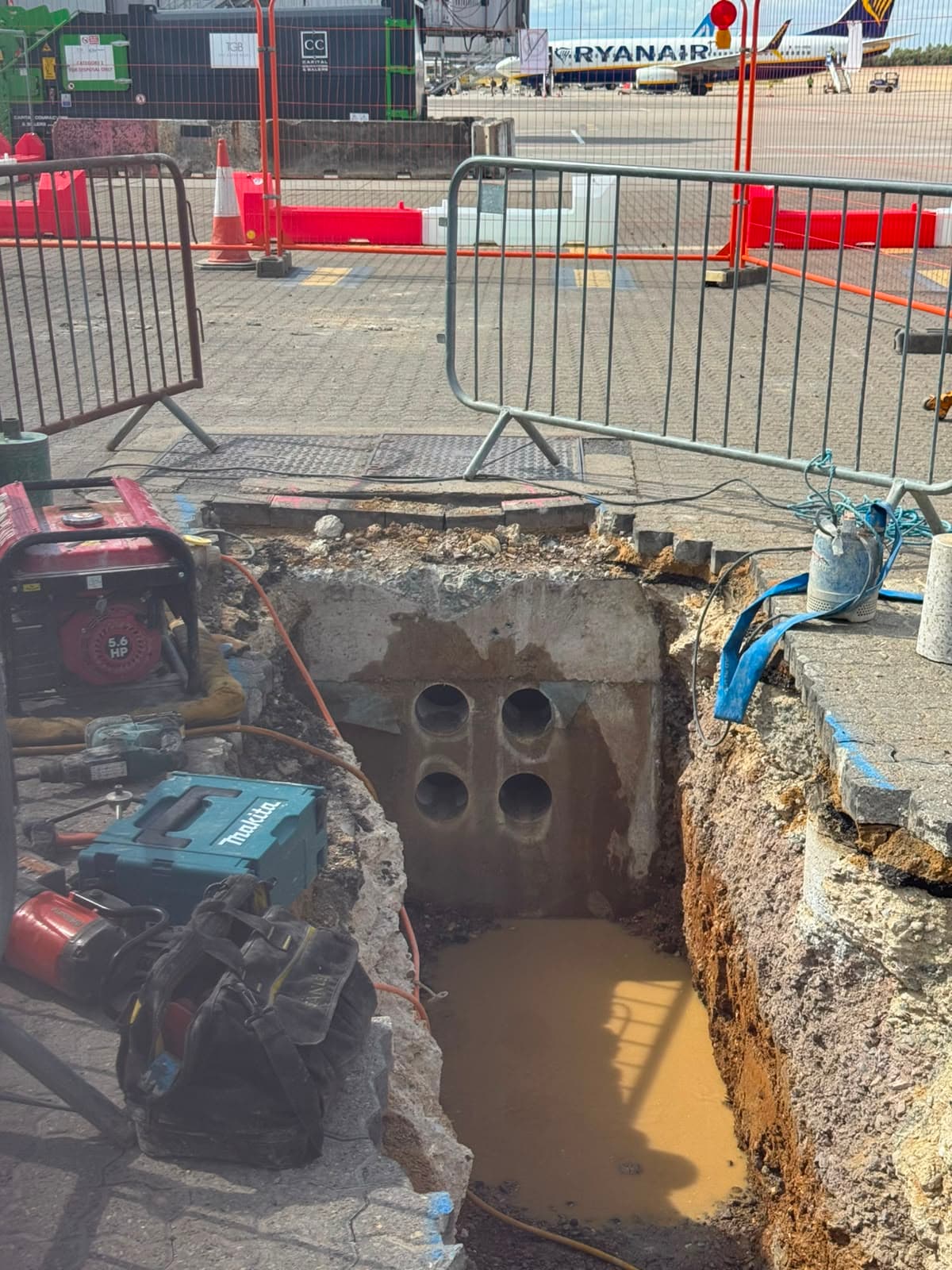 Concrete Cutting
What is Core Drilling?
Read More »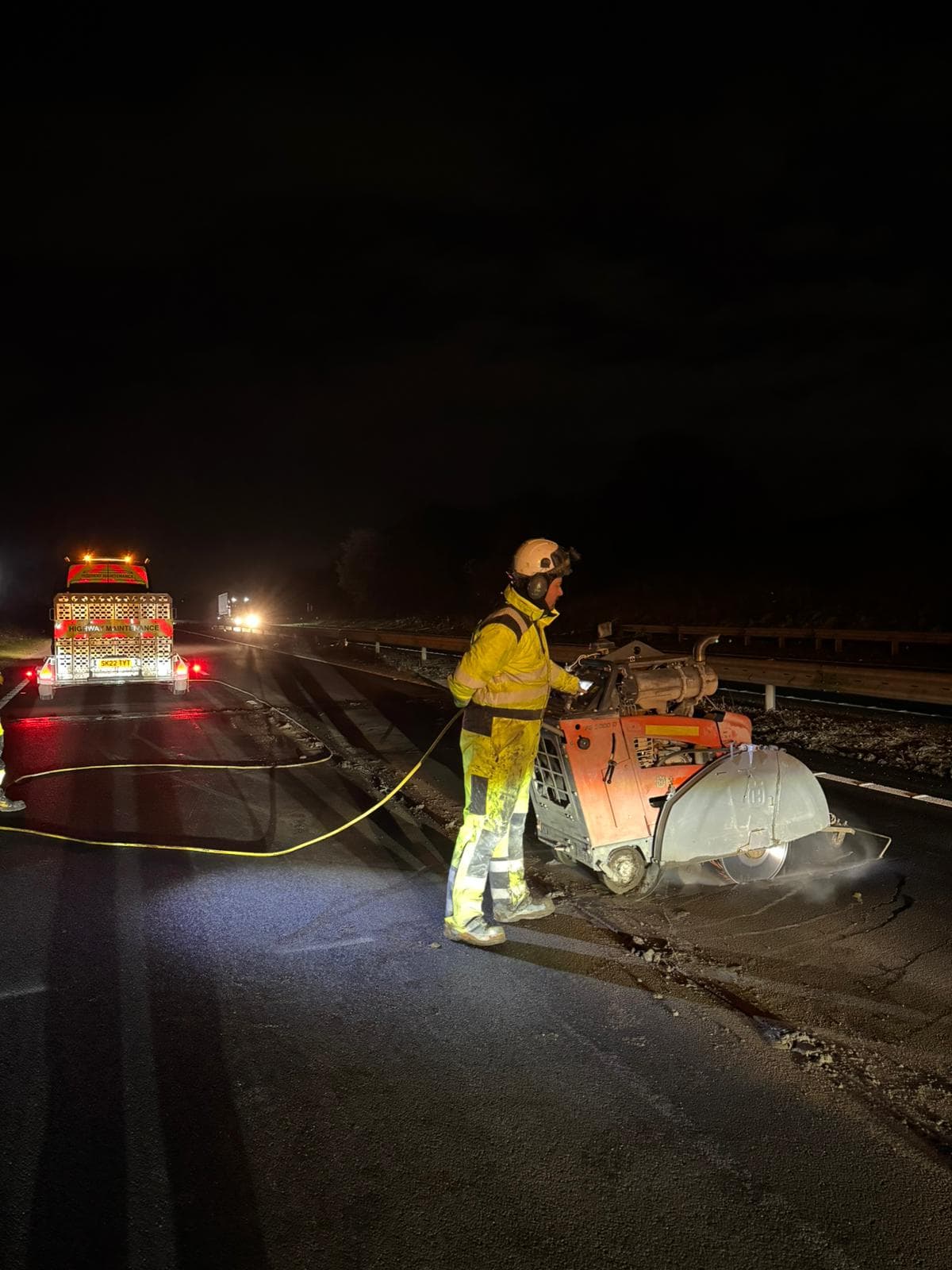 Concrete Cutting
Floor Sawing Services in Kent
Read More »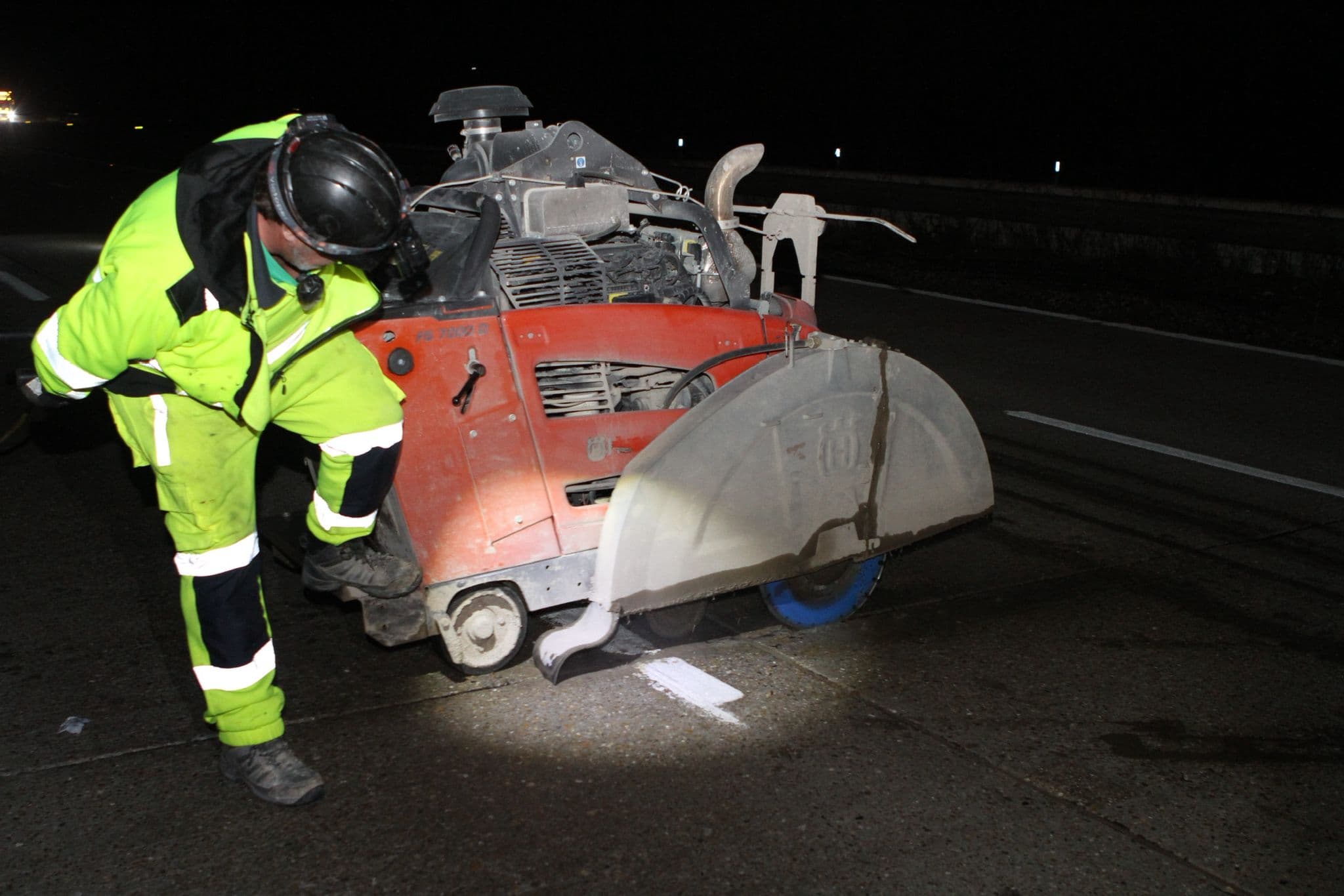 Concrete Cutting
What is floor sawing?
Read More » Concrete Cutting
Diamond Drilling Contractors in Kent
Read More »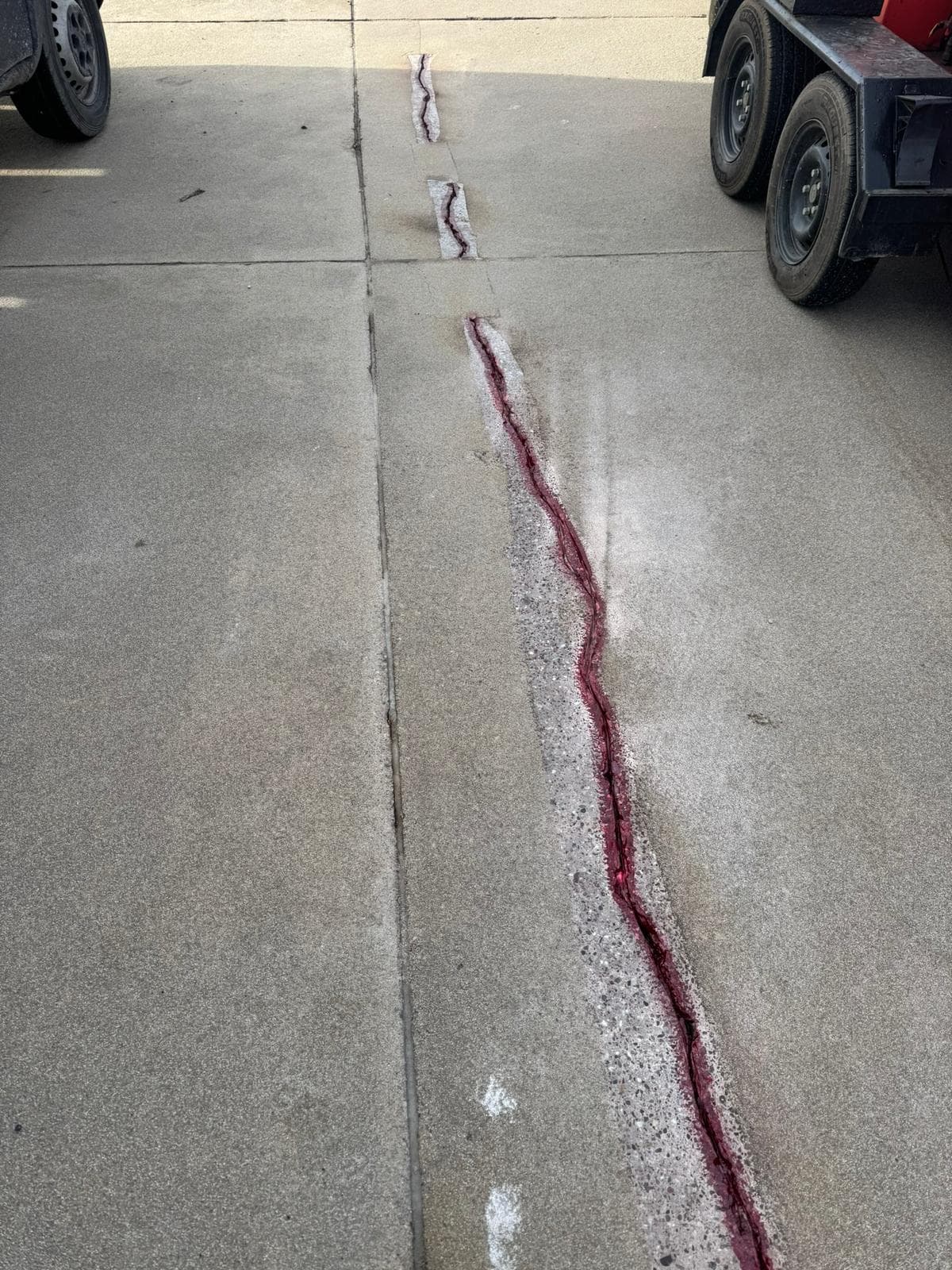 Concrete Cutting
What is concrete cutting?
Read More »