
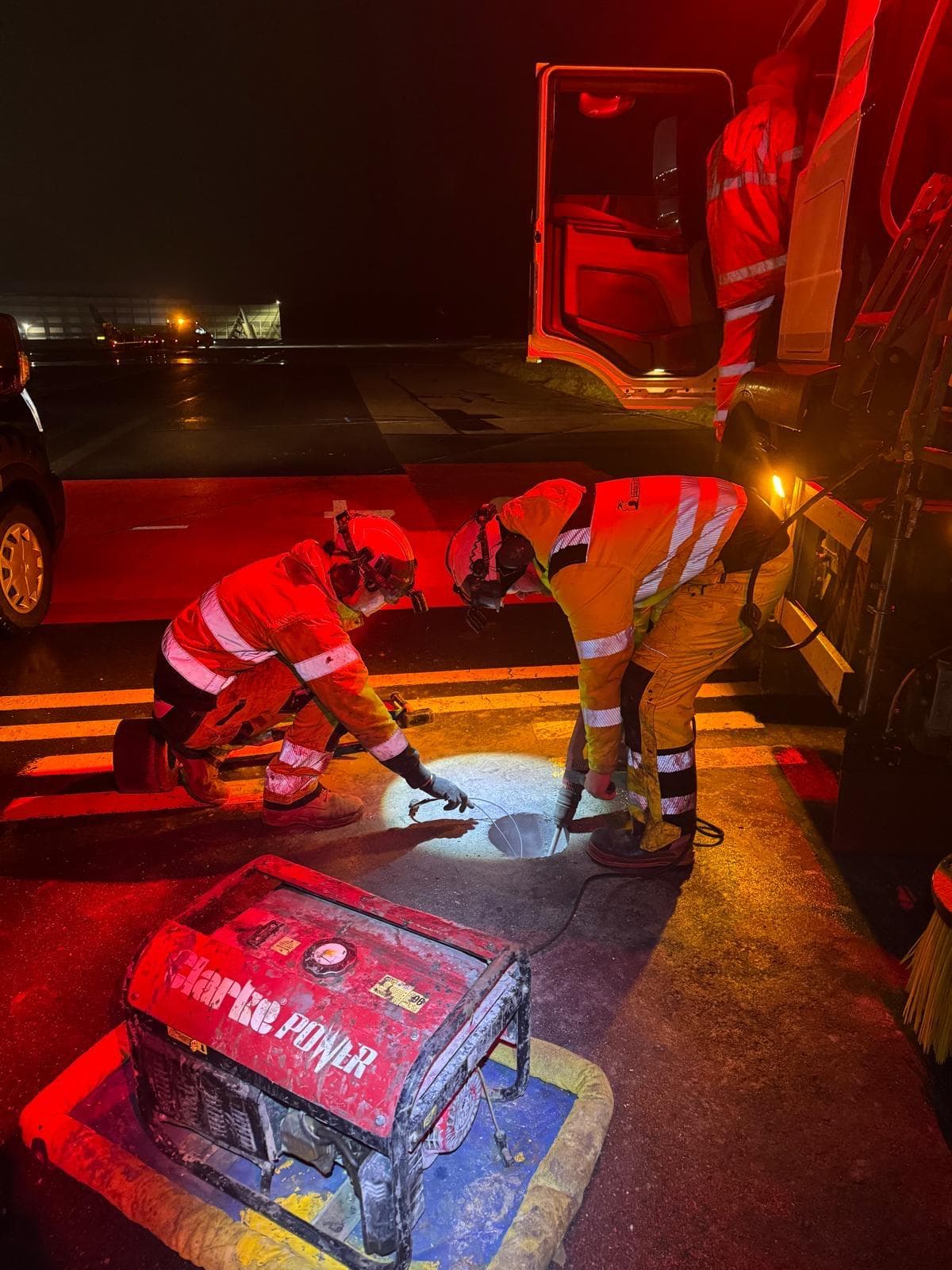
Diamond drilling cuts accurate circular holes through concrete, masonry and reinforced concrete using a hollow diamond-tipped barrel. We provide it across Sussex, at diameters from 10mm to over 1000mm. What Sussex asks for more than most counties is drilling into structures rather than floor slabs, and that changes the risk completely. A misplaced hole in a warehouse floor is a patch. A misplaced hole in a bridge abutment can cut something that is carrying load.
At Shepherd and Sons we have completed more than 300 cutting and drilling projects across the UK in the past six years. Sussex is a straightforward run west from our yard near Maidstone. The A21 and A272 lead into East Sussex, the A23 and M23 into West Sussex. From working with clients on Sussex structures, we've found the drilling itself is the quick part. Knowing what is inside the concrete before the barrel turns is the job.
Sussex is structures country
The county has given us a lot of bridge and highway structures work. The Sussex job on this site is the bridge jointing at Lyminster, a village near Arundel, delivered under Breheny Civil Engineering.
That was jointing and saw cutting rather than drilling, so it is not a drilling reference. It is a fair illustration of what the county asks for. It needed two different sealants on one structure. Thioflex 600 hand grade went into the expansion joints, and Craftco N1 into the saw cut surface joints. A bridge is not one condition throughout. Drilling on the same kind of structure carries the same lesson: the detail changes across a few metres.
Drilling a structure is not drilling a slab
On a floor slab you are usually going through and out the other side. The hole lands in fresh air or hardcore, and the consequence of being 50mm off is cosmetic.
On a structure the hole usually stops inside the concrete. Anchor holes for parapets, gantries and safety barriers. Dowel holes for joint repair. Drainage and service penetrations through abutments and deck edges. Each of those sits in an element designed to carry load through specific bars in specific places.
That is why structural drilling is a survey job before it is a drilling job.
Anchor holes carry their own trap. A resin anchor needs the right diameter and, more importantly, a clean hole. Dust left behind is a common cause of anchor failure. Blowing and brushing to the manufacturer's sequence is part of the drilling, not a separate tidy-up afterwards.
What you are avoiding, and why drawings are not enough
Three things matter. Reinforcement, which you can sometimes cut with permission and sometimes cannot touch. Post-tensioning tendons, which you can never cut, and where a hit is a structural incident rather than an inconvenience. Live services buried in or behind the element.
In our experience, scanning a structure before drilling works better than working from the drawings alone. As-built rarely matches as-drawn on anything that has been widened, strengthened or repaired. Sussex has plenty of structures in exactly that category. We will not put a barrel into a structural element on the strength of a drawing nobody has checked against the concrete.
Depth is rarely the constraint, access usually is
Diamond drilling depth is effectively unlimited, because barrels extend sequentially as the hole gets deeper. That makes diamond drilling different from sawing, where depth is capped by blade diameter.
What actually limits a structural job is where you can stand and how you anchor. Soffit drilling means working upward off a platform with the rig inverted and the water running back at you. Deck edges and abutment faces mean drilling horizontally from a position that has to be made safe first. Rig mounting has to suit the substrate too, since a vacuum base needs a smooth, sound surface and weathered structural concrete rarely gives one.
Coring for testing, not just for holes
Not every core is cut to make a hole. On an existing structure, cores are often taken to find out what the concrete actually is.
A test core goes away for compressive strength testing, and 100mm or 150mm diameter is the usual size. The same core can show carbonation depth, chloride content and whether the aggregate matches the records. On a coastal structure the chloride result is frequently the one that decides what happens next.
The hole left behind still has to be made good. On a structural element that reinstatement is part of the job, not an afterthought.
When a hole becomes an opening
Sometimes the requirement is not a hole but an opening, and breaking it out is not permitted.
The answer is stitch drilling. A line of overlapping cores forms the perimeter, and the section is then lifted clear. It leaves the surrounding concrete undisturbed, which is the whole point on an element still carrying load. It is slower than breaking, and it is often the only method a structural engineer will sign.
Water has somewhere to go, and it is usually somewhere bad
Diamond drilling is wet. Water cools the barrel, flushes the cut and keeps dust down, and it comes back out as slurry.
On a bridge that slurry has a watercourse, a railway or a live carriageway underneath it. It cannot simply run off the edge. Collection at the hole, bunding and a disposal route agreed in advance are what stop a routine job becoming an environmental report. This is one of the practical differences between structures work and drilling a floor in a unit.
The A23 corridor, Gatwick and the coast
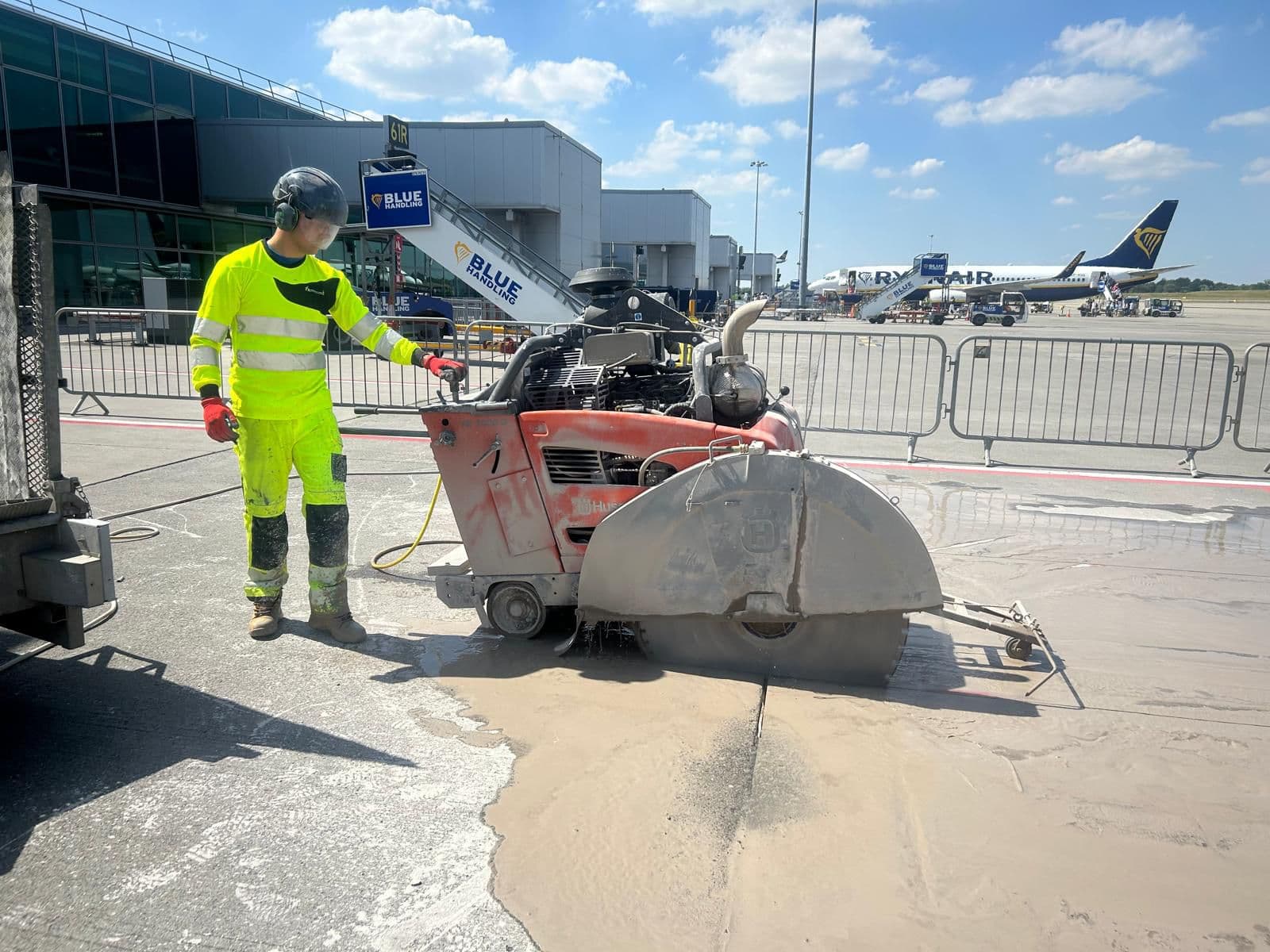
The A23 and M23 carry the county's main traffic and run to Gatwick, which sits just inside West Sussex at Crawley. Gatwick is one of the seven former BAA airports we work across, as sole contractor for the British Airport Authority since 2008. The airside regime is familiar ground here.
Highway work along the corridor follows the usual pattern of night closures under Chapter 8. On the coast, Shoreham and Newhaven bring port and marine-adjacent work. It behaves like our Kent estuary jobs: heavy point loads, salt in the air, and a reinstatement detail that has to survive both.
What to check before appointing anyone
- Has the element been scanned, or is the position coming off a drawing?
- Is there a permit to cut reinforcement, and who signs it?
- Where is the water going, and what is underneath the structure?
- How is the rig anchored, and has the substrate been checked for it?
- Are operatives NVQ Level 2 in cutting and drilling, with CSCS cards and Drilling and Sawing Association competence?
The second question is the one people forget. Cutting a bar is sometimes acceptable and sometimes not, and that is a decision for the structure's engineer rather than for the person holding the drill.
Drilling also rarely finishes a job. Holes get sealed, joints get reformed and surfaces get made good. On a structure the joint sealing that follows is what keeps water out of the concrete you have just opened.
Sussex sits inside the wider South East area we cover from the Kent yard, alongside our cutting work in the county. For diamond drilling anywhere in Sussex, get in touch with our team.
More on Concrete Cutting
 Concrete Cutting
Port Concrete Cutting in Kent
Read More »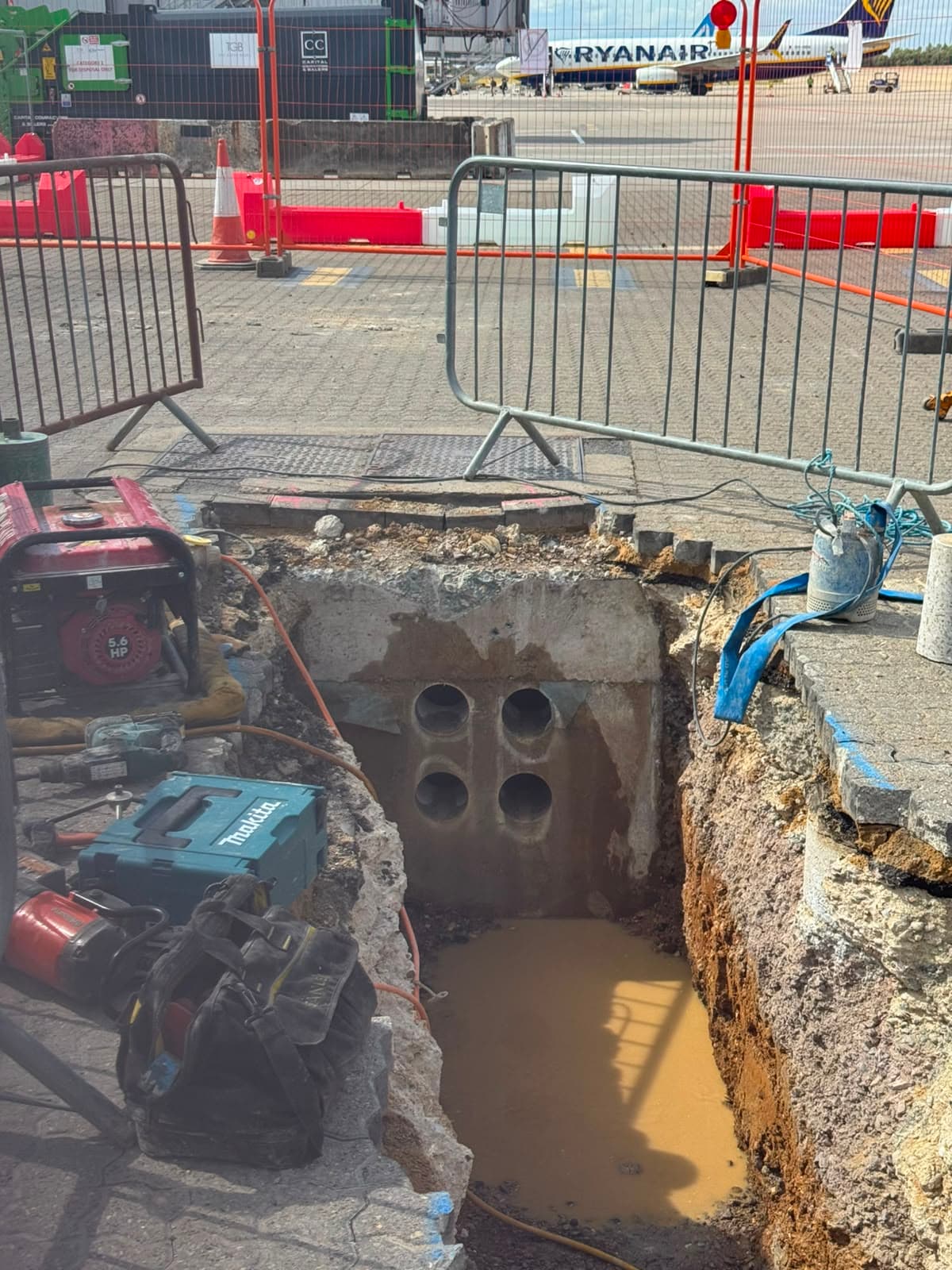 Concrete Cutting
What is Core Drilling?
Read More » Concrete Cutting
Floor Sawing Services in Kent
Read More »- Concrete Cutting
Concrete Cutting in London
Read More » 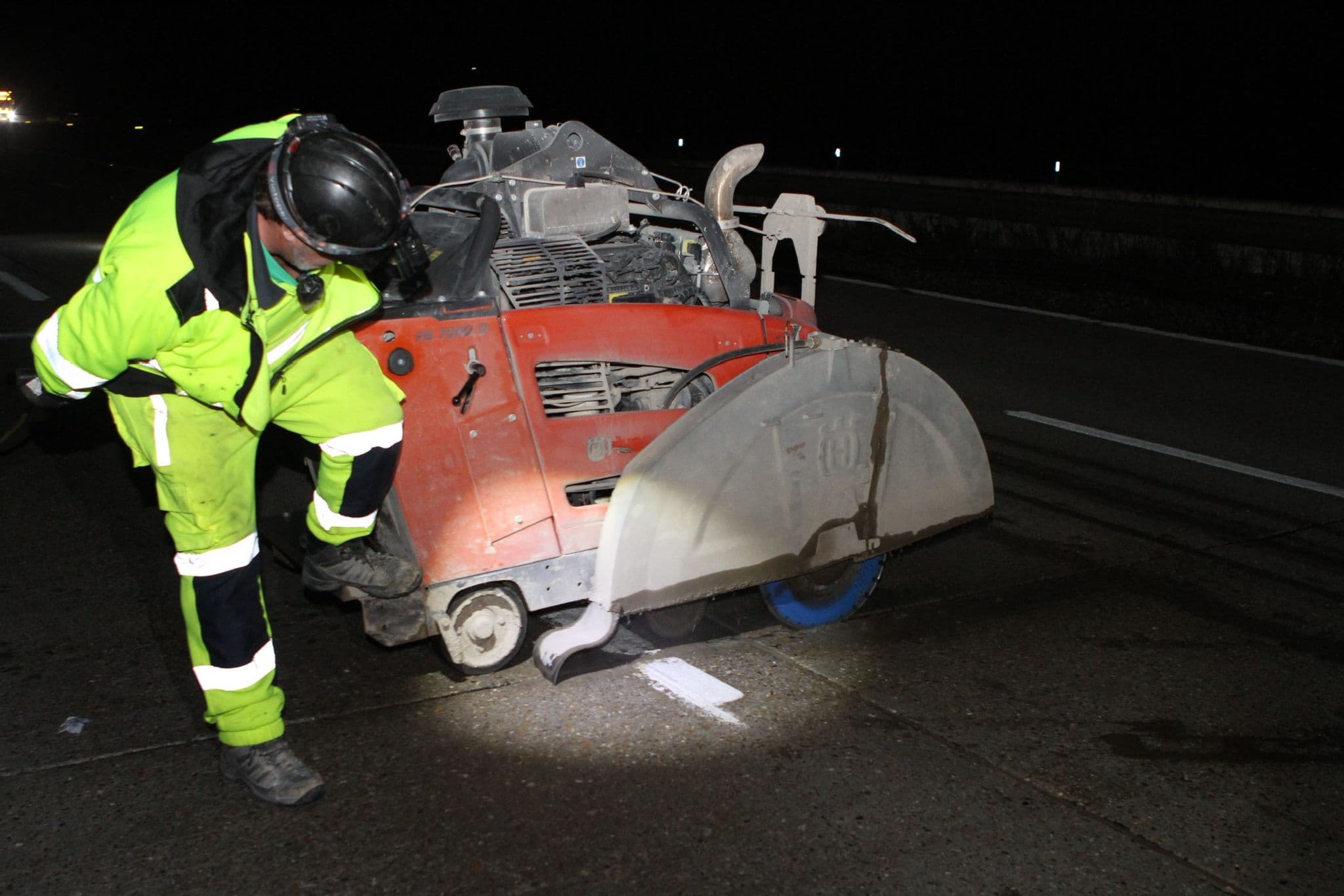 Concrete Cutting
What is floor sawing?
Read More »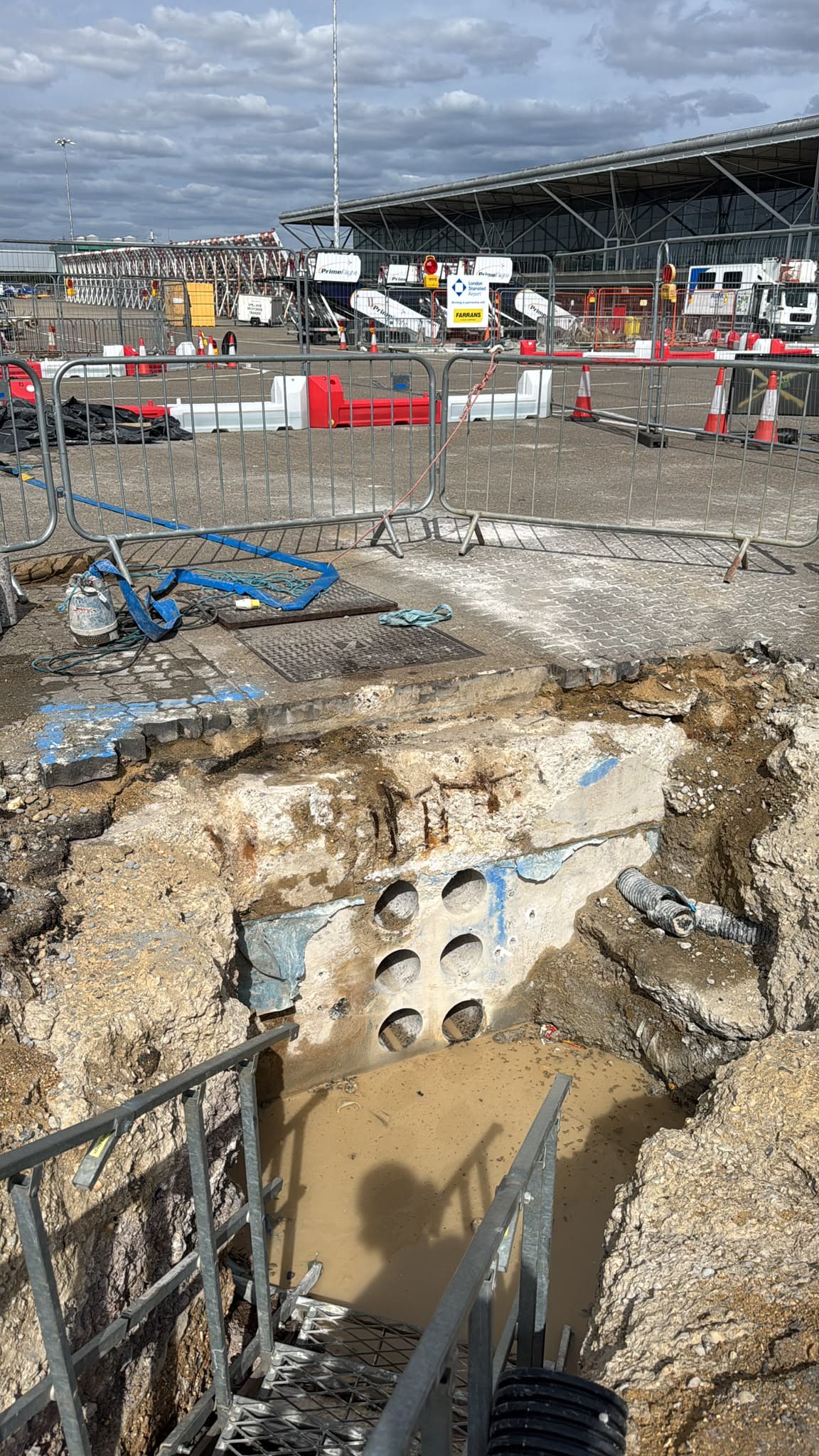 Concrete Cutting
Diamond Drilling Contractors in Kent
Read More »