

N2 sealant is the hot applied joint sealant grade classified under BS EN 14188-1 as normal, low extension. It's a polymer-modified bituminous sealant, heated in a melter and poured into the joint, where it cools and solidifies into a durable, flexible seal that keeps water and detritus out of the pavement. N2 is specified for joints that experience limited movement, where the wider extension capability of the N1 grade isn't required. In UK practice, that means contraction joints in shorter concrete bays, joints in thermally stable environments, and cost-conscious maintenance programmes on lightly to moderately trafficked pavements where the movement demand is genuinely low.
At Shepherd and Sons, we apply N2 hot applied sealant across UK highway, airfield and infrastructure work, with more than 40 years of experience in pavement joint sealing. We're based at Westerhill Farm in Kent, and we're members of the Extruded Sealant Association, working to the ESA Code of Practice and BS EN 14188-1. This article covers what N2 sealant is, where it's the right specification, an important point about what N2 is not, and how to install it properly.
What N2 sealant actually is
N2 is one of the two "normal" grades in the BS EN 14188-1 hot applied classification. The standard divides hot applied sealants into four types:
- Type N1: Elastic, high extension
- Type N2: Normal, low extension
- Type F1: Fuel-resistant, high extension
- Type F2: Fuel-resistant, low extension
N2 sits in the "normal" category alongside N1, meaning neither is formulated for fuel resistance. The distinction between N1 and N2 is extension capability. N1 is the high extension grade, formulated with a higher proportion of elastomeric polymer to handle larger joint movement. N2 is the low extension grade, with a formulation suited to joints where the movement is more limited.
That doesn't make N2 an inferior product. It makes it a different product for a different job. Specified correctly, on joints where the movement genuinely is low, N2 delivers a durable, long-lasting seal. The issue only arises when it's specified for joints that move more than it can accommodate, which is a specification error rather than a product weakness.
The defining characteristics of N2
Three properties define how N2 behaves and where it fits.
Lower movement accommodation. N2 is designed for joints with a smaller movement range. It doesn't stretch and recover across the wide range that N1 handles. On a joint that moves within N2's capability, that's not a limitation. On a high movement joint, it's the wrong choice.
Bituminous bond and flexibility. Like all hot applied sealants, N2 bonds aggressively to clean, sound concrete and asphalt when poured hot, and it retains flexibility across the normal service temperature range to keep the joint sealed as it cycles.
Rapid thermal cure. N2 cures by cooling, not by chemical reaction. Once poured, it's typically trafficable within 30 to 60 minutes depending on ambient temperature and pour depth. That fast return to service is a shared advantage of hot applied sealants and one of the main reasons they dominate highway and airfield joint work. The full picture of the method is set out in what is hot applied joint sealing?.
The important point: N2 is not fuel-resistant
This is the single most common misconception about N2, and it's worth stating plainly. N2 is not a fuel-resistant grade.
The confusion is understandable. The alphanumeric similarity between N2 and F2 invites crossovers in casual reference, and older technical literature sometimes discusses N2 in contexts near fuel-exposed applications. But under BS EN 14188-1, fuel resistance is the defining property of the F grades, F1 and F2, not the N grades. N2 is not tested against Test Fuel I or Test Fuel II as part of its classification.
Specifying N2 for a fuel-exposed joint, on the assumption that it resists fuel, is a genuine error we've been asked to correct on live specifications. Where a joint is exposed to aviation fuel, kerosene, diesel or hydraulic fluid, the correct routes are:
- Hot applied F1 or F2 fuel-resistant grades for high-volume linear pavement work with fuel exposure
- Cold applied two-part polysulfide such as Thioflex 555, certified to BS EN 14188-2 Classes B, C and D, for aircraft fuelling aprons and specialist areas
- One-part polyurethane such as Sikaflex or Sea-Kar for port and dockside fuel-handling environments
We've found that getting this right at specification stage saves the far greater cost of a joint that fails prematurely because a non-fuel-resistant sealant was used where fuel resistance was actually needed.
When N2 is the right specification
N2 is the correct grade in several situations, and it's genuinely the better commercial choice when the conditions suit it.
Contraction joints in short concrete bays. Where slab lengths are modest, the thermal movement at each joint is proportionally smaller. On closely spaced contraction joints, N2's movement range is sufficient.
Thermally stable environments. Covered, sheltered or internal concrete where temperature swings are smaller than fully exposed external pavements. Less thermal cycling means less joint movement.
Localised repairs matching an existing specification. Where a pavement was originally sealed with a low extension grade and the movement pattern is proven to fall within N2's capability, matching the specification is sound practice.
Cost-conscious maintenance on low-movement pavements. Lightly to moderately trafficked pavements such as some council car parks and service yards, where budget matters and the movement demand is genuinely low. Using N1 where N2 would suffice is simply spending more than the joint requires.
In our experience, N2 works better than N1 on closely spaced contraction joints in short-bay concrete because the joint movement falls comfortably within N2's range, and the more economical grade delivers the same service life at lower cost, where specifying N1 would add cost without adding performance. On a Kent depot pavement with short bays and modest thermal exposure, the N2 joints we sealed have performed identically to the more expensive grade used on an adjacent higher-movement section, at a lower material cost. The skill in specification is matching the grade to the actual movement, not defaulting to the higher grade everywhere.
When N2 is not the right answer
Equally, there are clear situations where N2 is the wrong call.
High movement joints. Expansion joints, long-bay concrete pavements, bridge approach joints and any joint with a significant calculated movement range need the high extension performance of N1. Specifying N2 here leads to cohesive failure, where the sealant tears through the centre of the bead within a few seasons. This is covered in detail in N1 sealant for high movement joints explained.
Fuel-exposed joints. As above, the F grades or a cold applied system are required, not N2.
Indoor or fire-restricted sites. Where a propane melter can't be used, a cold applied system is the only viable route regardless of the movement grade.
How N2 is installed
The application process for N2 follows standard hot applied practice, governed by the ESA Code of Practice.
Joint slot preparation. Slots must be sound dense concrete or asphalt, dry, sound, clean and free from frost and dust. Defective or contaminated faces are widened until sound material is reached. The slot is mechanically cleaned by wire brushing, grit blasting or routing, then blown clean with oil-free compressed air at a minimum pressure of 0.5N/mm².
Backer rod. A heat-resistant backer rod suitable for hot applied sealants is caulked into the base of the slot. This sets the sealant depth and prevents three-sided adhesion, which is a common cause of premature failure. Standard closed-cell polyethylene rod melts under a hot applied pour, so the heat-resistant grade is essential.
Sealant heating. N2 is loaded into a thermostatically controlled melter with continuous mechanical agitation and heated to the manufacturer's specified pour temperature. Overheating degrades the sealant, and holding it at temperature beyond the permitted duration reduces its performance.
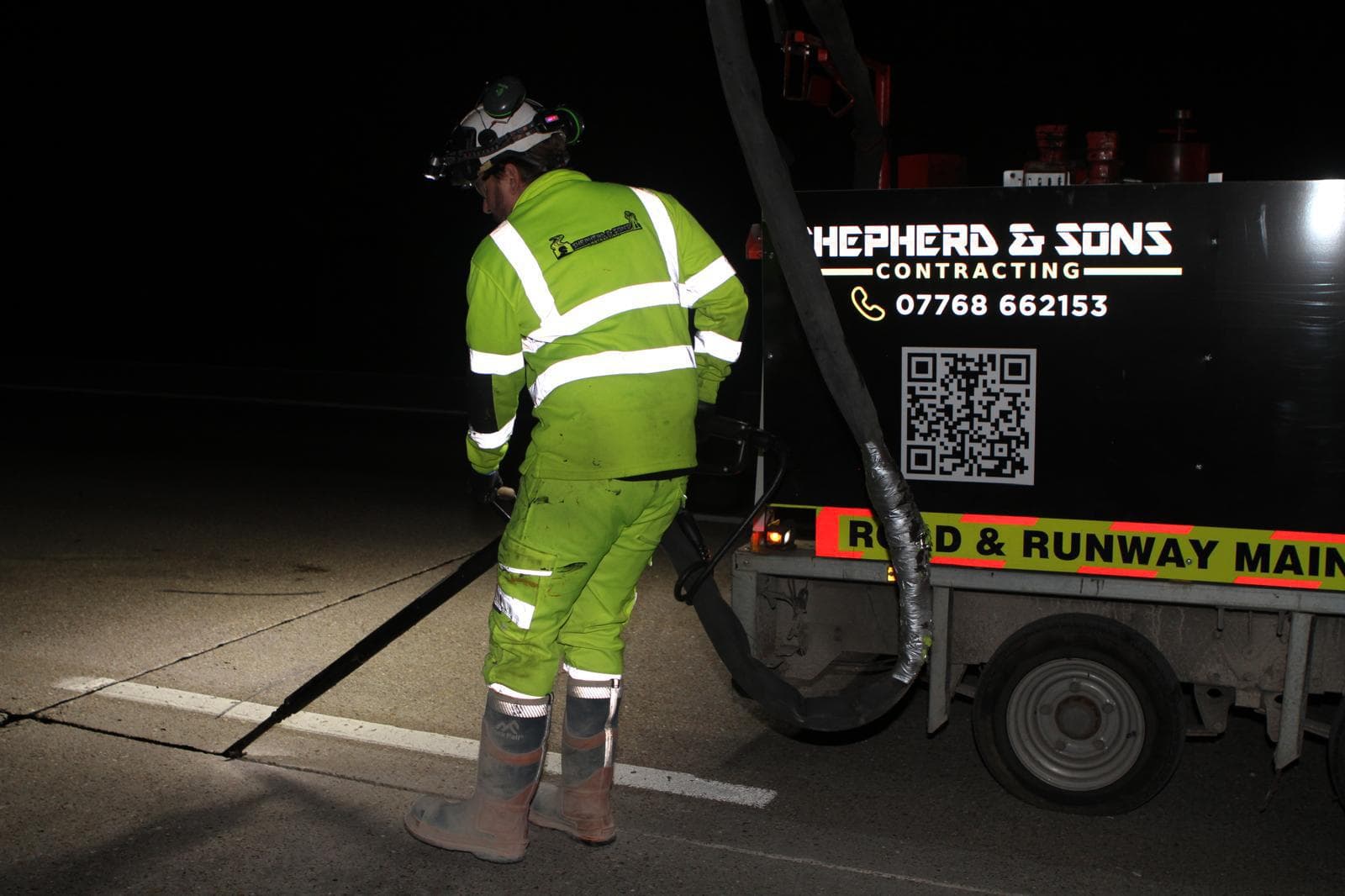
Pouring. The sealant is extruded through a heated lance directly into the joint at a pour rate matched to the slot geometry, filling cleanly without voids.
Sealant recess. The finished sealant level sits below the pavement surface to prevent traffic extrusion damage. The ESA Code specifies a minimum 5mm recess for transverse joints under normal vehicle traffic, 7mm for joints wider than 25mm, and 10mm if applied in cold weather, with a tolerance of ±2mm.
Cooling protection. The joint is protected from traffic until the sealant has cooled and set, typically 30 to 60 minutes depending on ambient temperature and pour depth.
Standards and compliance
N2 hot applied joint sealing works to:
- BS EN 14188-1 (Type N2 normal low extension)
- BS 10948:2020 (application and use of hot and cold applied joint sealant systems for concrete pavements)
- SHW Volume 1 Series 1000 (Specification for Highway Works, road pavements)
- The ESA Code of Practice for Joint Sealing (Issue 3.0, November 2025)
The ESA Code requires sample testing at three stages: at the factory, from packages on delivery, and on site. For hot applied sealant, test samples are retained at not less than one per 1,000m of joint, or one per day. Depth measurements are taken at three locations along each transverse joint, mid-width, to an accuracy of ±0.5mm using a metal ruler and 150mm straightedge.
Sectors where N2 is specified
Highway authorities and Tier 1 contractors specify N2 on low-movement contraction joints, short-bay concrete and cost-conscious maintenance programmes. Aviation clients use N2 on lower-movement airfield pavement joints, with taxiway and apron work moving to N1 and runway work to the 9525 high-performance specification. Port operators use N2 on dockside concrete away from fuel-handling and high-movement zones. Public sector clients specify N2 on depot pavements, car parks and infrastructure concrete with modest movement.
We've delivered hot applied joint sealing using both N1 and N2 across the UK, matching the grade to the calculated movement on each pavement rather than defaulting to one grade across the board.
Specifying N2 properly
A meaningful N2 specification will identify the grade, the calculated joint movement range confirming N2 is suitable, the joint width and depth, the backer rod type and size, the linear metres, the recess depth, the programme and cooling window, and the QC sampling rate. Because the risk with N2 is specifying it where movement exceeds its capability, the movement assessment is the critical part of the specification. For a direct comparison of the two grades and how to choose between them, what's the difference between N1 and N2 sealant sets out the decision framework.
If you're specifying or commissioning joint sealing work and want to confirm whether N2 is the right grade, or whether the movement or exposure calls for a different specification, get in touch. We'll assess the pavement, the slab dimensions, the exposure and the movement range, and specify against the ESA Code of Practice. You can see recent project work on our LinkedIn and Instagram.
What is N2 Sealant?
 Joint Sealing
N1 Sealant for High Movement Joints Explained
Read More » Joint Sealing
What’s the Difference Between N1 and N2 Sealant?
Read More »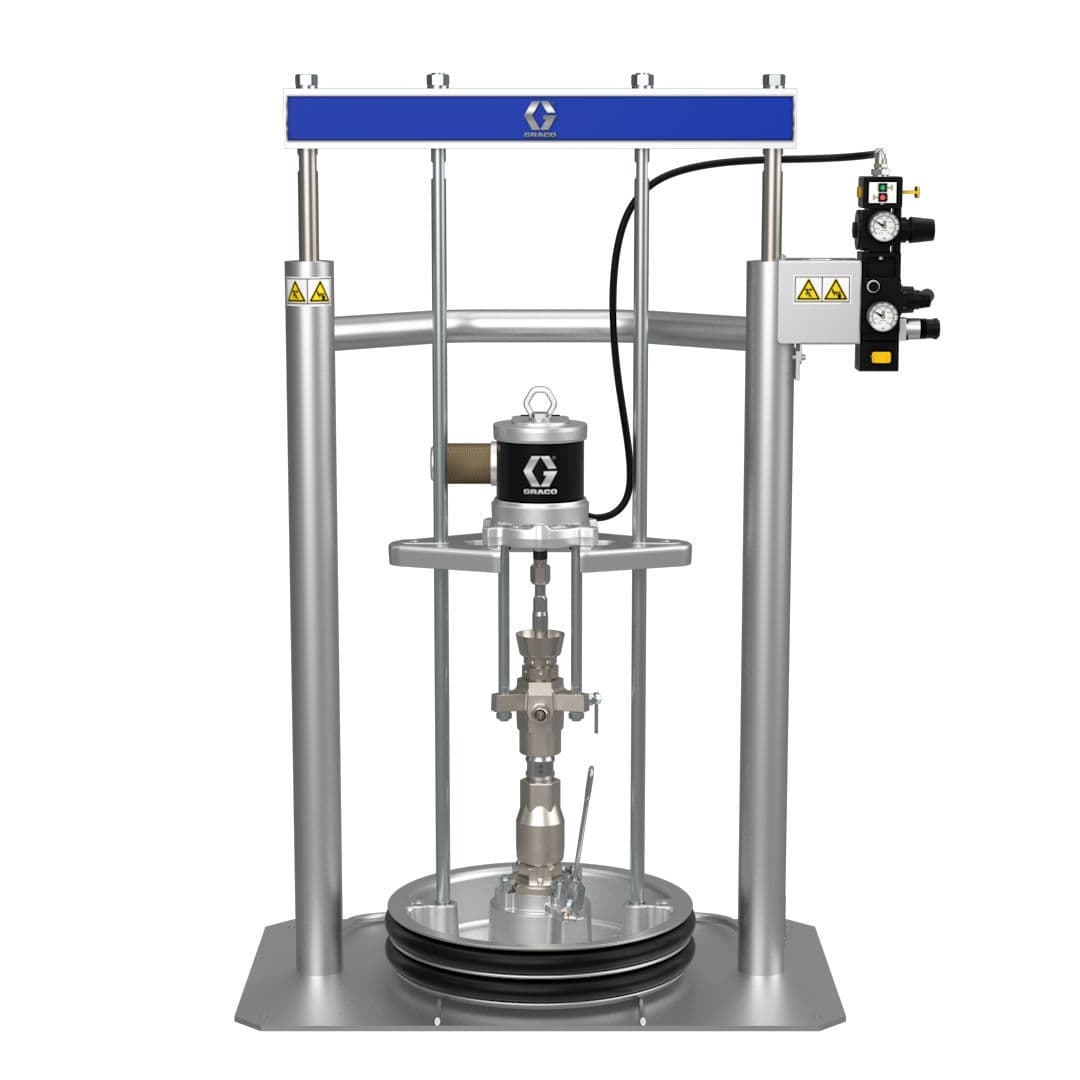 Joint Sealing
Sika Installers
Read More »- Joint Sealing
What is Sikaflex?
Read More » 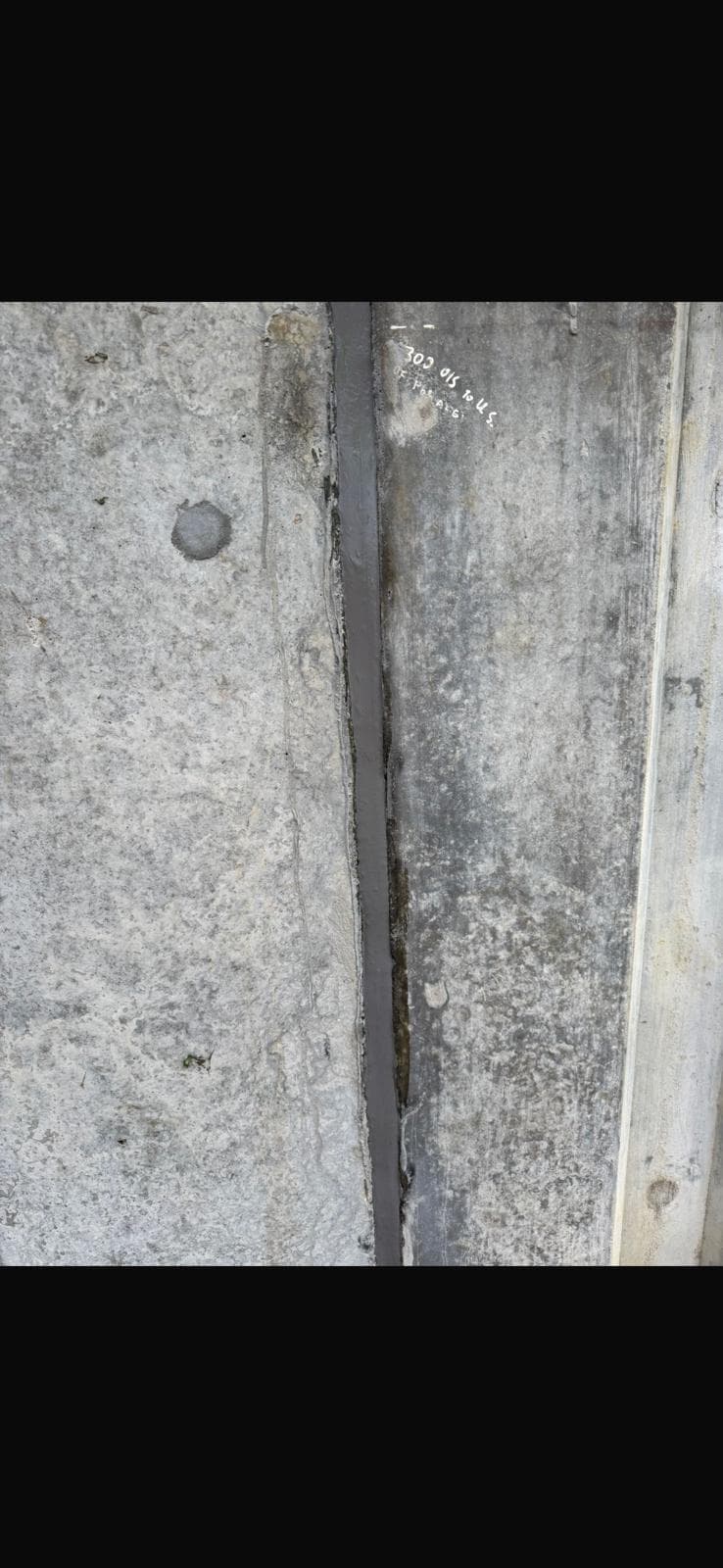 Joint Sealing
What is Thioflex 600?
Read More »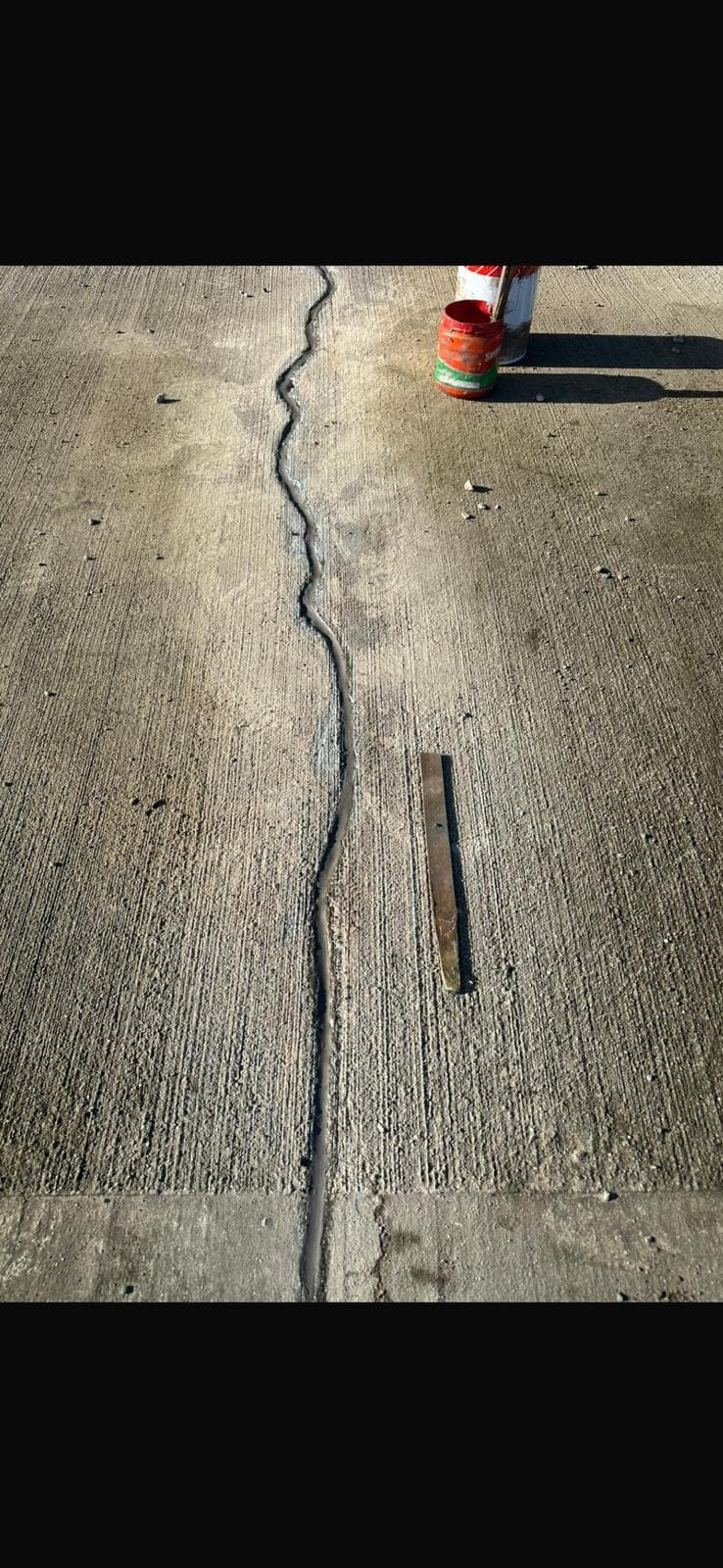 Joint Sealing
What are the benefits of Thioflex 555
Read More »