
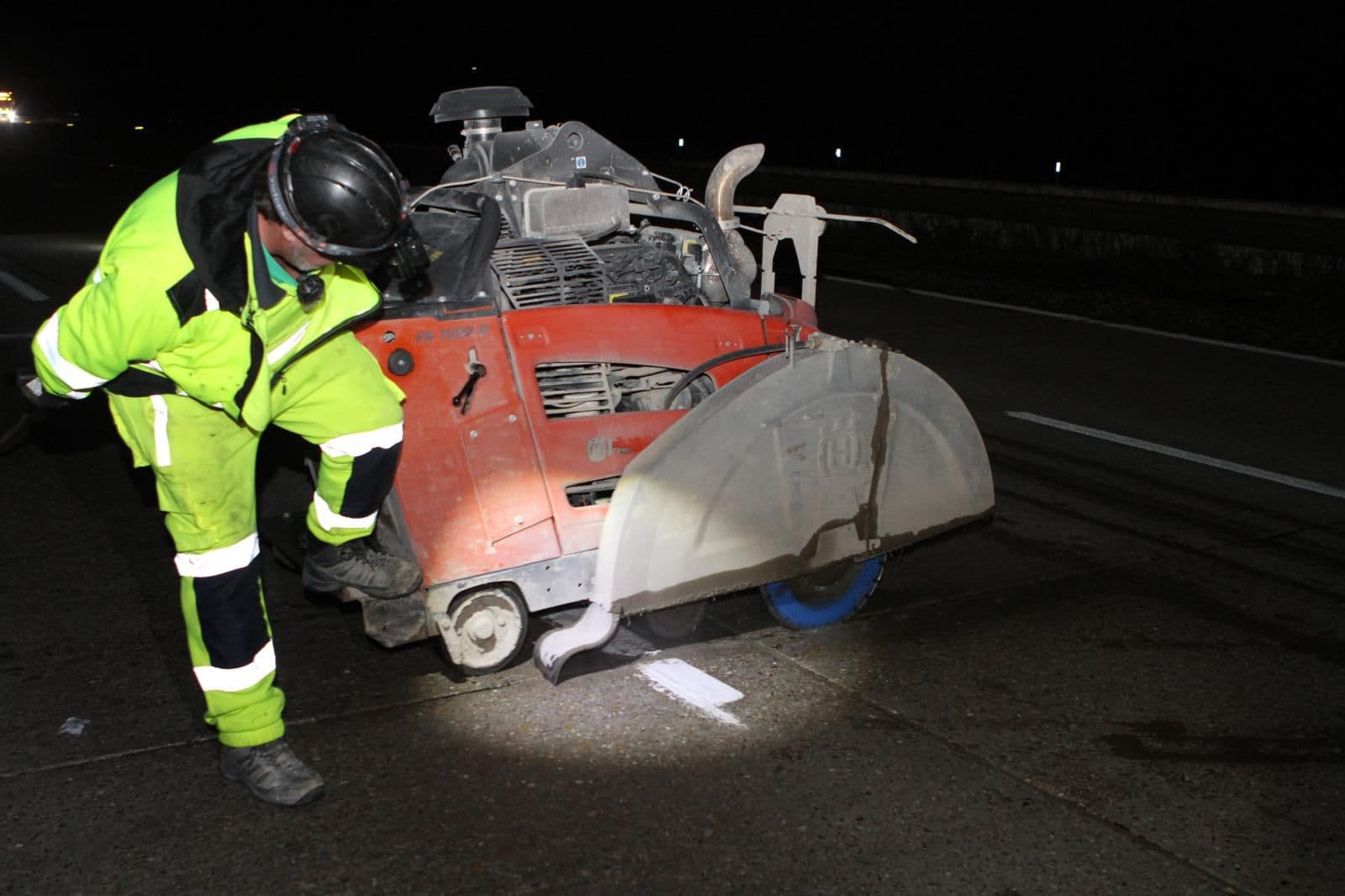
Yes, you can cut concrete in the rain. Diamond sawing is already a wet process by design. Water is fed to the blade to cool the segments, flush slurry from the cut and suppress silica dust. Rain simply adds water to an operation that is deliberately wet. It rarely affects the cut itself. What wet weather changes is everything around the saw: power, slurry control, setting out and access. Those are handled with planning, not by standing down.
At Shepherd and Sons we have completed more than 300 cutting and drilling projects across the UK in the past six years. Plenty ran in the weather Kent and London hand you between October and March. From working with clients on airfields, ports and live highways, we've found this is really a programming question. The cutting is seldom the problem. The sealing that follows it is. This article covers what rain affects, what genuinely has to stop, and how to sequence around a poor forecast.
Why rain does not stop the saw
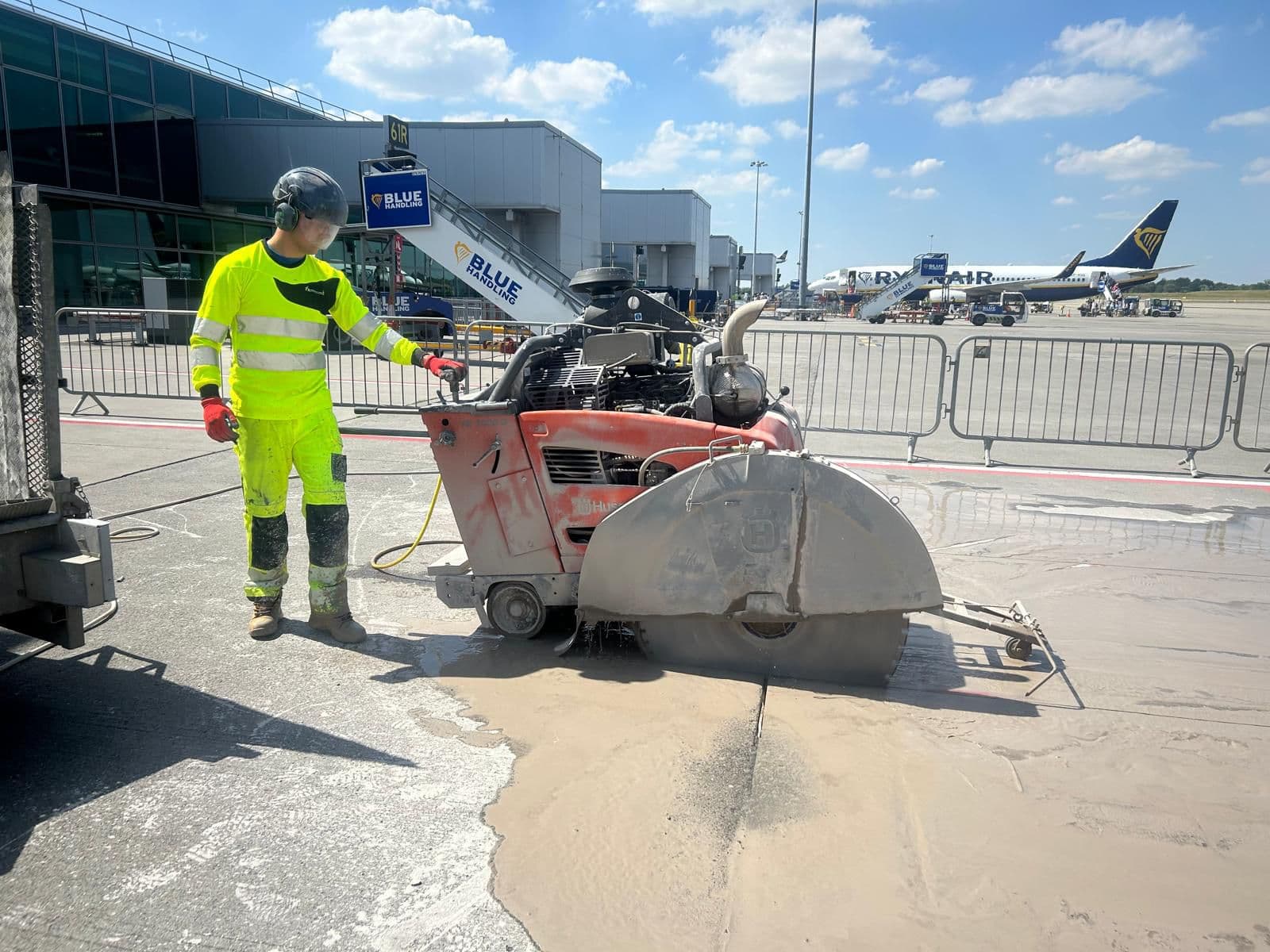
A diamond blade cuts by abrasion. The water feed is doing three jobs at once. It cools the segments, because a blade run dry overheats until the bond softens and the diamonds go. It flushes swarf from the kerf, so the blade keeps meeting fresh material. It also suppresses respirable crystalline silica. That last job is why HSE guidance treats water suppression as a primary control on this work.
Dry cutting is the exception. It needs on-tool extraction, and outdoors on pavement work a water feed is simply the better method. So adding rainfall to a process that already runs water changes very little.
Depth is unaffected too. Our floor saws reach 625mm in concrete and asphalt alike, soaked or bone dry. The limit is blade diameter, not conditions. A saw does not lose reach because it is raining.
What actually changes when it rains
Four things need managing. None of them is the cut.
Power and electrical safety
Standing water and trailing leads are a poor combination. Site power should run at 110V through an RCD-protected transformer. Keep connections out of pooling water, and route leads clear of the working line. In our experience, an engine-driven floor saw works better than an electric one in the wet because it removes the trailing lead entirely. Nothing live then crosses a surface already running with water. It also holds performance when several trades are drawing on one generator.
Slurry, which is the real constraint
Cutting slurry is strongly alkaline, typically above pH 11. It cannot be allowed to reach a gully, drain or watercourse. Rain is what turns a manageable volume into a mobile one. The controls are straightforward. Vacuum recovery at the blade, bunding with sandbags or absorbent socks, and a collection point agreed before the first cut. On ports and airfields this is a permit condition, not good practice. It is also the item most likely to stop work if nobody has planned for it.
Setting out
Chalk and crayon wash off a wet surface. Standing water hides a line even where the mark survives. Use paint markers, and set out progressively rather than marking the whole run at the start.
Access and traction
Self-propelled saws on a wet slope need thinking about. So does tracked plant on saturated ground, particularly on a deck or bridge where the fall is deliberate. This is a mobilisation problem more than a cutting one. It still costs a morning if you find it on site.
The work that genuinely has to stop
Here is the part that matters. Cutting tolerates rain. Joint sealing does not.
Every sealant system we install needs a dry slot. The Extruded Sealant Association Code of Practice and the manufacturers' data sheets agree. Slots must be dry, sound, clean and free from frost before priming or sealing begins. BS 10948:2020 sets out the same discipline for concrete pavements. There is no wet-weather workaround, and anyone offering one is storing up a failure.
With hot applied sealant, moisture in the slot flashes to steam as material at pouring temperature reaches it. That blows the seal and destroys adhesion at the slot face. The joint then looks fine for a season before it fails.
With a two-part cold applied system, the vulnerable moment is the primer window. Sealant goes in between 20 minutes and four hours after priming. Past 24 hours the cured primer must be ground off and the slot primed again. A shower inside that window costs you the preparation, not just the pour. We treat priming as a commitment rather than a step for exactly that reason.
Line marking splits the same way. Thermoplastic needs a dry surface at 5°C and rising, and it needs that surface to stay dry. MMA cures chemically in 15 to 30 minutes, down to around 0°C. That is precisely why it earns its place on a British winter programme.
Rain and cold are different problems
The two get conflated on site, and they behave differently. Rain is about water in the slot. Cold is about cure time and the shape of the seal.
Temperature changes how long a material takes to come back into service. A two-part cold applied polysulphide such as Thioflex 555 returns to service in about 30 minutes at 20°C. At 5°C the same material wants around 90 minutes. Nothing has gone wrong there. The programme simply has to allow for it, and a possession planned on summer figures will overrun in February.
Cold changes the detail of the joint as well. On a transverse joint the sealant normally sits at least 5mm below the surface. Applied in cold weather that recess goes to 10mm. The reason is that concrete contracts when cold, so the joint is at its widest as you seal it. Seal it full at that moment and the sealant is squeezed as the slab expands again, leaving it standing proud. Frost rules the work out altogether, in a way rain does not. A damp slot can be dried. A frozen one cannot be sealed at all.
How we sequence a job when the forecast is poor
The practical answer is to stop treating a job as one operation. Cutting, drilling and joint preparation tolerate weather. Sealing and marking do not. Split them. The weather-tolerant work can then take the exposed end of a possession, while the sealing sits in the most protected part.
That discipline came from aviation. As sole contractor for the British Airport Authority since 2008, we work across all seven former BAA airports. The windows there do not move. A taxiway comes back into service at a stated time, swept and free of foreign object debris. You cannot ask an airside possession to wait for a dry hour. The sequence has to absorb the weather instead.
Stitch drilling is the clearest example of an operation rain cannot touch. Where mechanical breaking is not permitted, we form the cut line as a row of overlapping cores. Alongside a live high-pressure aviation fuel main, for instance. The sections are then lifted out. Rain is close to irrelevant there, because diamond drilling runs water through the barrel anyway. No percussive energy goes into the ground either. More than once it has kept a programme moving on a day a saw cut would not have been sanctioned.
Sometimes a slot has to be sealed and the weather will not co-operate. It can be dried with hot air lances and tented locally. That adds cost. We've found it is still cheaper than a return visit with fresh traffic management behind it.
What to ask before booking wet-weather work
- How will slurry be contained, and where is it going?
- Is the saw engine-driven or electric, and who supplies the power?
- Is sealing programmed separately from the concrete cutting, or does one delay stop both?
- Are operatives NVQ Level 2 in cutting and drilling, with CSCS cards and Drilling and Sawing Association competence behind them?
- What is the trigger to stand down, and who makes that call on site?
Rain is a planning problem, not a technical one. The saw does not mind. The sealant does. That difference tends to show up eighteen months later, at the joint face.
For cutting, drilling, joint sealing and line marking across Kent, London and the South East, get in touch with our team.
More on Concrete Cutting
 Concrete Cutting
Port Concrete Cutting in Kent
Read More »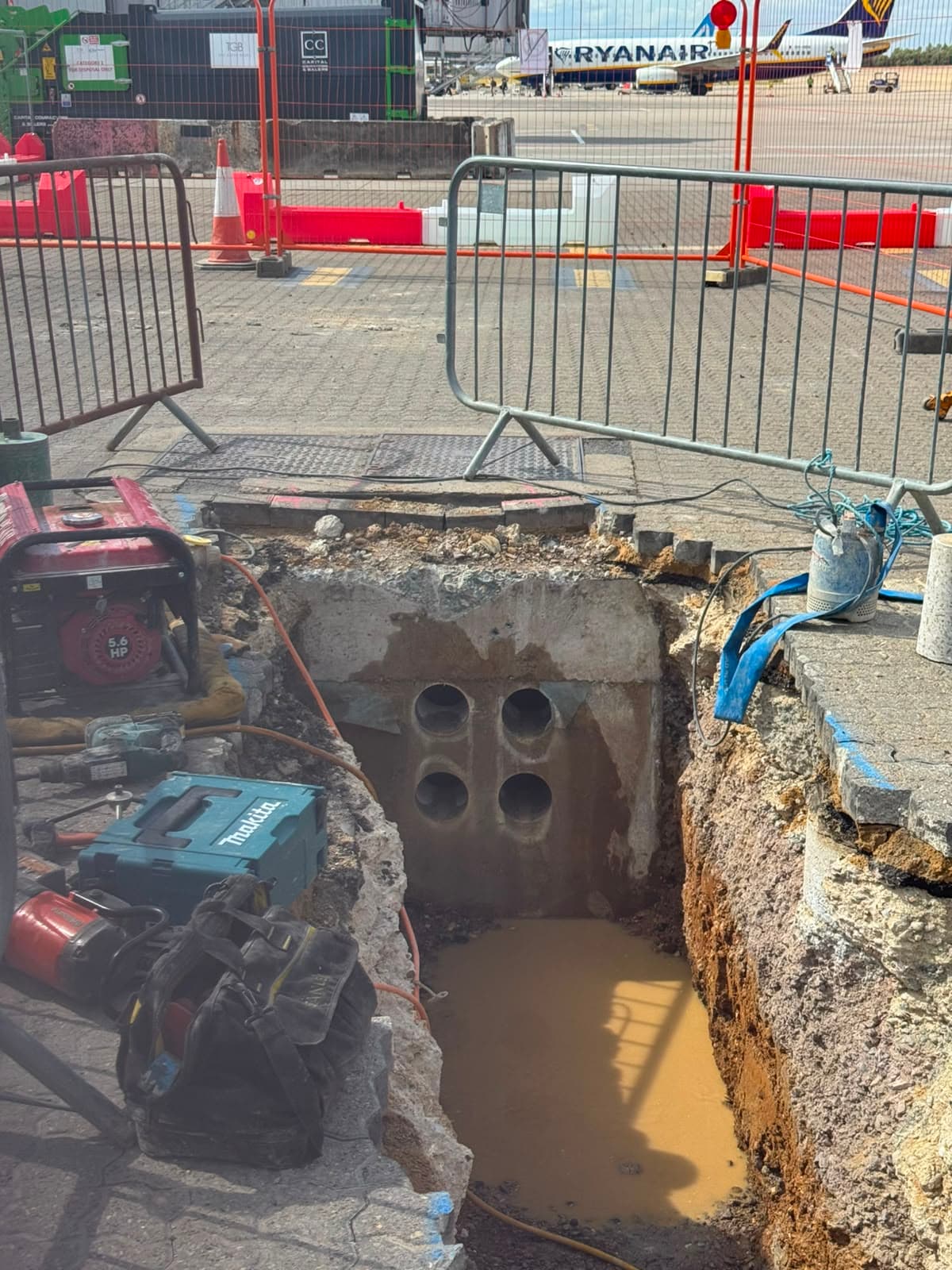 Concrete Cutting
What is Core Drilling?
Read More » Concrete Cutting
Floor Sawing Services in Kent
Read More »- Concrete Cutting
Concrete Cutting in London
Read More »  Concrete Cutting
What is floor sawing?
Read More »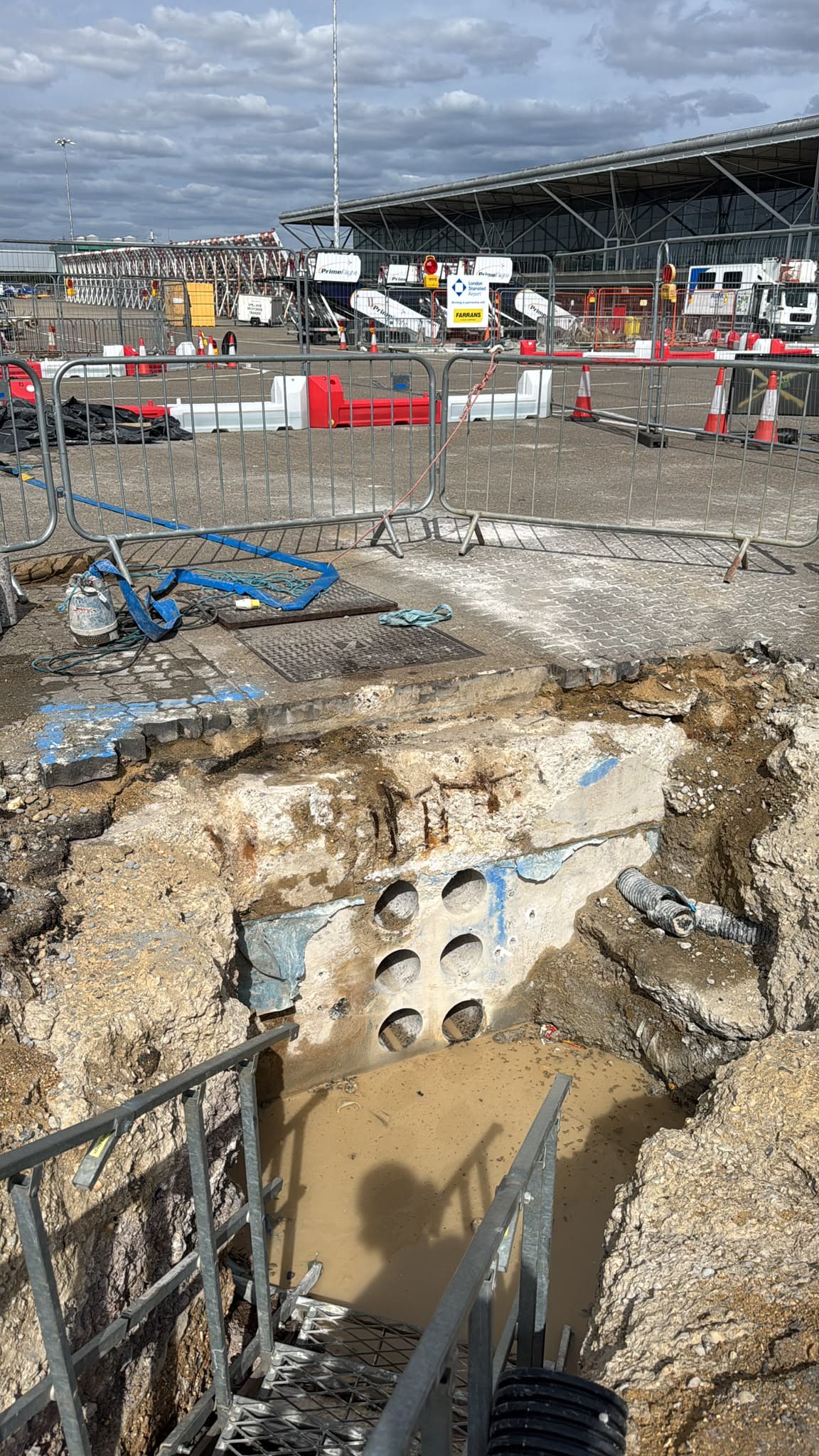 Concrete Cutting
Diamond Drilling Contractors in Kent
Read More »