Shepherd and Sons Ltd
What Is MMA Line Marking?
MMA line marking is a two-component, cold applied road and floor marking system based on methyl methacrylate resin. A pigmented resin is mixed with a peroxide catalyst immediately before application, triggering a chemical reaction that cures the material into a tough, plastic-like marking bonded to the surface. Its defining characteristic is speed of cure. MMA is trafficable within roughly 15 to 30 minutes of application, even in cold weather, without any need for heating. That makes it the specification of choice for overnight relines, cold-season work, coloured surfacing such as cycle and bus lanes, and any project where the surface has to reopen fast. Service life is typically six to ten years on good quality surfaces under normal traffic.
At Shepherd and Sons, we deliver MMA line marking as part of our wider line marking service, with more than 40 years of surfacing experience across UK airfields, highways, ports and public sites. We're based at Westerhill Farm in Kent and hold SafeContractor and CHAS accreditation. This article covers what MMA line marking is, how the chemistry works, when it's the right specification, how it compares to thermoplastic and epoxy, and what proper application involves.
How MMA line marking works
MMA cures by chemical reaction, not by cooling or by evaporation. This is the key to understanding why it behaves the way it does.
Thermoplastic marking is a solid compound melted at around 180 to 200°C, applied hot, and cured by cooling back to a solid. Conventional paint dries by solvent or water evaporation. MMA does neither. The pigmented methyl methacrylate resin and the benzoyl peroxide catalyst are mixed at the point of application, usually at a 1:1 or 98:2 ratio depending on the system, and the catalyst initiates a polymerisation reaction. The liquid monomer converts into a solid thermoset polymer.
Three consequences follow from that chemistry, and each one drives where MMA is specified:
Rapid cure independent of temperature. Because the reaction is chemical rather than thermal, MMA cures fast even when it's cold. A marking can be trafficable in 15 to 30 minutes, and in warm conditions in as little as ten. Application is possible across a surface temperature range from around 0°C up to 35°C, which is far wider than thermoplastic can manage.
A thermoset, cross-linked structure. Once cured, MMA doesn't re-melt. The cross-linked polymer gives permanent mechanical strength, strong bead retention for retroreflectivity, and excellent abrasion and chemical resistance. It withstands snow plough blades, which is why it's favoured on regularly ploughed routes.
A short pot life. The trade-off for fast cure is that once mixed, the material has to be applied within a very short window, often around ten minutes. This demands proper metering and application equipment and a practised crew.
When MMA line marking is the right specification
Five scenarios push a specification towards MMA.
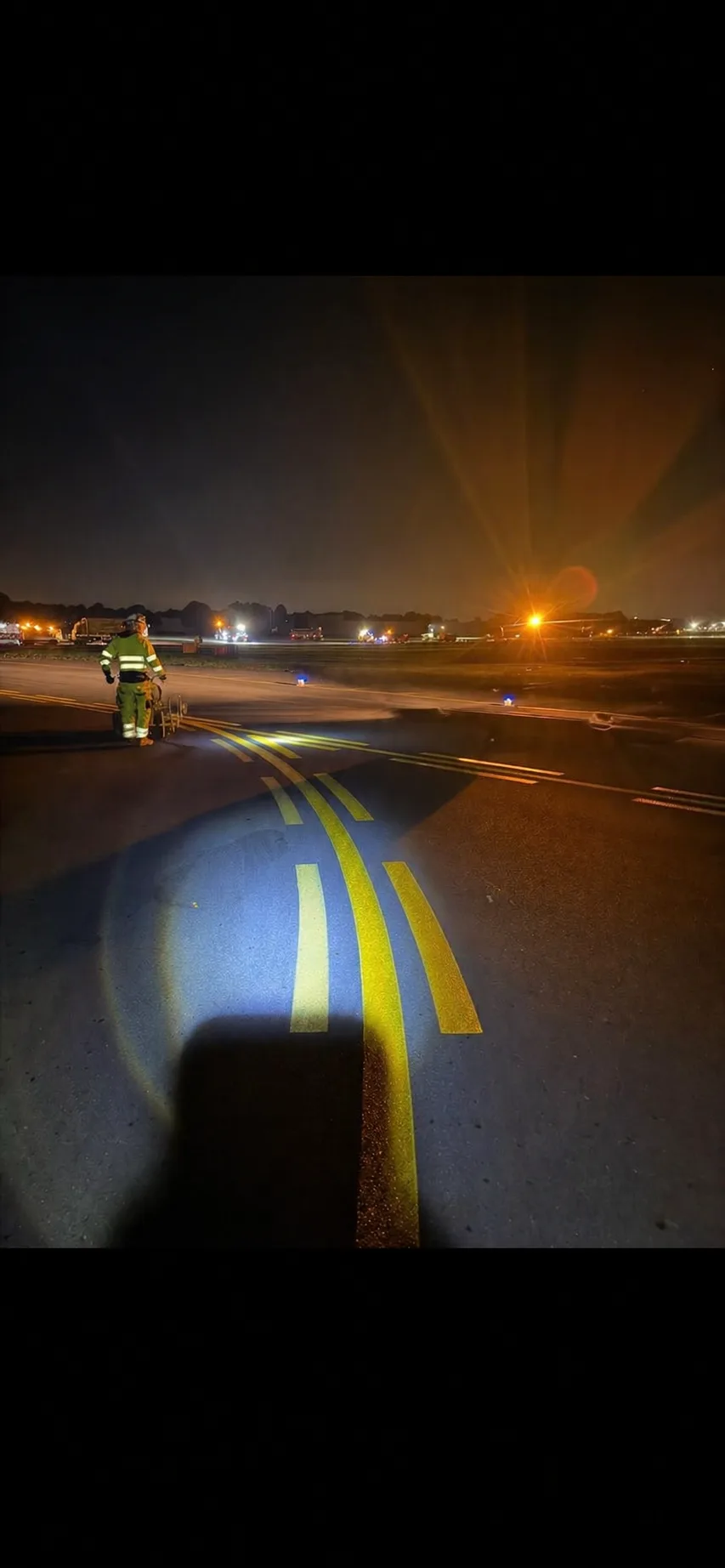
Overnight and rapid-turnaround relines. Where a road, junction, car park or airfield surface has to reopen at the start of the next shift, MMA's fast cure is decisive. The marking is down, cured and trafficable inside the closure window.
Cold weather application. Thermoplastic needs the surface at 5°C and rising with no moisture for 24 hours, which shuts down a large part of the UK working year. MMA cures reliably down to around 0°C, extending the marking season significantly.
Coloured surfacing. Cycle lanes, bus lanes, junction approaches and hatched safety areas where a durable, high-visibility coloured finish is required. MMA can be pigmented across a wide colour range and holds that colour well under UV.
High-traffic, high-wear locations. Roundabouts, busy junctions, bus stops and pedestrian crossings that take a routine beating. The thermoset structure resists the wear that would strip a lesser marking.
Regularly ploughed routes. MMA's resistance to snow plough blade damage suits it to routes where winter maintenance is aggressive.
In our experience, MMA line marking works better than thermoplastic on cold-weather and overnight car park relines because it cures chemically in around 20 to 30 minutes regardless of ambient temperature, where thermoplastic laid onto a cold surface on a winter night doesn't cool and key in properly and can fail to bond. On a 24-hour-operating site with a single overnight closure window in December, that difference is the gap between a job completed in one shift and one that runs across three. On a long summer stretch of open A-road, though, thermoplastic is faster to lay in bulk and cheaper per metre, so it remains the right call there.
MMA compared to the alternatives
For specifiers weighing the options:
MMA versus thermoplastic. MMA cures fast in cold weather and resists plough damage; thermoplastic is cheaper per metre and faster to lay on long open runs but is temperature-restricted and cannot be laid in the wet. Thermoplastic is the highway workhorse; MMA is the specialist for speed, cold and colour.
MMA versus epoxy. Both are two-component cold applied systems with strong chemical resistance. Epoxy cures more slowly, over four to twenty-four hours, so it suits internal industrial floors where turnaround time isn't critical and its chemical resistance and cost are the priority. MMA cures in minutes, so it suits external work where reopening speed matters. MMA carries a strong odour during application that can rule it out in some enclosed occupied buildings, where epoxy is preferable.
MMA versus conventional paint. No real contest on durability. Water and solvent-based paints are cheaper and simpler but last months rather than years on trafficked surfaces.
The odour point, and why it matters
MMA has a characteristic strong smell during application and cure, caused by the methacrylate monomer before it polymerises. It dissipates once the material has cured, but it's noticeable and can be objectionable in populated or enclosed areas.
On external highway and airfield work this is rarely an issue. In enclosed car parks, near hospital windows, or in occupied buildings, it needs managing, and in some cases it steers the specification towards epoxy instead. We've found that flagging the odour with the client and the site's neighbours before mobilising avoids complaints on the night, particularly on residential-adjacent car park work. It's a small point that causes disproportionate friction when it's missed.
Why surface preparation still decides the outcome
Fast cure doesn't excuse poor preparation. MMA needs a clean, sound, dry surface, and the substrate determines the approach.
On asphalt, MMA generally bonds well without a primer, which is one of its practical advantages on highway work.
On concrete, the picture is different. MMA doesn't bond as reliably to concrete as it does to asphalt, so concrete surfaces normally need a concrete primer to seal the capillary pores and develop adhesion. Skipping the primer on concrete is a common cause of early failure.
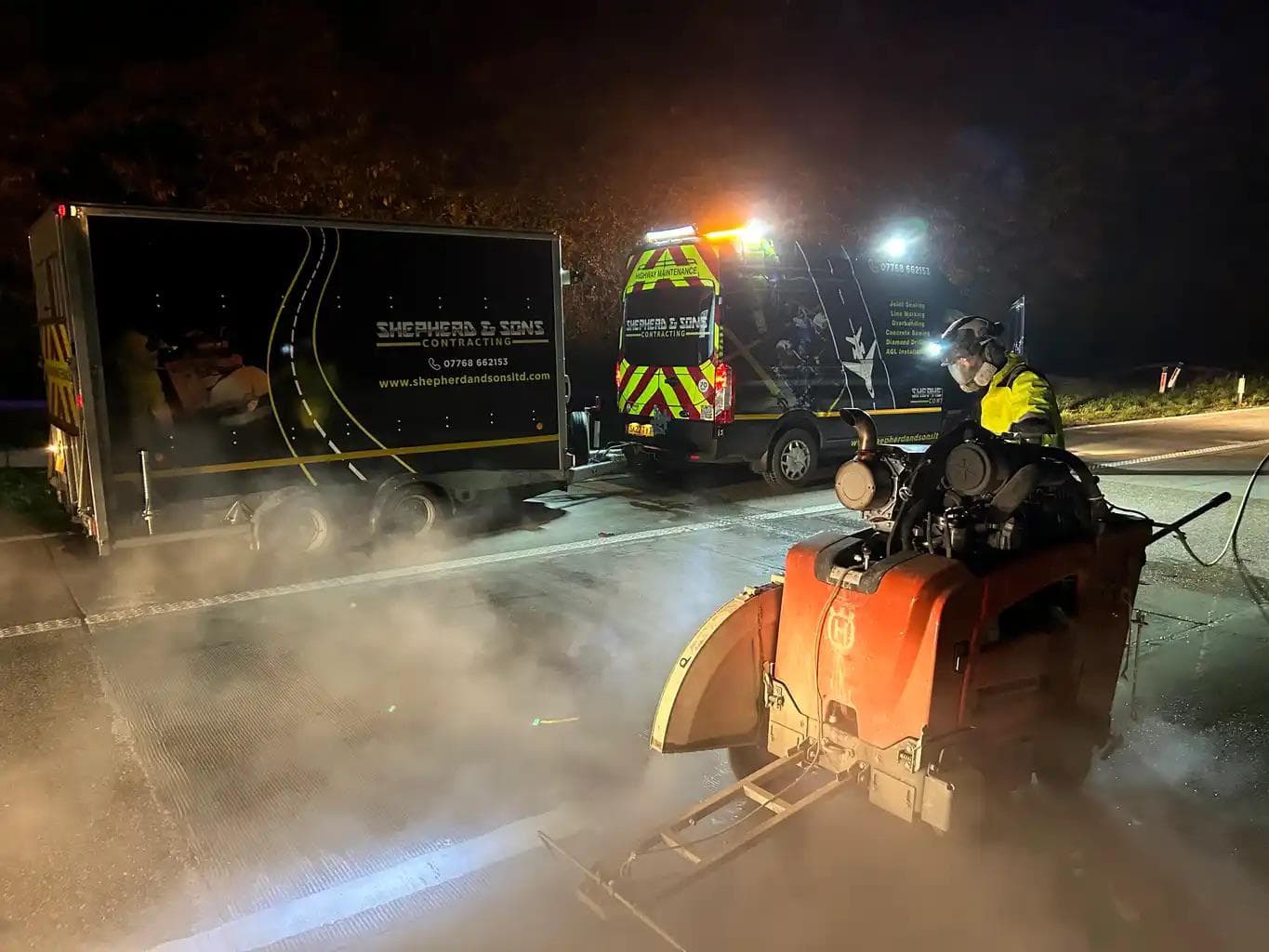
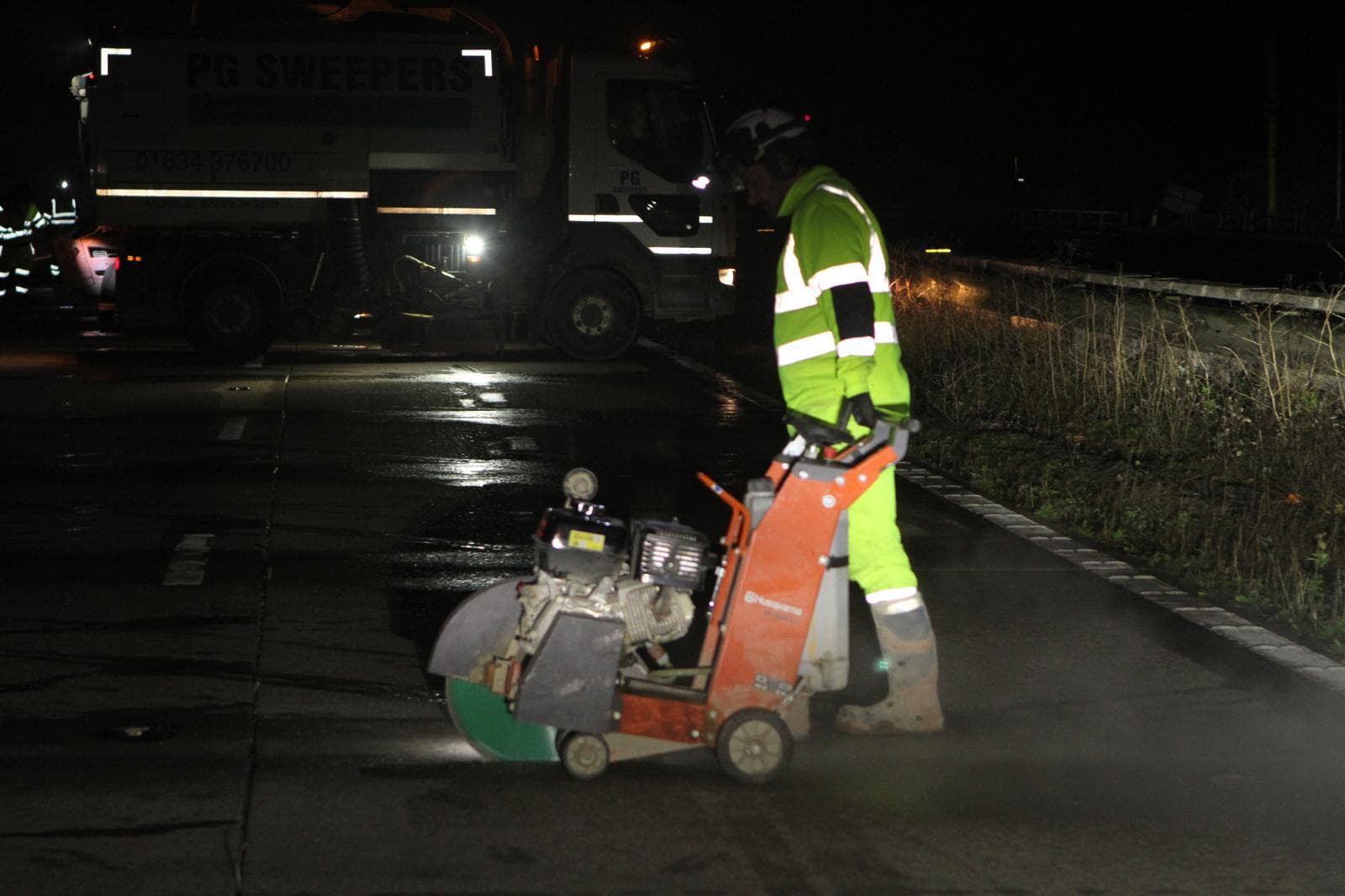
Contamination and existing markings. Oil, grease, rubber deposits, dust and failed existing markings all have to be removed. Where old markings are incompatible or in poor condition, they're taken off by shot blasting, grinding or captive-head blasting, rather than marked over.
Moisture. The surface must be dry at application. MMA tolerates cold far better than it tolerates a damp substrate.
The application process
Setting out. Line positions are surveyed and marked before application. On airfield and highway work the setting out follows the specification drawing to millimetre tolerance.
Masking. Edges are masked where a crisp line is needed, and the tape is lifted before the material cures.
Metering and mixing. The resin and catalyst are combined at the point of application in the specified ratio. Because pot life is short, the mixing has to be controlled and continuous, either through the applicator or in small batches. Under-catalysing leaves the marking soft; over-catalysing shortens the pot life to the point of unworkability.
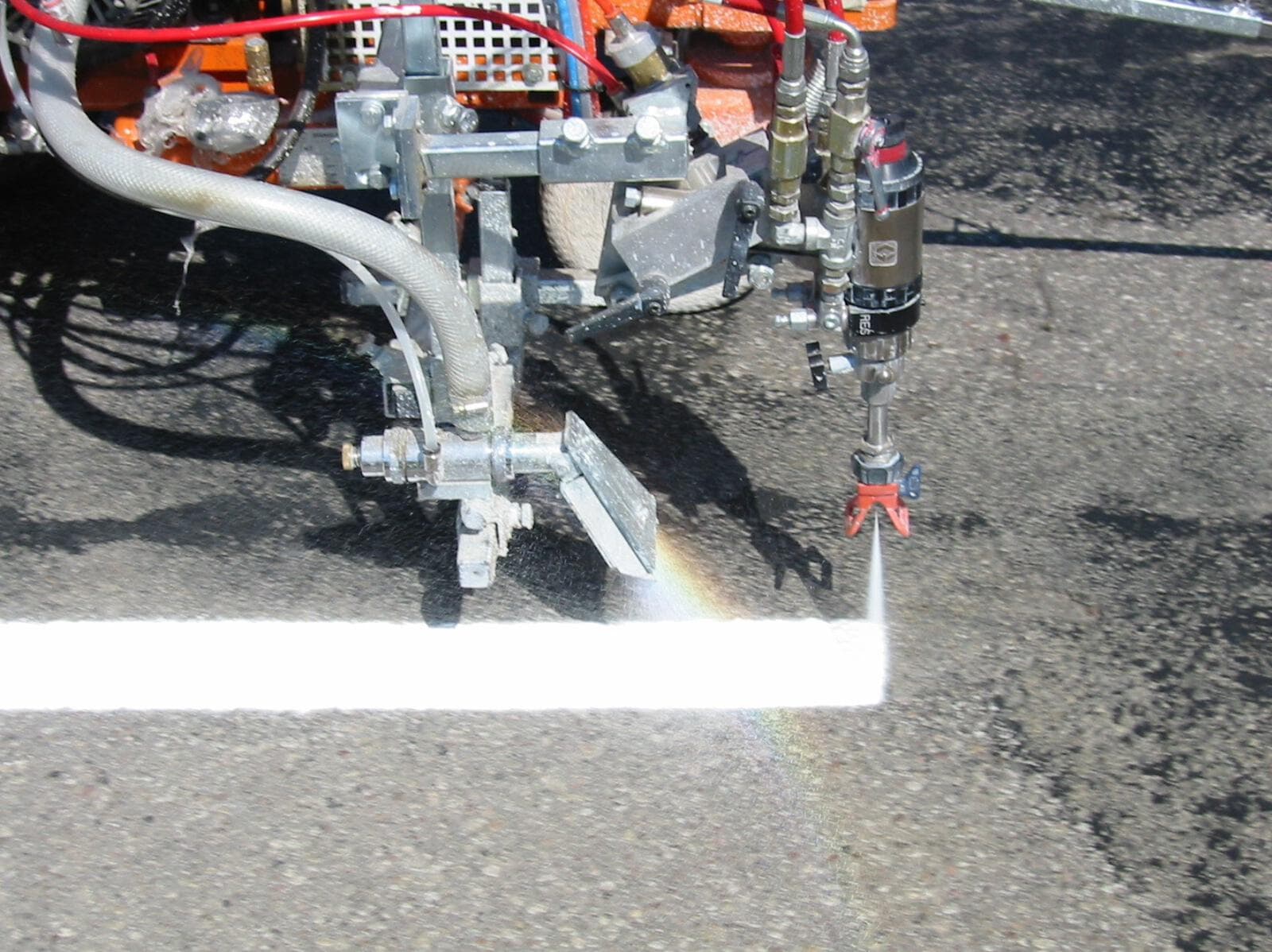
Application. MMA is applied by airless spray, draw box, screed or hand trowel depending on the marking type and thickness. Spray-applied MMA at around 1mm gives a thinner, shorter-life marking; structured or draw-box MMA at 1.5 to 2mm gives the full six-to-ten-year service life.
Glass beads. For retroreflective markings, glass beads are applied to the wet surface immediately after laying, with a bead coating specified by the manufacturer to improve retention in the cured marking.
Cure and reopening. The marking is trafficable in 15 to 30 minutes at typical temperatures, faster in warm conditions. That short window is the whole point of choosing MMA.
Colour, safety and compliance
Where MMA is used for coloured surfacing and safety markings, the colour scheme should follow the relevant traffic or site safety convention rather than aesthetic preference. On highways, red and green surfacing is used for cycle and bus lanes and junction treatments; on workplace and car park sites, marking colours should map to the traffic management plan.
MMA road and floor marking in the UK works to:
- BS EN 1436 (road marking materials, performance for road users) covering retroreflection, colour, skid resistance and durability
- BS EN 1871 (road marking materials, physical properties)
- BS EN 1423 and 1424 (drop-on and premix glass beads for retroreflection)
- Department for Transport Traffic Signs Manual, Chapter 5 (road markings)
- Specification for Highway Works Series 1200 (road markings, highway authority specification)
- CAA and ICAO standards for airfield marking applications
- HSE guidance for workplace and car park markings
Sectors where MMA line marking is specified
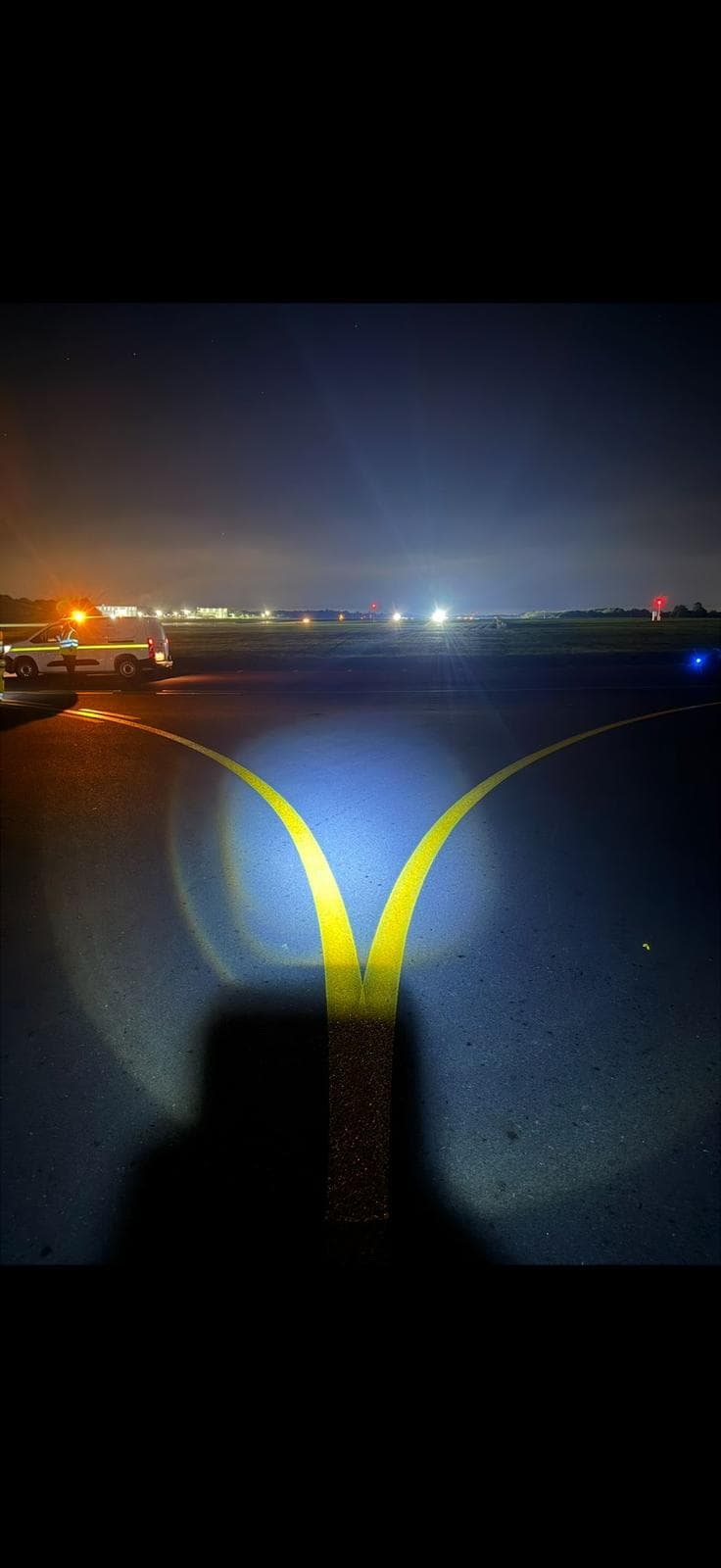
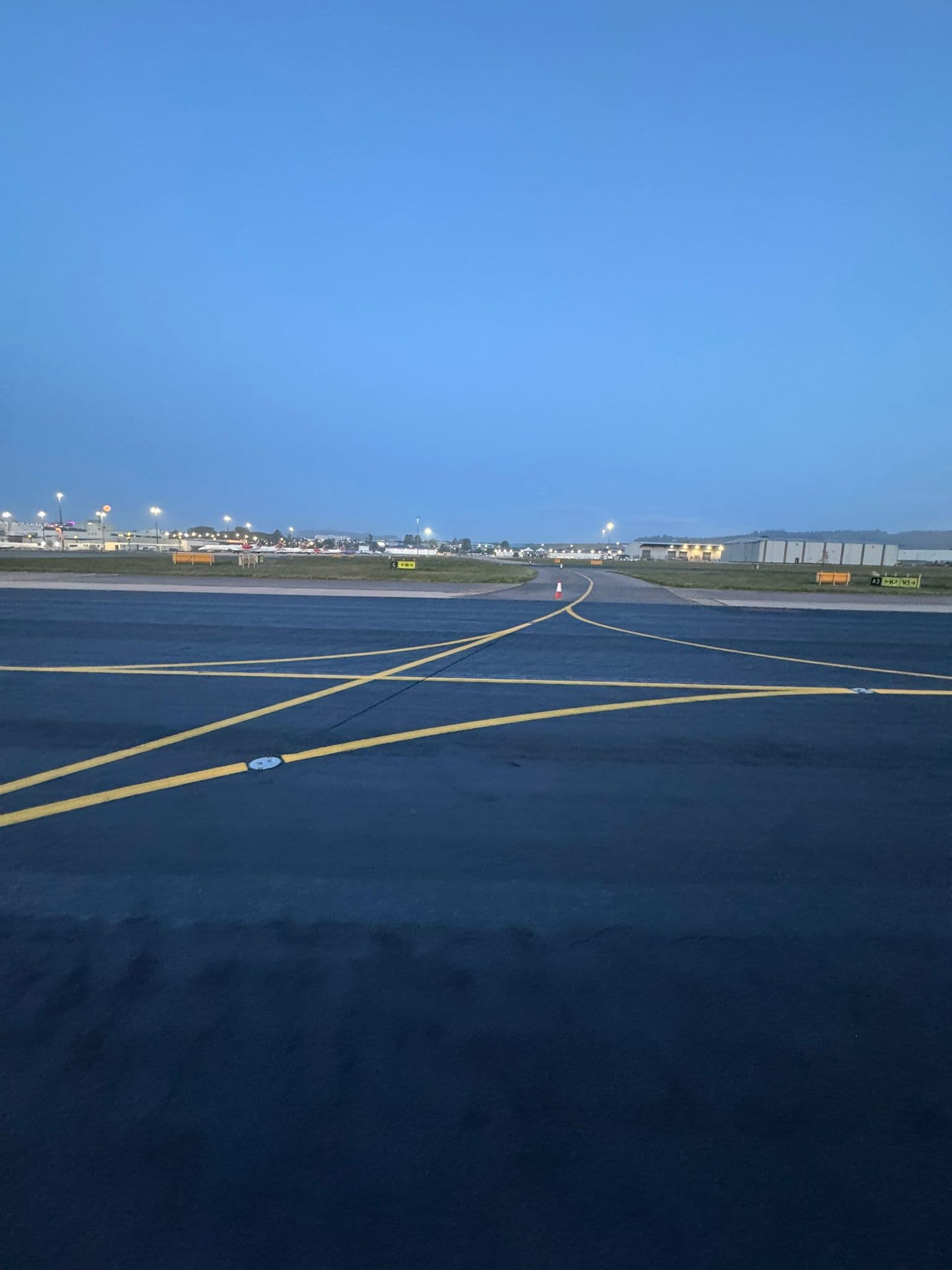
Highway authorities and Tier 1 contractors specify MMA for cold-weather work, coloured cycle and bus lane surfacing, junction treatments and rapid overnight relines on trunk roads and local authority networks. Public sector clients use it for school markings, hospital car parks needing overnight turnaround, and council car park schemes. Aviation clients specify MMA where fast cure suits tight airside working windows, though airfield marking materials are selected against the specific CAA and ICAO performance requirements. Port operators use it for quayside safety markings, container grids and heavy plant operating zones where durability and colour are priorities.
We've delivered line marking across the UK, spanning fast-cure MMA schemes through to bulk thermoplastic highway work and internal epoxy floors. For the full picture of how MMA sits alongside the other materials, what is line marking? covers the whole range.
Specifying MMA line marking properly
A meaningful MMA line marking specification will identify the substrate type, the primer requirement on concrete, the surface preparation method, the product and colour, the application thickness and method, the glass bead requirement, the line widths and layout, the ambient temperature window, and the reopening requirement.
A specification that lists "MMA line marking, £X per metre" says nothing about substrate preparation or application thickness, which are the two things that actually determine service life.
If you're specifying or commissioning MMA line marking work, whether that's a cold-weather highway reline, a coloured cycle lane scheme, a hospital car park needing overnight turnaround, or an airfield marking programme, get in touch. We'll assess the substrate, the climate window, the colour and durability requirement and the reopening constraint, and quote against the actual specification. You can see recent project work on our LinkedIn and Instagram.