Thermoplastic is the material almost every road marking in the UK is made of. It arrives as a solid and is heated until it flows. It is applied hot to the road surface, where it cures simply by cooling back to a solid. Glass beads are dropped onto it as it is laid. Those beads are what make a marking visible in headlights at night.
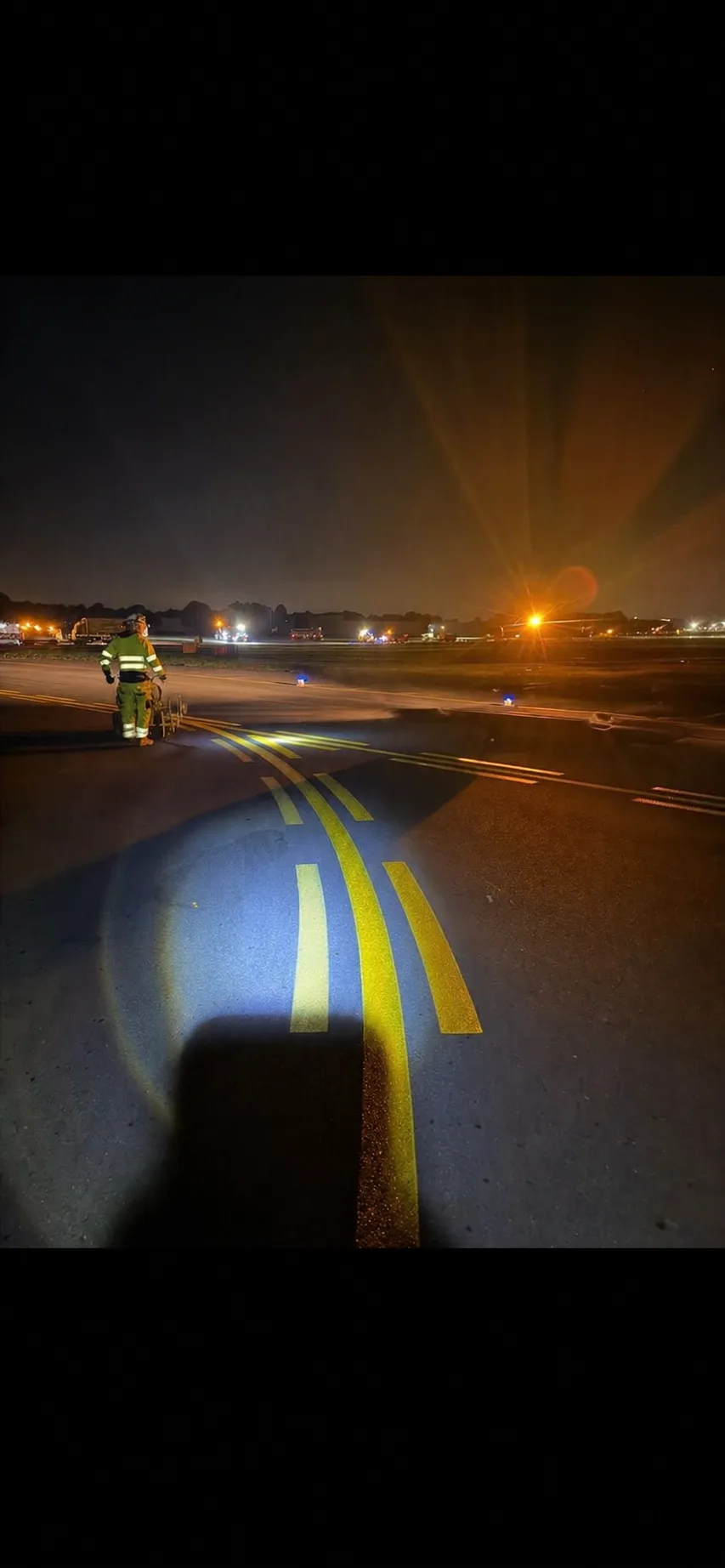
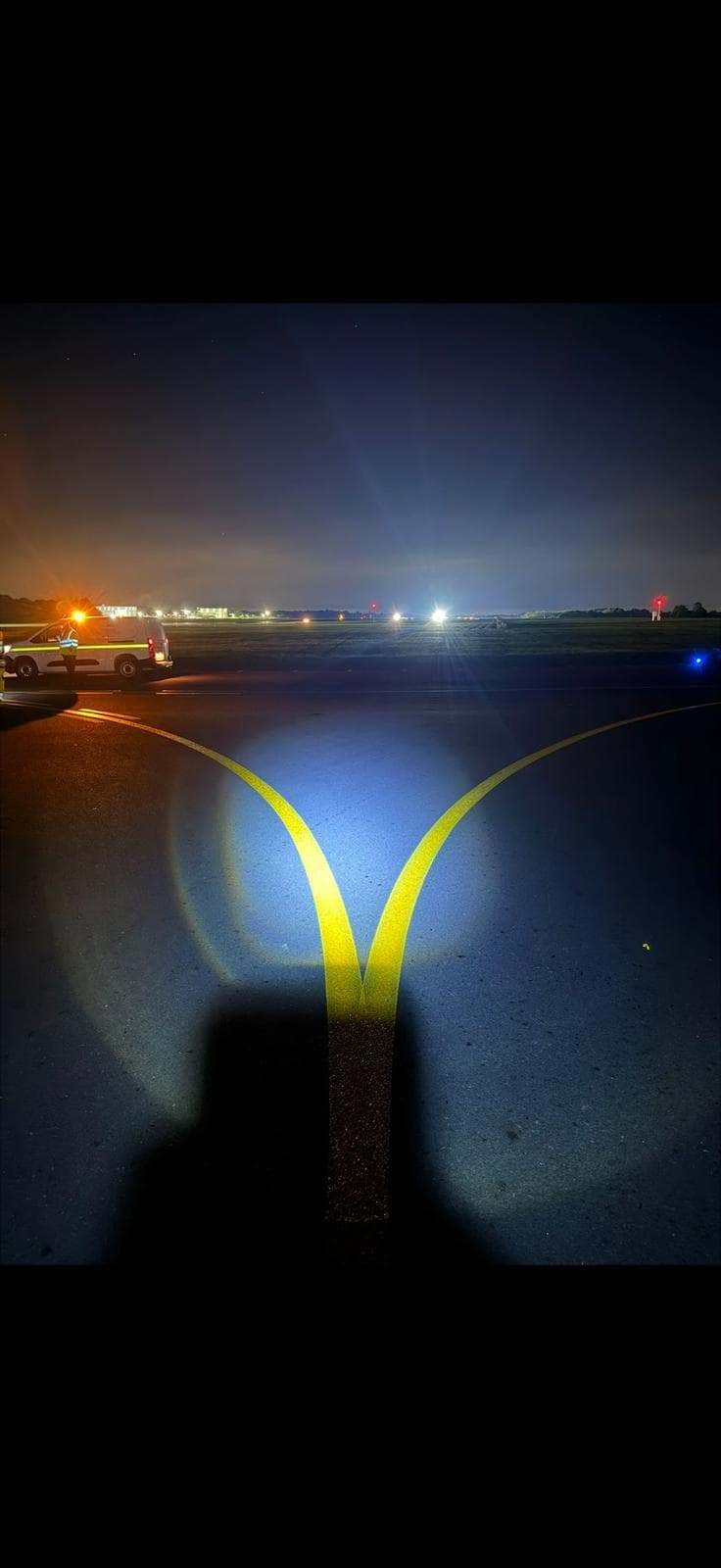
At Shepherd and Sons we lay thermoplastic road marking on highways, car parks and airfield pavements. From working with clients across highway and public sector schemes, we've found the question that matters is almost never how it is applied. It is how long it will last, and that is the question the industry answers worst.
How it works
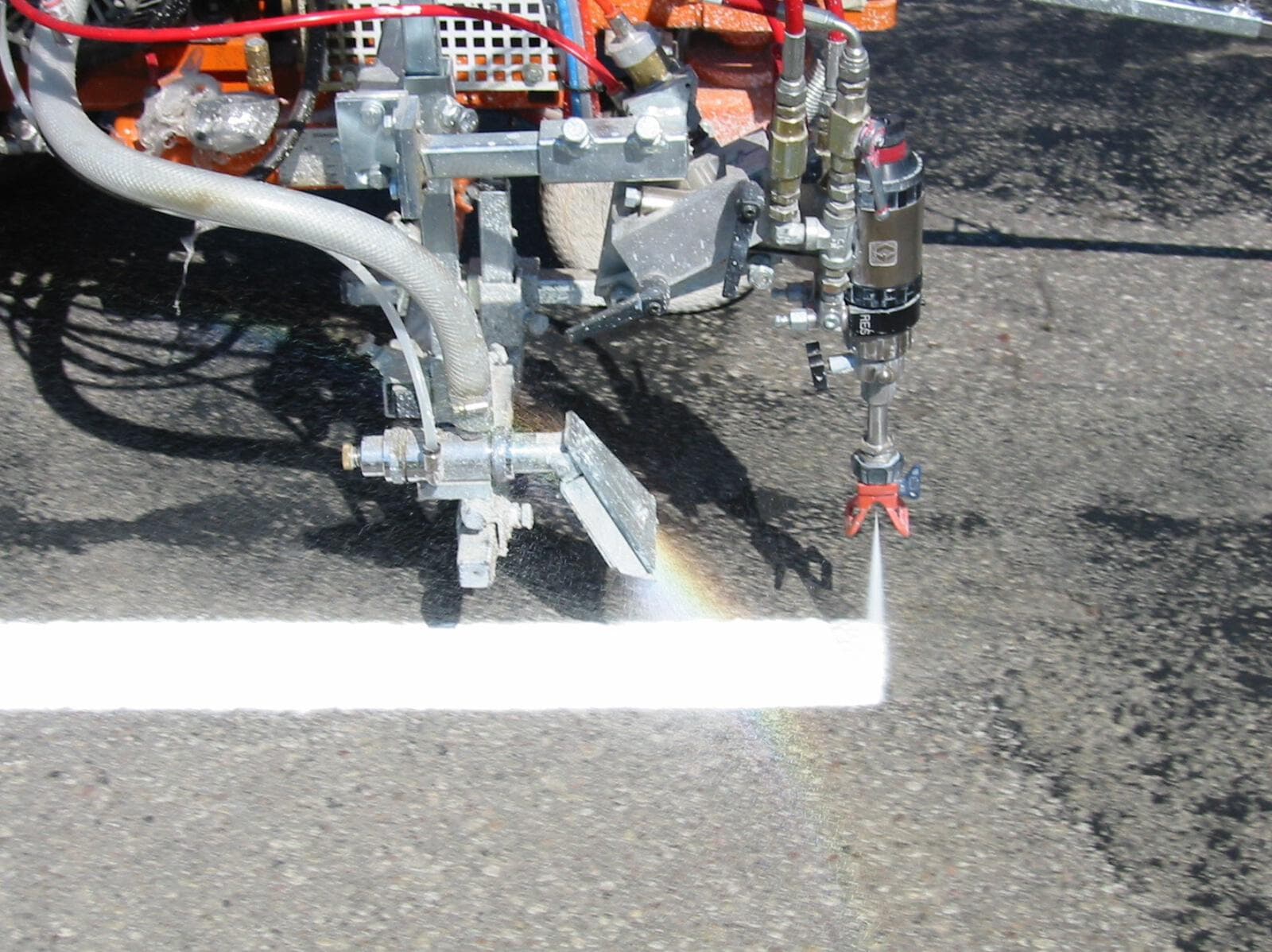
The compound is a blend of binder, pigment, filler and aggregate. It is heated in a boiler and applied by screed, spray or extrusion. It bonds to the surface as it cools and is trafficable within minutes.
That fast set is the reason it dominates. A road can be reopened almost immediately. On a live carriageway that is worth more than almost any other property the material has.
Screed application gives a thicker line and the longest life, and it is the normal choice for transverse markings and heavy-duty work. Spray gives a thinner film that is quicker over long runs. Extrusion sits between the two. The method changes the thickness, and thickness is one of the things that decides how long the marking survives.
Glass beads do the night-time work. Dropped on while the material is still molten, they sit proud enough to catch a headlight beam and return it toward the driver. That is retroreflectivity. It is measured and specified separately from the marking itself, and it is usually the first property to fail.
The honest answer on service life
You will see ten years quoted. Treat it carefully.
The Department for Transport declines to give a figure at all. Traffic Signs Manual Chapter 5 says it is not possible to recommend specific renewal intervals. They depend on the type of line, the material and the traffic flow. Authorities are asked to keep markings under review instead.
The best UK field evidence points considerably lower than ten years. A study for the Scottish Road Research Board recorded one authority generally experiencing five years from thermoplastic. At traffic junctions the same authority reported two.
Notice which way that runs. Heavy traffic shortens the life of a marking. It does not extend it. Any claim pairing a long life with heavy traffic has the physics backwards.
In our experience, specifying a marking by its required performance class works better than specifying it by expected years. The years depend on traffic volume, turning movements and surface condition, none of which a contractor controls. A class is measurable on the day. A lifespan is a hope.
What actually governs it
The law is the Traffic Signs Regulations and General Directions 2016. That is what prescribes how a marking must look. Chapter 5 of the Traffic Signs Manual is guidance that helps you comply, and it says so itself rather than claiming force.
On trunk roads and motorways the contract specification bites, and it has recently moved. The Specification for Highway Works was modernised and republished, and the old Series 1200 is withdrawn. Permanent markings now sit under CC 120 on the Manual of Contract Documents for Highway Works. Anyone still citing Series 1200 in 2026 is quoting a withdrawn document.
It is also worth knowing that none of that applies on private land. A supermarket car park is not governed by the highway specification. Laying to it there is a voluntary quality choice, which is a perfectly good thing to offer as long as nobody pretends it is a legal requirement.
Performance is measured to BS EN 1436, covering retroreflection, luminance, colour and skid resistance. The physical properties of the material sit under BS EN 1871, and the glass beads under BS EN 1423 and 1424. Those are the numbers worth writing into a specification.
Where it works and where it does not
Thermoplastic wants a clean, dry, bituminous surface. It is not laid in the wet. It is not laid onto a cold road either, because a poor bond forms and the marking then fails early rather than wearing out.
There is no single legislated minimum surface temperature in the UK specification, which surprises people. The commonly quoted five degrees comes from elsewhere. The UK specification asks for clean and dry rather than naming a number. In practice a rising road temperature and a dry surface is the working rule.
It is an outdoor material on bituminous surfaces. Indoors it is the wrong choice. On concrete it needs more care, because the bond behaves differently and preparation matters more.
That is not the same as saying it is unsuitable off the public highway. Depots, yards and workplace traffic routes are legitimate thermoplastic ground. HSE guidance on workplace transport actively prefers it to paint in those places.
Changing a layout, and why removal matters
Markings do not only wear out. Layouts change, and a car park re-striped to a new bay arrangement has to lose the old lines first.
Thermoplastic is thick enough that painting over it does not work. The old line telegraphs through. On a wet night the ghost of it reflects almost as well as the new one does.
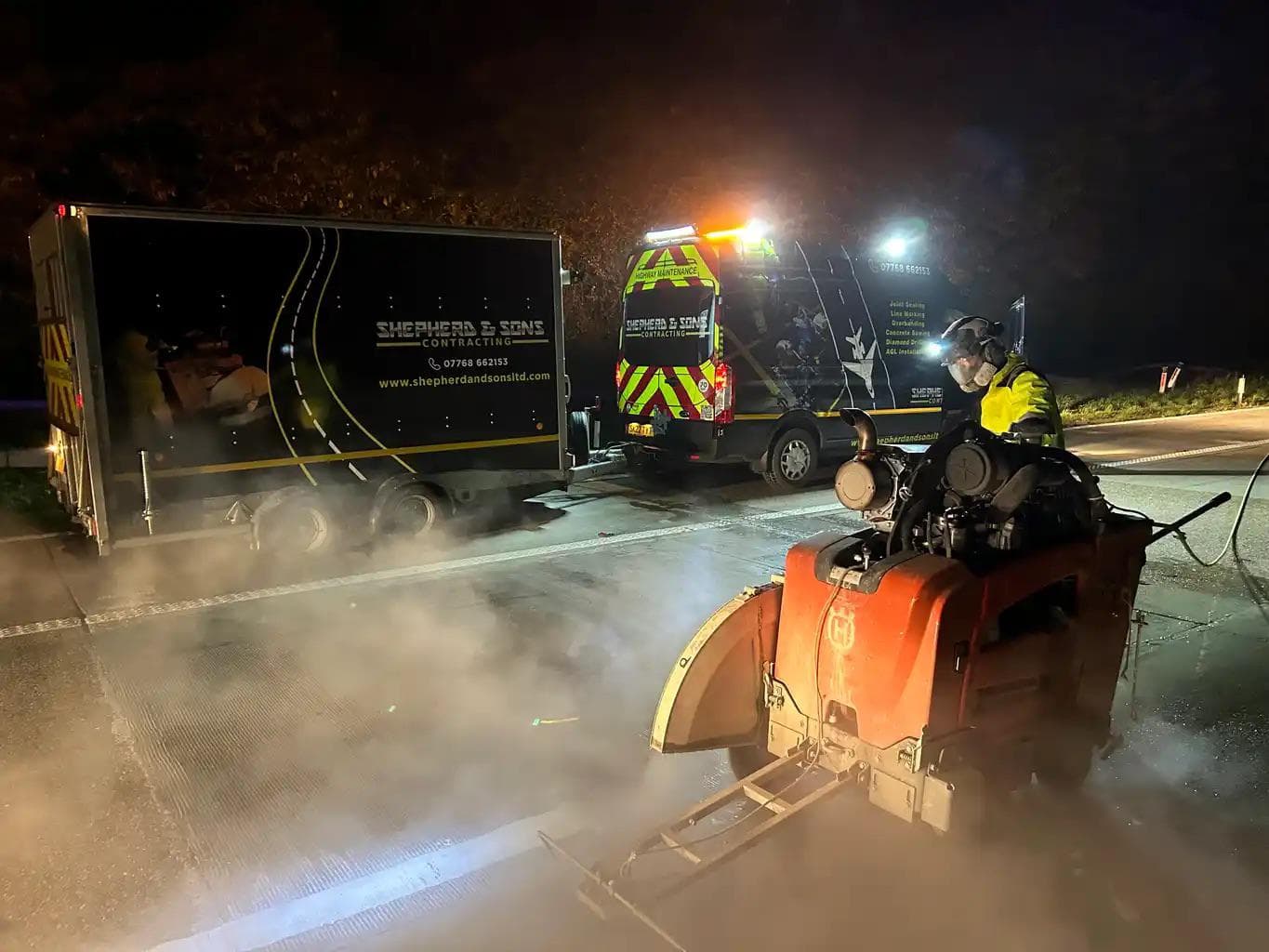
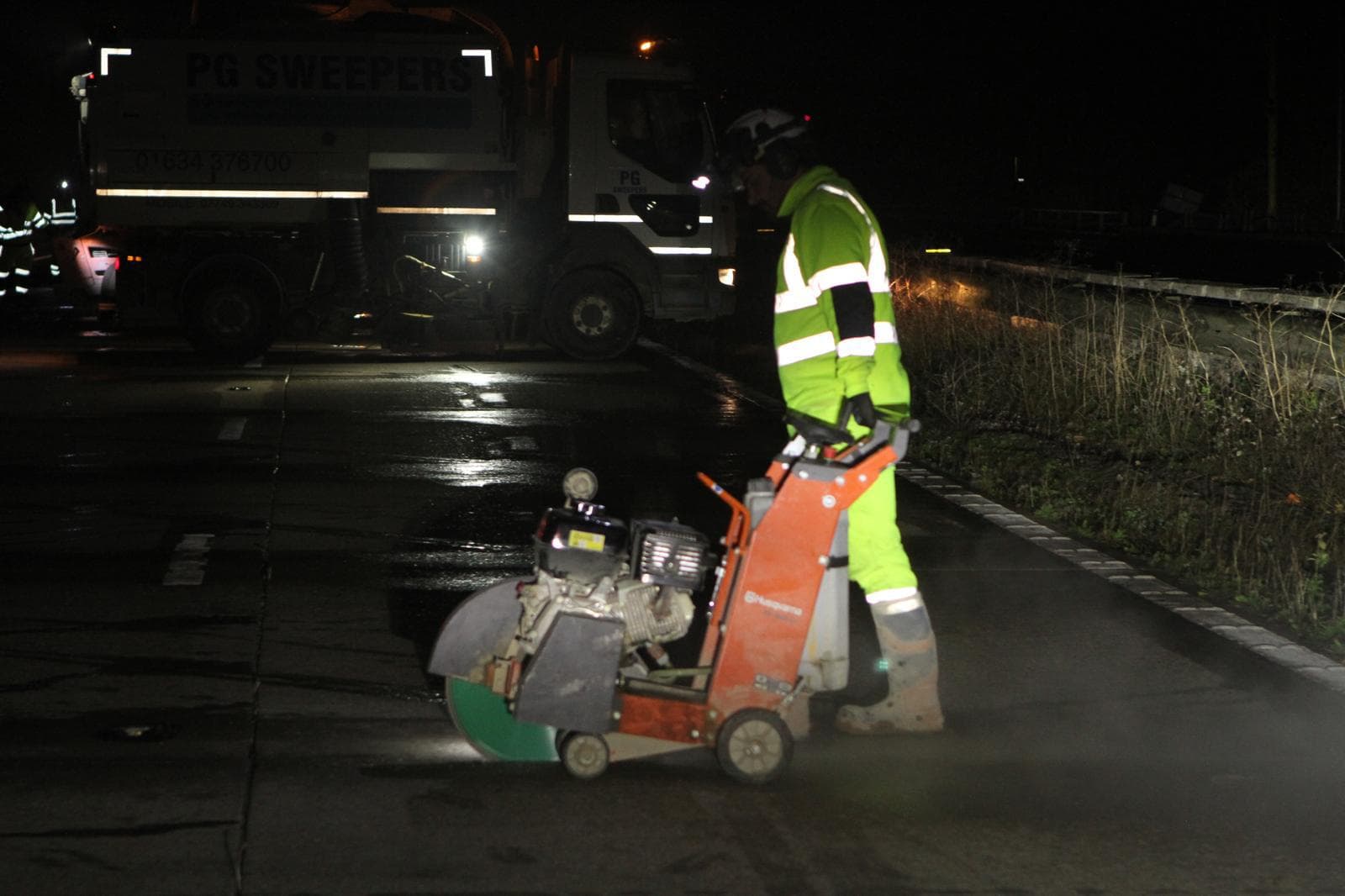
Removal is therefore a job in its own right. The usual methods are captive-head shot blasting, planing and hydro-blasting. The first drives abrasive at the marking and recovers it in the same pass.
The trade-off is scarring. Any removal method takes some of the surface with it. An aggressive removal on a thin surface course leaves a visible patch that then collects water.
On an airfield that patch is a defect. On a supermarket car park it is cosmetic. The right method is not the same in both places.
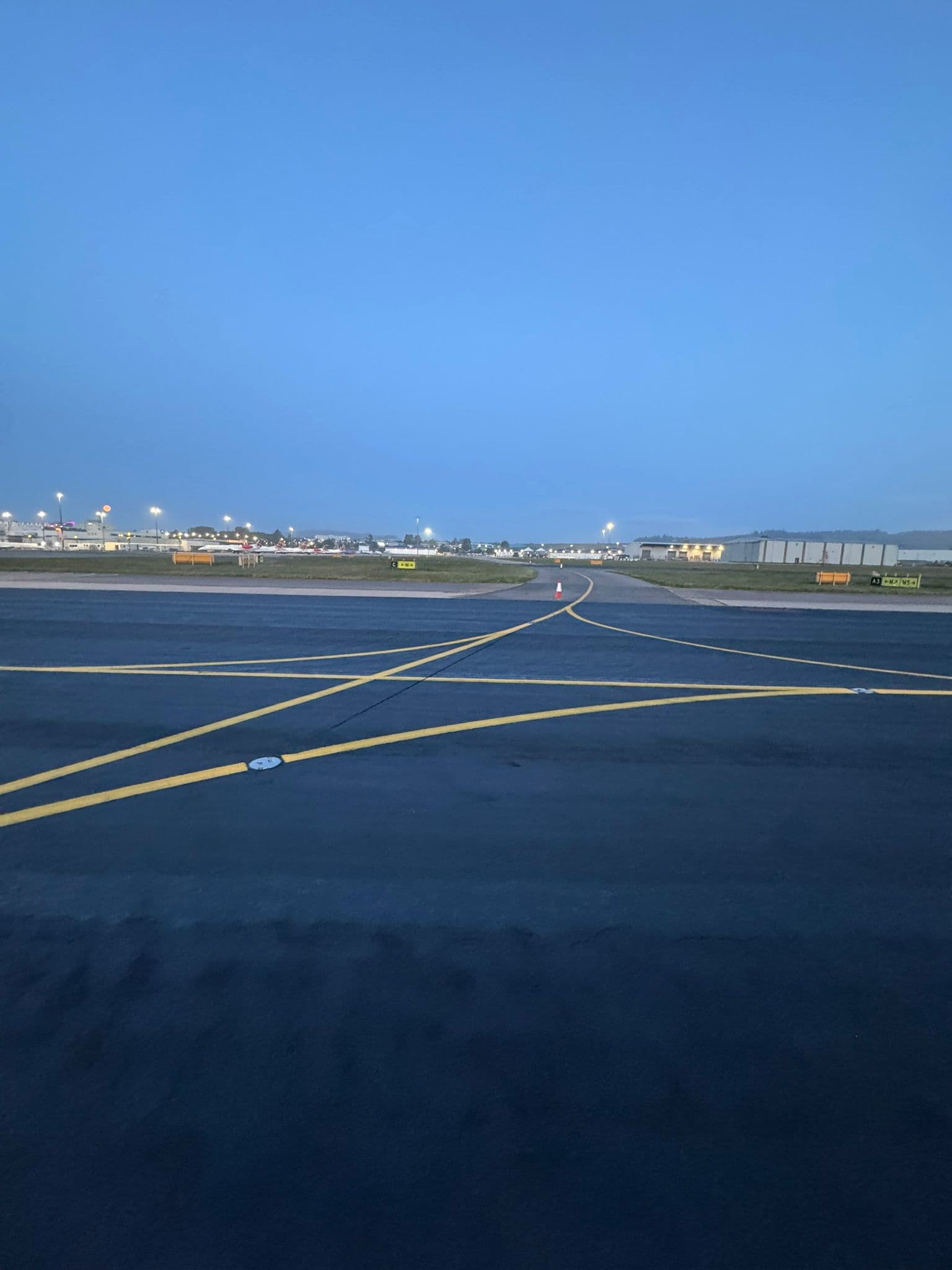
Airfield removal is stricter again. The surface has to come back with its texture intact and free of foreign object debris. The method is chosen for what it leaves behind rather than for speed.
In practice the removal often costs more than the new marking does. That is worth knowing before a scheme is priced from the linear metre of new line alone.
How it compares with the alternatives
- Thermoplastic: fast, durable, cost-effective at scale, for outdoor bituminous surfaces.
- MMA: cures chemically in 15 to 30 minutes down to around zero degrees, which is why it survives a winter programme.
- Epoxy: two-part cold applied, chemically resistant, the internal and industrial floor answer.
Choosing between them is a question of surface, temperature and how quickly the area has to reopen. None is simply better than another. There is more on the wider line marking picture and on where MMA earns its place.
The one that catches people out is temperature. A programme written for thermoplastic in October can stall for a week waiting on a dry, warm enough surface. The same programme written for MMA would have run.
For line marking across highways, car parks and airfield pavements, get in touch with our team.