
Shepherd and Sons Ltd
Hot Applied or Cold Applied Joint Sealant?
By Jordan Shepherd, Director. Published .
Most pavement joints in the UK can be sealed with either a hot applied or a cold applied sealant, and the choice usually comes down to one question. Will fuel, oil or jet blast reach the joint? Hot applied sealants are polymer modified bitumens, melted in a boiler and poured. They are the quicker and generally cheaper option for highways, car parks, yards and the joints where concrete meets asphalt. Cold applied sealants cure chemically, and the ones that matter on pavements are mostly two-part polysulphides and polyurethanes. They are the choice wherever spilt fuel, hydraulic oil or engine blast would attack a bitumen seal, which means aircraft stands, fuelling areas, forecourts and oil terminals.
After that first question come movement, what the joint sits between, how long the surface can stay shut and what the weather is doing. Shepherd and Sons seal joints both ways, and we are members of the Extruded Sealant Association, so neither answer is a sales pitch for us. This article sets out how the decision actually gets made, factor by factor.
What the two families actually are
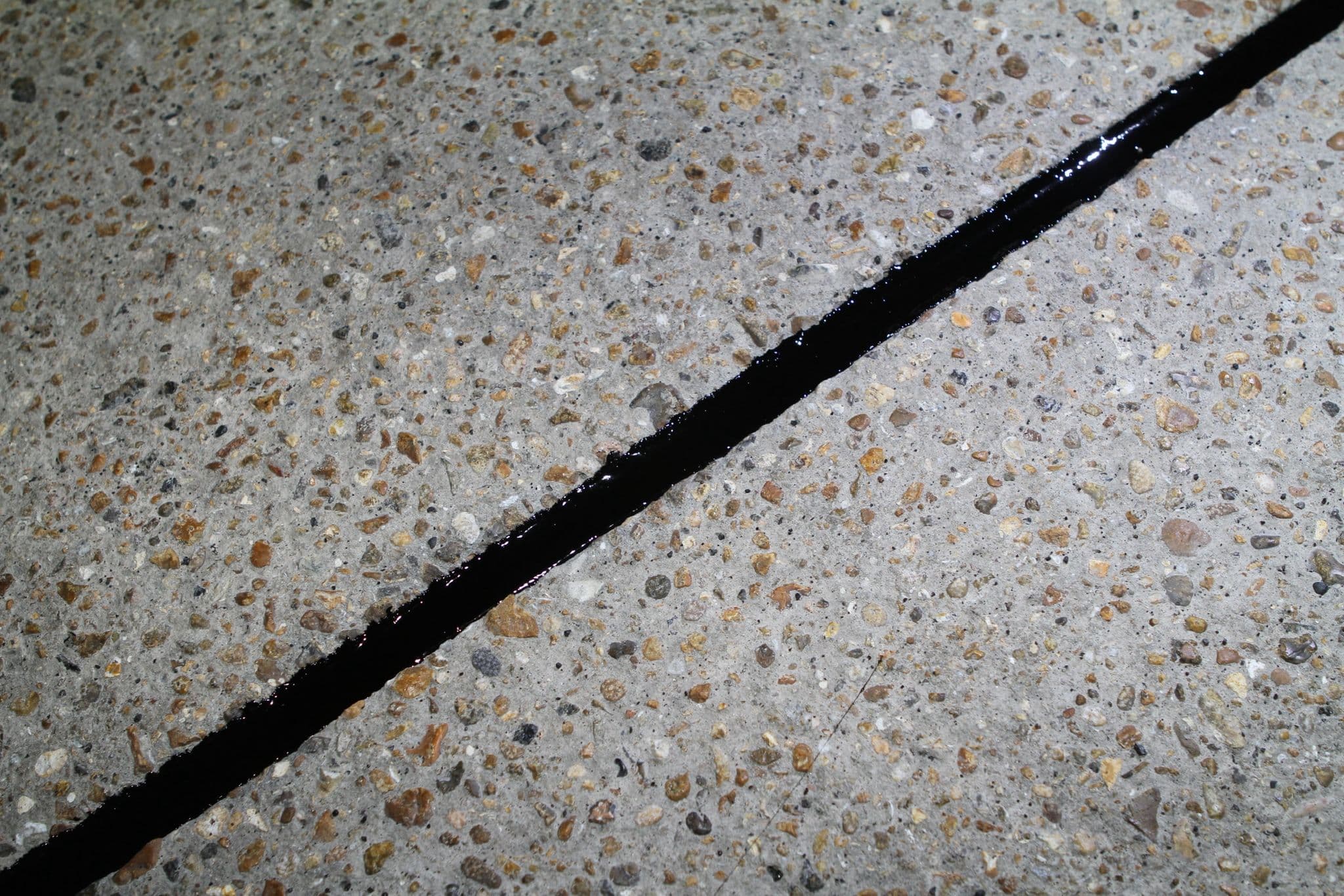
Hot applied joint sealing uses a bitumen compound, usually polymer modified, heated in a boiler until it pours. It goes into the slot molten and sets as it cools, which is why a hot poured joint can usually take traffic soon after the gang moves on. The British specification is BS EN 14188-1, which covers hot applied sealants for roads, airfields and other trafficked areas, and the joints between bituminous surfacing and concrete.
Cold applied joint sealing uses a sealant that cures by chemical reaction rather than by cooling. A two-part system has a base and a hardener mixed at the point of application. A one-part system cures from moisture in the air, which is slower. The specification here is BS EN 14188-2, written for cold applied sealants in concrete pavements, including roads, parking decks, bridge decks and airfields.
Both standards include normal grades and fuel resistant grades, so the label on the tin matters more than the family name. The US Federal Highway Administration's advisory on concrete pavement joints sorts the materials the same way, with the hot poured rubberised asphalts in one group and the two-component polysulphides and polyurethanes, described as jet fuel and jet blast resistant, in the other.
Fuel and jet blast settle it first
Bitumen and hydrocarbons do not mix well. Diesel, kerosene and hydraulic oil soften a bitumen seal, and a softened seal is picked out of the joint by the next wheel. That is why the first thing we ask about any joint is what gets spilt on it.
On an aircraft stand the answer is fuel, hydraulic fluid and de-icer, and then there is the engine. Jet blast is hot and fast enough to strip a soft seal out of its slot, and anything it lifts becomes foreign object debris. In our experience, Thioflex 555 works better than a hot applied seal on aircraft stands because it resists both jet blast and repeated fuel contact. Fosroc, who make it, describe Thioflex 555 as a two-component polysulphide for concrete roads, runways and hard standings, particularly suited to aircraft fuelling areas, oil terminals, garage forecourts and cargo areas. It is our main cold applied sealant, and on airfield work we pump and mix it through a rig Richard Shepherd built in house to keep the flow and the mix consistent.
One detail catches people out. The scope of BS EN 14188-2 excludes petrol stations, jet fuel stations on airfields and the chemical industry. On those sites the product's own data and approvals, and the client's specification, decide what goes in the joint, so ask for them in writing rather than relying on the standard number alone. The benefits of Thioflex 555 go through what that product's data covers.
Where the joint meets asphalt
Plenty of joints are not concrete to concrete. A concrete apron meets an asphalt taxiway, a bridge deck meets the carriageway, a yard slab meets the access road. Hot applied bitumen bonds to asphalt naturally, and BS EN 14188-1 is written to include those bituminous to concrete joints. BS EN 14188-2 is written for joints in concrete pavements.
So where a joint has asphalt on one face and no fuel risk, hot applied is normally the natural fit. Where it has asphalt on one face and a fuel risk as well, the decision needs the manufacturer's word on adhesion to bitumen before anything is ordered, because the two requirements pull in different directions.
Movement, and the grade within each family
Choosing hot or cold is only half the decision. Within hot applied there are two normal grades under BS EN 14188-1. N1 is the elastic, high extension type and N2 the normal, low extension type, and the difference between N1 and N2 comes down to how far the joint moves. Neither is a fuel resistant grade.
Cold applied systems carry their own movement capacity on the data sheet, and the joint reservoir has to be cut to the width and depth that product needs. The same goes for the backer rod, which has to suit the sealant going over it, with a heat resistant grade under a hot pour. What the joint is matters too. An expansion joint moves far more than a sawn contraction joint, and a sealant chosen for the family name rather than the movement is the most common route to an early failure.
How long the surface can stay shut
On a live airfield or a motorway the possession is fixed, and the sealant has to be ready for traffic when it ends. A hot pour sets as it cools, so the timing is fairly predictable once the joint is filled. A two-part cold applied sealant cures by reaction, and the machine grades are made to cure quickly. Fosroc sell Thioflex 555 in a machine grade they describe as ultra fast setting and a hand grade they describe as fast setting. A one-part sealant curing from atmospheric moisture is much slower, which is why we keep it for ports, warehouses and commercial surfaces where a longer closure is acceptable.
Whatever goes in, the cure and the possession are worked out together before the night starts. The data sheet gives the figure for the temperature on the night, not a figure for a warm afternoon.
Weather, plant and the gang
A hot applied sealant brings its own heat to the joint, while a cold applied one depends on the slab and the air to cure at the rate the data sheet promises. Both need a dry, clean, sound slot, and both suffer if the joint faces are cold and damp. How cold is too cold for joint sealing covers the temperatures and the dew point check in detail.
The plant is different as well. Hot work needs a boiler, a fuel supply and operatives trained to run molten material at pouring temperature. Two-part cold work needs accurate proportioning of base and hardener, because a mix that is off ratio may never cure properly, and polysulphide systems are primed before they are poured. Neither is a job for a general gang with a bucket.
Vertical faces and awkward joints
Pourable sealants need a horizontal slot. On a vertical face, an upstand or an overhead joint they simply run out. That is what hand grade and gun grade cold applied sealants are for. Our usual hand applied material is Thioflex 600, used on sea walls, bridge stems, wall faces and vertical expansion joints.
The bridge jointing job at Lyminster shows how one structure can need both families. The expansion joints took Fosroc Thioflex 600 in hand grade, while the surface joints we sawed and sealed took a hot applied N1 sealant. Neither choice was belt and braces. They were different joints doing different jobs.
Cost, and what it is really buying
Bitumen sealants are usually the cheaper material per metre, and on a long highway run with no fuel exposure they are quick to lay. The FHWA notes that higher performing sealants often cost proportionally more, and that the longer life is worth considering because joint sealant maintenance tends to be deferred or ignored. That is a fair warning in both directions. Paying for a fuel resistant polysulphide on a motorway joint that will never see a spill buys nothing, and saving money with bitumen on a fuelling apron buys a reseal far sooner than the pavement needs one.
Most of the cost of sealing is not the sealant at all. It is the possession, the traffic management, the sawing and the cleaning. On the M20 between junctions 8 and 9 the sequence was ploughing out the old sealant, sawing, drying, grit blasting, caulking and only then sealing, across twenty night shifts. The material choice changes the last step, and it changes how long the job lasts.
Resealing means starting again
A reseal is a chance to change the decision, but only if the old material comes out completely. Pouring a new sealant over remnants of a different one leaves the new seal bonded to something that is already failing. The joint is ploughed or sawn back to clean concrete faces, dried, cleaned, fitted with a new rod and then sealed with whatever the joint now needs. If the use of the pavement has changed, say a yard that now parks fuel bowsers, the reseal is when hot applied becomes cold applied. Why joint sealants fail sets out the failure modes worth reading before choosing again.
How to decide for your pavement
Work through it in order. Ask first whether fuel, oil or jet blast will reach the joint, and if they will, look at a cold applied fuel resistant system and check its approvals for that site. If not, check whether the joint runs against asphalt, which points towards hot applied. Then size the grade to the movement, check the cure against the possession, and confirm the plant and the weather window. The answer is often a mix across one site. Hot applied on the running lanes, cold applied on the stands and fuel points, and hand grade on the vertical faces.
Shepherd and Sons work across highways, ports and airfields from Little Westerhill Farm in Linton, near Maidstone, and our joint sealing covers both families, hot applied and cold applied, across Kent and well beyond it. Send us the joint type, what gets spilt on it and the window you can give us, and we will tell you which sealant it needs and why. Ring 07768 662153 or contact us with the details.
More on Joint Sealing
 Joint Sealing
N1 Sealant for High Movement Joints Explained
Read More » Joint Sealing
What’s the Difference Between N1 and N2 Sealant?
Read More » Joint Sealing
Sika Installers
Read More »- Joint Sealing
What is Sikaflex?
Read More »  Joint Sealing
What is Thioflex 600?
Read More » Joint Sealing
What are the benefits of Thioflex 555
Read More »