
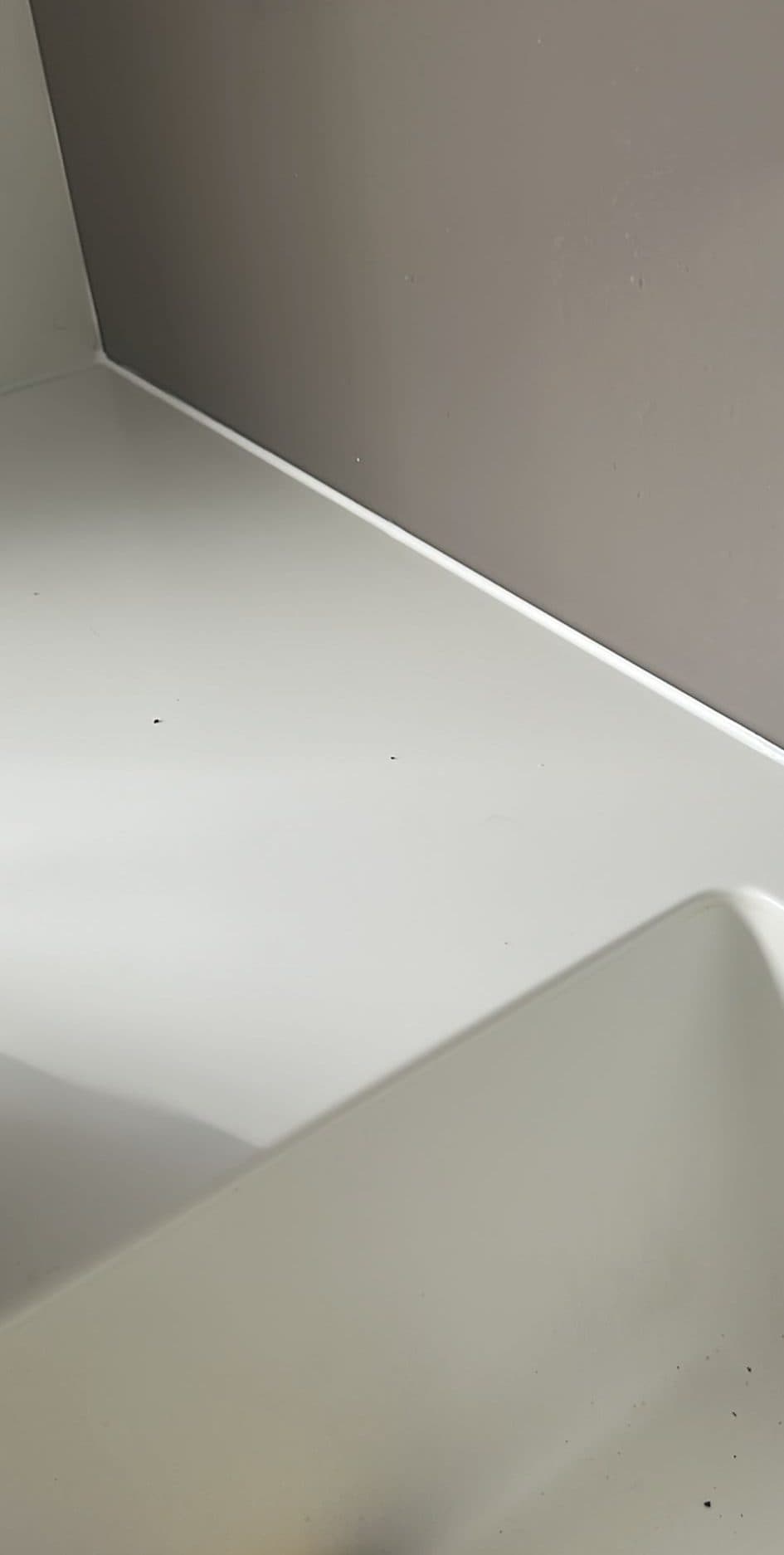
Pavement joints are the planned breaks in a concrete pavement, put there so the slab moves and cracks where the designer chose rather than where it likes. Concrete is never still. It shrinks as it cures, grows in the heat, pulls back in the cold and flexes under every axle that crosses it, and no mix or reinforcement stops that. A slab with no joints still cracks, just in a ragged line across the bay. A joint brings the same movement to a straight edge, at a chosen spacing, in a detail that can be sealed.
There are five kinds worth knowing. Contraction joints control shrinkage cracking, expansion joints give the slab room to grow, construction joints mark where one pour stopped, isolation joints free the slab from anything fixed, and longitudinal joints run along the pavement between paving lanes. The US Federal Highway Administration's technical advisory on concrete pavement joints sorts them the same way. We bring more than 40 years of joint sealing experience across airports, highways and ports.
Why a slab needs joints at all
Fresh concrete loses water and gets smaller, and most of that drying shrinkage happens early. Restrain it and the slab goes into tension, and because concrete is weak in tension it relieves itself by cracking, often before it has taken any traffic. Thermal movement then takes over for the rest of the pavement's life. A dark slab runs well above air temperature on a summer afternoon and well below it in a February frost, and across a long bay that is millimetres of movement every year. So the joint layout is a design decision, settled before the pour, and it cannot be retrofitted. Get it wrong and all that is left is chasing the cracks that turn up instead.
Contraction joints, which are most of what you see
A contraction joint is a deliberately weakened plane, not a gap. A saw cut takes a slice out of the slab's cross section, so when the shrinkage crack forms it forms directly beneath the cut, straight and vertical, rather than wandering across the bay. On a carriageway these run across the lanes as transverse joints. Contraction is what the joint does and transverse is which way it points.
The cut is typically a quarter to a third of the slab depth, and it goes in during what the trade calls the sawing window. It opens once the concrete can be cut cleanly without tearing out aggregate, and closes when shrinkage stress overtakes its strength. Cut too early and the arris ravels. Cut too late and the slab has already cracked somewhere of its own choosing. Warm, dry or windy weather pulls the window earlier, which is why early entry saws exist and why a pour and a sawing gang are programmed together.
Below the cut the crack face is rough and interlocked, and that interlock carries load from one bay to the next, with dowels added on a highway or an airfield. Each reseal saws the slot out again so the new sealant starts in a clean reservoir of known size. Cutting it wider than it was built, where the movement has been overstressing whatever was in there, is joint widening.
Expansion joints are a space, not a weakened plane
An expansion joint is a genuine gap, formed full depth through the slab around a compressible filler board and usually doweled, so the slabs either side have somewhere to grow when they warm up. It takes up the expansion of everything between it and the next one, so it moves far more than any contraction joint, and its seal has to follow that. They go where the pavement needs relief or meets something that will not move, such as the approach to a bridge or a slab laid years earlier.
Plenty of modern jointed pavement has fewer than people expect, and the FHWA advisory warns against overusing them. Too many let the contraction joints around them open up over time, and the sealant in those joints then fails, letting in water and grit and losing load transfer. Different joints on one structure can need different seals, too. On a bridge jointing job at Lyminster the expansion joints took Fosroc Thioflex 600 in hand grade, while the surface joints we sawed and sealed took Craftco N1.
Construction joints, where one pour stopped
A construction joint is where the day's work ended, because a paving train ran out of programme, a possession closed or a wagon failed to arrive. The concrete either side went in at different times, so nothing interlocks across it and the detail has to supply the load transfer. Dowels do that across a transverse construction joint, and a keyed profile with tie bars does it on a longitudinal one. Once sealed, a construction joint can look exactly like a contraction joint from above. The as built drawings tell you which is which, if they exist and match what was built, and on an older pavement a core is the way to be sure.
Isolation joints, around anything that moves on its own
An isolation joint separates the slab from something that has to move independently of it, such as a column base, a manhole, a gully or a building wall. Two elements on different foundations settle and expand at different rates, and holding them together cracks whichever is weaker. So the slab stops short and a compressible filler runs right around the obstruction, full depth, with no dowels, tie bars or other connections crossing it. A bar left running through defeats the whole detail.
Against a wall or round a column base no wheel touches the joint, so a gun applied movement joint seal is the practical answer. A manhole in a container yard or a gully on a kerb line is driven over all day, so it takes a pavement grade sealant set in a recess like the joints running past it.
Longitudinal joints, which run the other way
A longitudinal joint runs along the pavement between paving lanes, near a lane line on a dual carriageway or as a grid line across an apron. A single run can go a hundred metres or more without a break. It is usually tied across with bars at mid depth, which holds the lanes together and leaves it moving less than the transverse joints either side. On a wide pavement the movement building up across the width can still justify a high extension grade, because the grade follows the calculated movement, not the name on the drawing.
The dowels sit exactly where your cut wants to go
Load transfer dowels are plain round bars set across a joint at mid depth, at regular centres, and debonded on one side so the joint can still open and close. They are why a loaded aircraft or lorry crosses a joint without the far slab dropping away under it. Mid depth is exactly where a full depth saw cut passes. Hitting a dowel wrecks the bar and the blade, and doing it along a run quietly takes the load transfer out of a joint still carrying traffic.
So before any full depth cut on a jointed pavement, the layout has to be known. The drawings give the intent, a cover meter with a radar pass finds what is really in the slab, and a core settles it where the answer matters. Our reseal on the M20 between junctions 8 and 9 came to 23,304 linear metres across twenty night shifts inside a 10pm to 3.30am possession, and that programme depended on knowing the joint detail before the first saw went down.
What happens when a joint is left open
An unsealed joint lets water down to the sub-base. The FAA's guidelines for maintaining airport pavements trace what follows. Water getting through damaged joint seals can cause pumping, where each loaded pass ejects water and fine material through the joint and the slab loses support along a line already designed as a discontinuity. Grit lodged in an open joint stops the slab expanding and spalls the edges.
How much sealing pays is still argued in the United States, and the FHWA says the answer depends on the pavement's drainage, its foundation, its traffic and the service it has to give. In the UK the code of practice for doing it is BS 10948, covering slot preparation, application and site testing on roads, airfields and other trafficked concrete. On a runway, taxiway or stand, spalled concrete becomes foreign object debris, which is why failing joints matter so much in aviation work. A broken arris gets cut back to sound faces, reformed and resealed, while loose material lifting off a slab that is sound underneath is what airfield surface repair treats. Why joint sealants fail works through the failure modes, and nearly all of them are decided before any sealant is poured.
What goes in the slot depends on the joint, but the decisions are the same handful every time.
- The reservoir. A width and depth chosen for the movement the joint actually makes, which on an older pavement means sawing the slot out again rather than pouring into it as found.
- The backer rod. It sets the depth of the bead and stops the sealant bonding to the base of the slot, so it grips the two faces and stays free to stretch. Hot work needs a heat resistant grade of backer rod.
- Hot or cold. Hot applied and cold applied systems want differently shaped reservoirs, and the shape comes off the product data sheet, not off the joint type.
- The grade. Under BS EN 14188-1, N1 is the elastic, high extension class of hot applied sealant and N2 the normal, low extension one. The comparison sets out which suits which movement.
- The recess. Finished sealant sits below the surface, never flush, or traffic and plough blades pull it straight back out.
Working out what you have on the ground
Where nobody has the drawings, a walk with a tape helps. A regular pattern every few metres is contraction joints. One noticeably wider joint with filler board visible, usually near a structure, is an expansion joint. A joint running the length of the pavement is longitudinal, and filler round a manhole or column base is an isolation joint. Construction joints are the ones you cannot pick out from contraction joints, which is why the survey happens before the blade does.
In our experience the useful question is not which name a joint carries but how much it is moving. Expected joint movement is among the first factors the FHWA lists for choosing a sealant, alongside climate, traffic and exposure to fuel or jet blast. The movement sets the reservoir, the grade and the recess. Work it out from the bay length and the temperature range the pavement sees, and the sealing specification follows from the arithmetic.
A crack that has formed away from any joint is not a joint. It gets chased out into a sound reservoir and sealed, which is crack chasing, and where a surface band is the right closing detail, that is overbanding. Neither replaces sealing a live joint, and a band over a moving joint is a bill paid twice.
If you have a jointed pavement and are not sure what is in it, send us photographs of a few joints and the bay size. That is usually enough for a straight answer on which joints you are looking at and whether each needs reforming or only resealing. Shepherd and Sons are members of the Extruded Sealant Association, based at Little Westerhill Farm in Linton, near Maidstone. Ring 07768 662153 or contact us with the details.
More on Joint Sealing
 Joint Sealing
N1 Sealant for High Movement Joints Explained
Read More » Joint Sealing
What’s the Difference Between N1 and N2 Sealant?
Read More » Joint Sealing
Sika Installers
Read More »- Joint Sealing
What is Sikaflex?
Read More »  Joint Sealing
What is Thioflex 600?
Read More » Joint Sealing
What are the benefits of Thioflex 555
Read More »