

Shepherd and Sons Ltd
Silica Dust From Concrete Cutting and the EH40 Limit
By Jordan Shepherd, Director. Published .
Cutting concrete releases respirable crystalline silica, a dust fine enough to reach deep into the lungs, and the legal limit on breathing it in is set in HSE's EH40. The workplace exposure limit for respirable crystalline silica is 0.1 milligrams per cubic metre of air, averaged over an eight hour working day, and EH40 marks it as a carcinogen where a work process generates it. HSE describes cutting with a saw as work that creates very high levels of dust, which is why professional concrete cutting is done wet.
Water at the blade or the core bit is what keeps the dust down, and it creates a slurry that then has to be dealt with properly. This article covers the limit, what HSE's guidance asks for when concrete is sawn or cored, where respiratory protection still comes in, and what happens to the water afterwards. It applies to every method we use, from floor sawing on highways and airfields to coring and wall sawing inside buildings.
What the limit is
EH40/2005, Workplace exposure limits, in its January 2020 edition, lists respirable crystalline silica at 0.1 mg/m³ as an eight hour time weighted average. That is a very small quantity of dust, and the limit is a ceiling to be kept under rather than a target. The Control of Substances Hazardous to Health Regulations 2002 require exposure to be prevented or, where that is not reasonably practicable, adequately controlled.
The reason for the attention is in HSE's own figures. Its page on construction dust states that over 500 construction workers are believed to die from exposure to silica dust every year. The diseases its guidance names are silicosis, chronic obstructive pulmonary disease and lung cancer, and they cause permanent disability and early death.
What HSE's guidance asks for
HSE publishes COSHH essentials sheets for silica in construction, one task per sheet. There is no sheet written specifically for floor saws, so the closest guidance is the sheet for cut-off saws and the one for diamond coring, and both take the same approach.
The cut-off saw sheet, CN6, says the work creates very high levels of dust. It asks for a diamond blade rather than an abrasive wheel, a water suppression attachment, enough water flowing at the rate the work needs, a mains connection or pressurised container, protection against freezing in cold weather, and a plan for the slurry. It asks for respiratory protection with an assigned protection factor of at least 20, fit tested where the mask seals to the face, and powered respirators where it is worn for long periods.
The diamond coring sheet, CN8, asks for the same water supply and slurry control when coring concrete wet, a secure base plate where needed, awareness of buried utilities, and rotation of operators where a lot of drilling is involved. It calls for respiratory protection of at least the same standard for long periods of wet coring in enclosed spaces.
Both sheets start before the tools do. Can the work be planned to need fewer cuts or fewer holes? Can access be limited to the people doing it? That planning question is the cheapest dust control there is.
Why wet cutting does most of the work
A diamond blade or core bit grinds the concrete away, and dry grinding throws the fine fraction straight into the air at the operator's breathing height. Water at the cutting face binds that dust into a slurry before it can become airborne, cools the diamond segments and flushes the cut. That is why wet cutting is the normal method for floor sawing, and why what floor sawing is treats dry cutting as the exception for shallow cuts and places where water cannot be tolerated.
Water is not a guarantee by itself. Too little flow, a blocked feed or a saw run for a moment without water undoes it, which is why HSE's sheets talk about enough water at the rate needed rather than just water. A frozen supply on a winter night stops the job, which is why HSE's sheets mention protecting the water against freezing, and why the water is planned like any other part of the plant.
Our own diamond drilling uses water flushing, creating a slurry that is vacuumed and contained and generating minimal dust. On the Stansted terminal extension the floor sawing for channels, pits and trenches ran inside a live airfield with strict noise and dust control measures in place.
Where respiratory protection comes in
Water reduces exposure. It does not always reduce it far enough on its own, particularly in enclosed spaces, on long shifts or with hand-held saws held close to the face. HSE's sheets therefore pair water suppression with respiratory protective equipment rather than offering one instead of the other.
The assigned protection factor is the number to check. A factor of 20 means the mask, worn and fitted properly, should cut what the wearer breathes to a twentieth of the dust in the air. A tight fitting mask only achieves that if it has been fit tested to that person, and if they are clean shaven where it seals. Filters need changing when they are damaged, past their date or harder to breathe through.
The slurry is the second hazard
Wet cutting moves the problem from the air to the ground. GOV.UK's pollution prevention guidance for businesses names concrete slurry as a polluting substance. Surface water drains discharge directly to the environment, so only clean water may go into them. Contaminated water can go to the foul or combined drain only with the water company's permission, or be collected and removed by a registered waste carrier.
In practice that means vacuum recovery at the blade or the core, containment around the cut, and gullies protected before the first cut on a highway or a yard. On an airfield the slurry also has to come off the pavement entirely, because once it dries it becomes loose material, and airside working treats loose material as foreign object debris. The disposal route belongs in the method statement before the work starts.
When dry cutting is the only option
Some places cannot take water. Live electrical rooms, finished interiors and some occupied spaces are the obvious ones. There the controls change rather than disappear. HSE's coring sheet covers dry coring of brick with on-tool extraction feeding an M or H class extraction unit, and calls for respiratory protection with a factor of at least 20 for dry coring of more than 15 to 20 minutes over a day. Dry work is kept for places where water genuinely cannot be used.
Choosing a method with less dust in it
The method decides how much dust there is to control. Breaking needs its own water suppression too, which HSE covers in a separate sheet for breaking in enclosed spaces, and dust is one reason cutting is often chosen over breaking in occupied buildings. A wet stitched line of cores or a wire saw keeps its water at the cutting face throughout, and the noise and vibration of each method are covered in floor sawing noise and vibration under BS 5228.
What to ask before work starts
- Is the cutting wet, and where is the water coming from at the rate the saw needs?
- What respiratory protection will operatives wear, at what protection factor, and have they been fit tested?
- How is the slurry collected, and where does it go?
- Which drains and gullies are protected, and who has confirmed it?
- If any cutting has to be dry, what extraction is used and for how long?
Shepherd and Sons cut and core concrete on highways, airfields, ports and occupied sites from Little Westerhill Farm in Linton, near Maidstone, and hold CHAS Elite, SafeContractor and Constructionline. Our diamond drilling and concrete cutting work is planned around water, slurry and dust from the start. Tell us where the cutting is and what is around it, and we will set out how the dust and the slurry will be controlled. Ring 07768 662153 or contact us with the details.
More on Concrete Cutting
 Concrete Cutting
What is Core Drilling?
Read More » Concrete Cutting
 in London
Read More »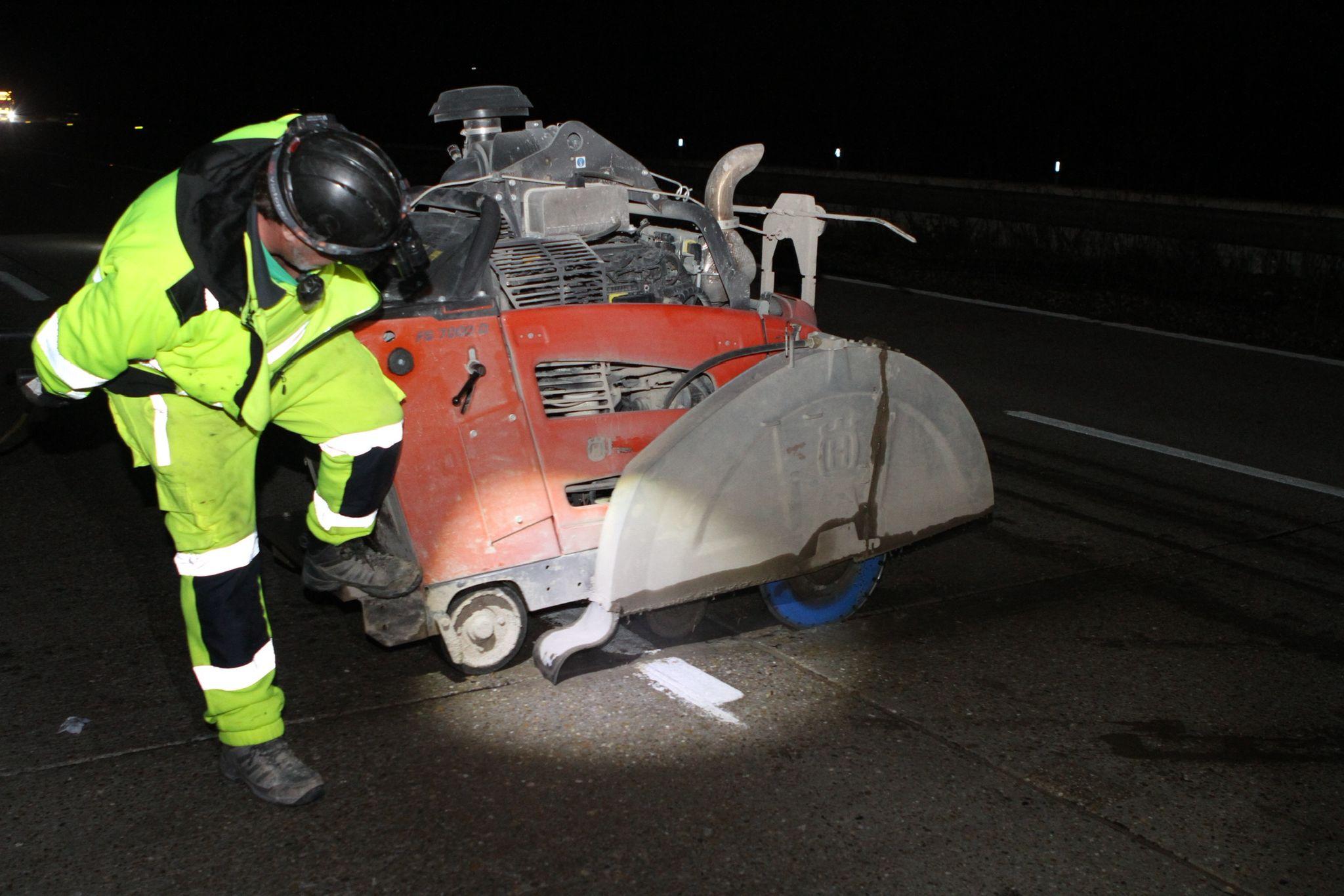 Concrete Cutting
What is floor sawing?
Read More » Concrete Cutting
What is concrete cutting?
Read More » Concrete Cutting
What is diamond drilling?
Read More » Concrete Cutting
Floor Sawing Noise and Vibration Under BS 5228
Read More »