Shepherd and Sons Ltd
What Is Different About Airside Working?
Airside working is not a different way of cutting concrete. The saws are the same saws. The blades and the trained hands are the same ones that go out on a motorway. The sealant often is not, because an airfield joint has to resist spilled fuel and a highway joint does not. What changes is the regime around the work. Who is allowed through the gate. How they reach the face, and how long they have once they get there. What condition the surface has to be in when they walk away. Ask any contractor who has moved from highway work onto an airfield and you tend to get the same answer. The cutting was never the hard part.
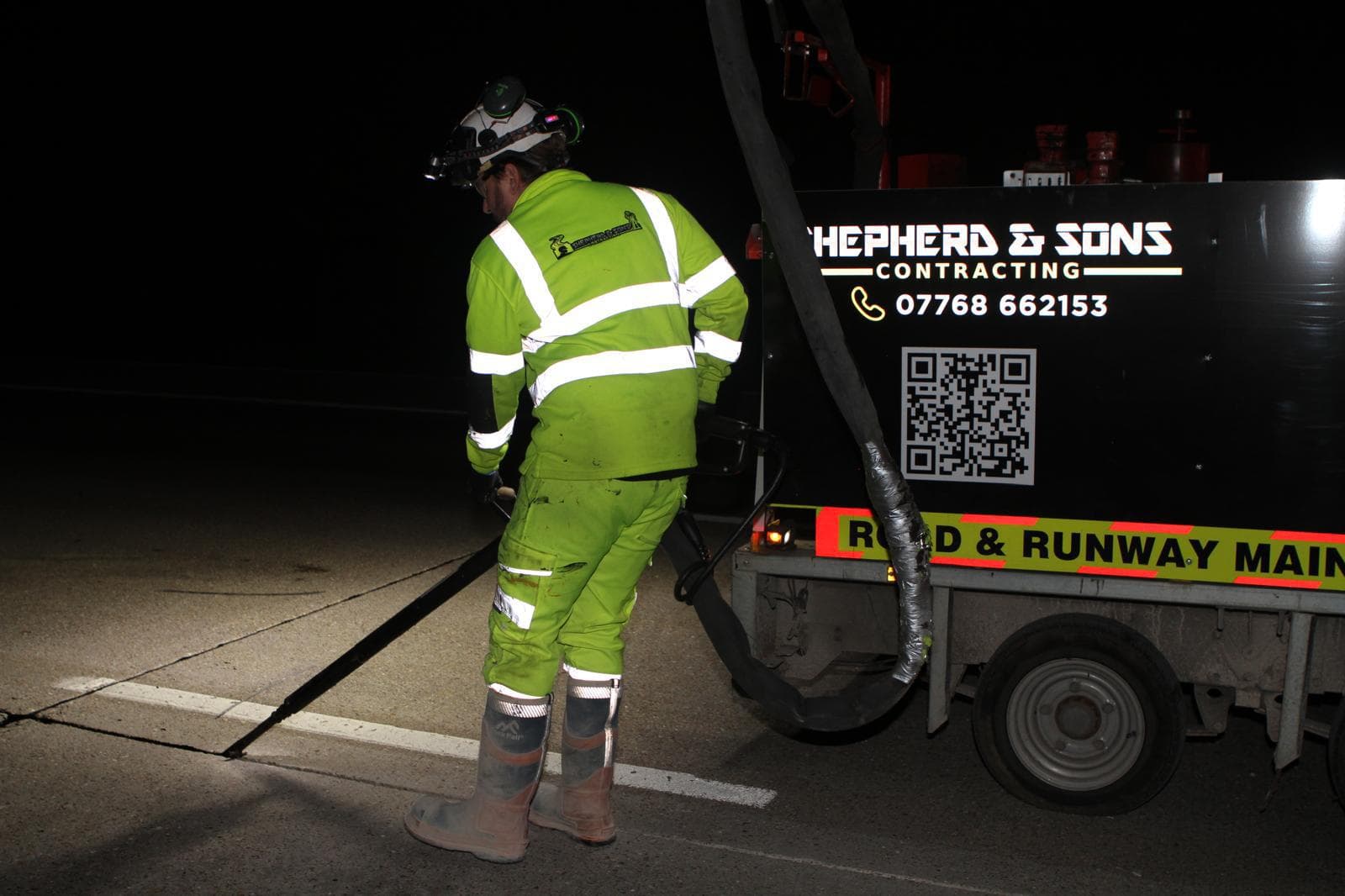
Shepherd and Sons have been the sole contractor for the British Airport Authority since 2008, working across all seven former BAA airports. Our aviation work runs on runways, taxiways, aprons and airside civil pavement, mostly at night and mostly inside possessions that were fixed weeks earlier. In our experience the programmes that go wrong airside go wrong long before anyone reaches the pavement. They go wrong at the pass office, in the vehicle permit queue, or in a plan that quietly assumed handback was negotiable. This article sets out what actually changes the moment you cross the line, and why that discipline is worth paying for.
Where the line sits, and why it matters
Airside is everything beyond the security boundary. Aprons, stands, taxiways, runways, and the service roads that link them. Landside is everything the public can reach. The line between the two is a fence, a gate and a search. Crossing it changes your legal position, your insurance position and your programme all at once.
There is a second line inside the first. The manoeuvring area is where aircraft move under air traffic control instructions, and it is a further step up again. Work there needs radio contact, clearances and people who know what to do when a controller asks them to stop. A van that could drive onto a live motorway contraflow tomorrow cannot drive onto an apron at all without weeks of preparation behind it. That one fact reorders everything else.
The pass is the long lead item
Nobody sets foot airside unescorted without an airside pass. A pass is not issued on a name and a phone call. It follows a referenced background check, and that check reaches back over years of employment history. Every gap has to be accounted for and every reference has to answer. A criminal record check sits alongside it. Then there is the airport's own induction and airside safety training. That has to be booked onto a course date, and the date may not be this week.
The lead time is measured in weeks, not days. It is the single most common reason an airside programme slips before it has started. The trap is that the rest of the job looks ready. Plant is available, materials are ordered, the possession is booked, and the only thing missing is four pieces of plastic on lanyards.
Some practical points that catch people out:
- Passes are issued to named individuals, not to a company or a gang. Swapping an operative the week before means starting that person's application from scratch.
- Passes are usually specific to the airport that issued them. A pass for one airfield is not a pass for the next one.
- Passes expire, and renewal has its own lead time. A long programme can run past the expiry date of the people delivering it.
- Somebody has to sponsor the application, normally the airport or the principal contractor. That sponsorship is a task with an owner and a date, not a formality.
- Escorted access is the standing condition airside, not a stopgap. Every possession is escorted whatever the gang holds, and an operative still waiting on a pass needs an escort for every individual movement on top of that, which is the part that does not scale.
We submit names the day an order is placed, before the programme is drawn. It is the cheapest week of float you will ever buy.
Plant does not simply drive to the work area
Vehicles need their own airside permits. That means inspection, insurance in order, beacons, markings and a vehicle that is fit to be on an operational surface. Drivers need an airside driving qualification for the roads, and a further authorisation before they go anywhere near the manoeuvring area. Neither is quick, and neither transfers automatically from one airport to another.
Plant moves under escort in any case, and until a driver holds those authorisations it cannot move at all without one. An escort is a person and a vehicle, and both have to be booked in advance. The convoy then travels at the escort's pace, by the route the escort is given, which is rarely the shortest one on the map. On a large airport, twenty minutes each way between the compound and the face is not unusual.
That time is part of the shift. We build it into the plan rather than into the contingency, because it happens every single night without fail. A programme that assumes plant appears at the work area at the start of the possession has already lost the first hour.
The possession does not move
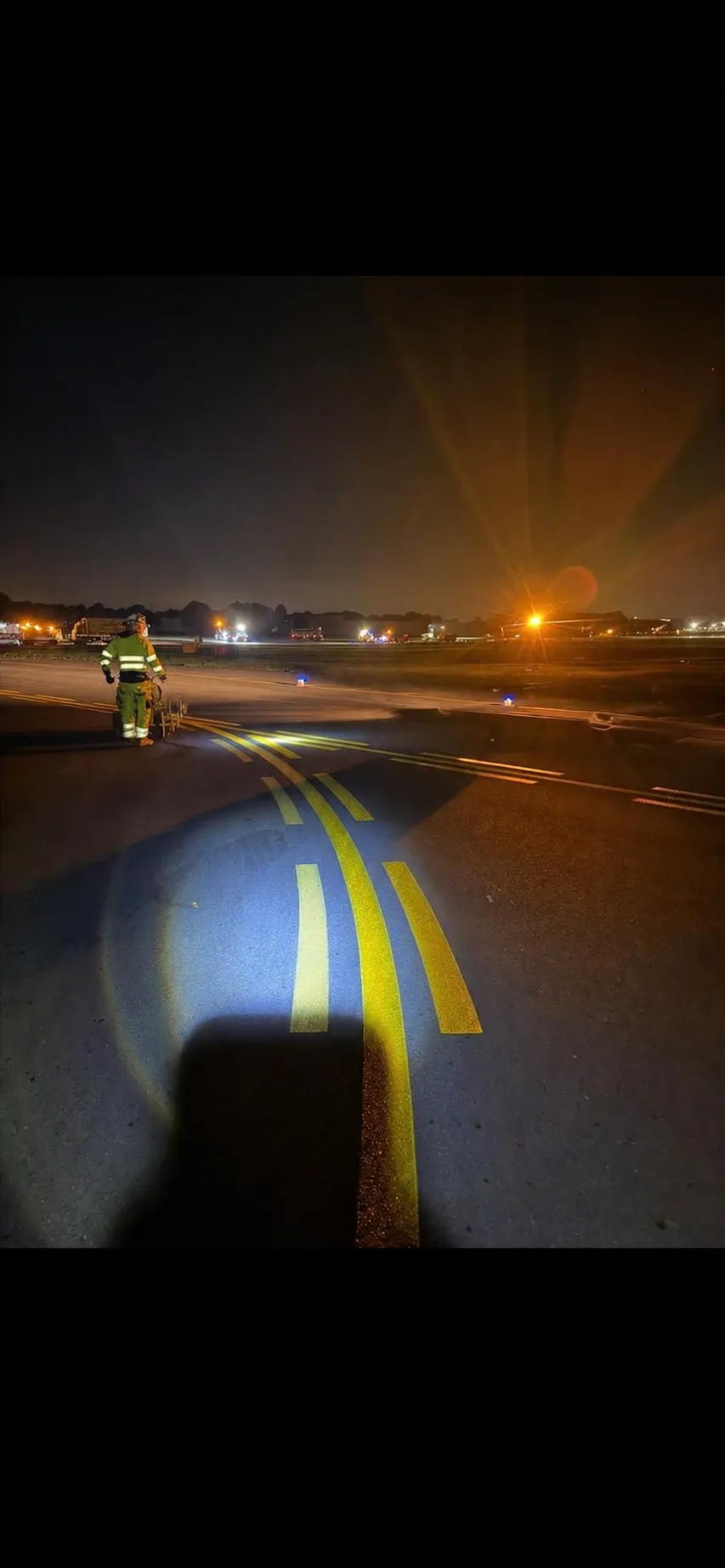
A taxiway handed back at 0500 is handed back at 0500. There is no negotiating with the first departure, and nobody at the airport has the authority to give you another twenty minutes. Everything is sequenced backwards from that moment.
Work back from handback and the shift builds itself. The handback inspection. Before it, the final sweep and the FOD check. Before that, reinstatement, sealing, cutting and setting out. At the front of it all, the escorted run in and the permit to work. Whatever is left in the middle is the productive window, and it is always shorter than the possession looks on paper.
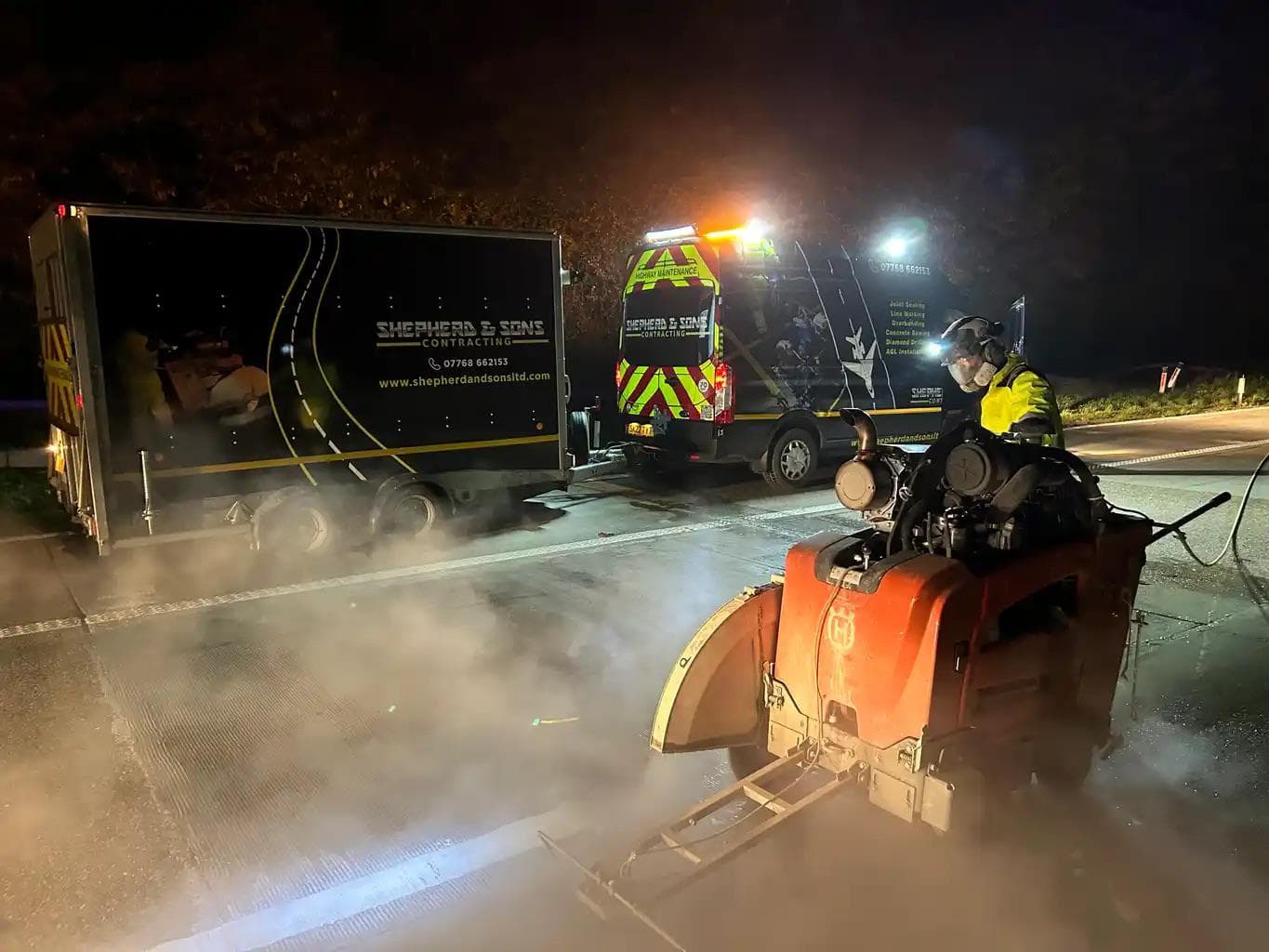
We plan the same way on the highway. On the M20 between junctions 8 and 9 the possession ran from 10pm to 3:30am across twenty night shifts. Inside those windows, 23,304 linear metres of joint were reformed and resealed. The difference is what an overrun costs. On a highway, an overrun is a lane closure held a little longer and a difficult conversation. Airside, an overrun holds aircraft.
So the honest answer is to plan for less than the theoretical maximum. A gang that takes on a little less than the window could hold finishes clean every night. A gang that takes on all of it hands back late once, and after that the airport plans around you rather than with you.
Foreign object debris is a programmed operation
An engine sitting a couple of metres off the ground takes in whatever is on the surface in front of it. A cored fragment does not have to be big to bend a fan blade, open a nose-wheel tyre, or reach somebody working behind a jet. Debris gets ingested, or picked up and thrown, and the consequences run from an expensive inspection to something far worse. That is the whole reason foreign object debris control is treated the way it is.
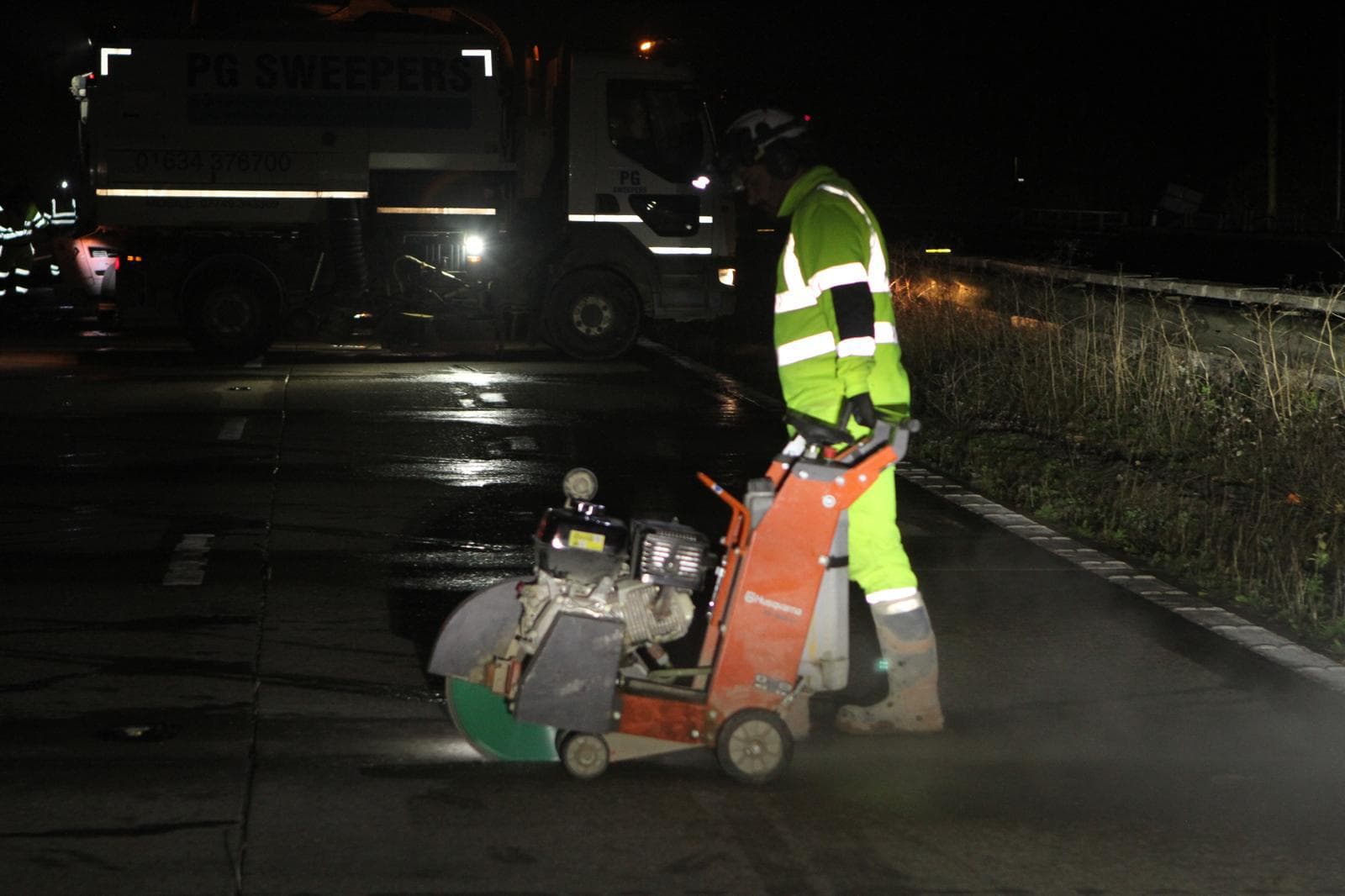
Sweeping and the FOD check are operations with time and people allowed for them in the plan, the same as the cutting itself. Cores are counted out of the area and taken off site rather than swept up afterwards. Slurry is vacuumed and recovered rather than hosed towards the nearest gully. Blade segments, cable ties, tape, hand tools and drinks cans are all checked for at the end. Every one of them has been found on an airfield by somebody at some point.
A shift that cuts well and hands back dirty has not finished. That is the sentence worth taking away from this. The work is not the cut; the work is the surface you leave behind.
What is under the pavement decides the method
Airfield pavements carry more buried services than almost any other surface we work on. An airfield slab has fuel mains running through it, airfield ground lighting circuits beneath it, and drainage and comms threaded between the two. On an aircraft stand the density is higher again.
This is why so much airside work is cored or stitch drilled rather than broken out. Percussive breaking is fast, blind and unforgiving. Core drilling is controlled, and the hole finishes exactly where you told it to. Where a section has to come out near a live main, overlapping cores form the cut line. The piece is then lifted away rather than hammered.
The same thinking governs how a cable chase is formed. It is also why the services survey is a genuine piece of work, not a drawing glanced at in the cabin. Drawings are verified physically before anyone starts. The methods themselves are covered in more detail in our article on concrete cutting at UK airports. What matters here is that the method is chosen by what is underneath, not by what is quickest.
Tolerances are measured in millimetres
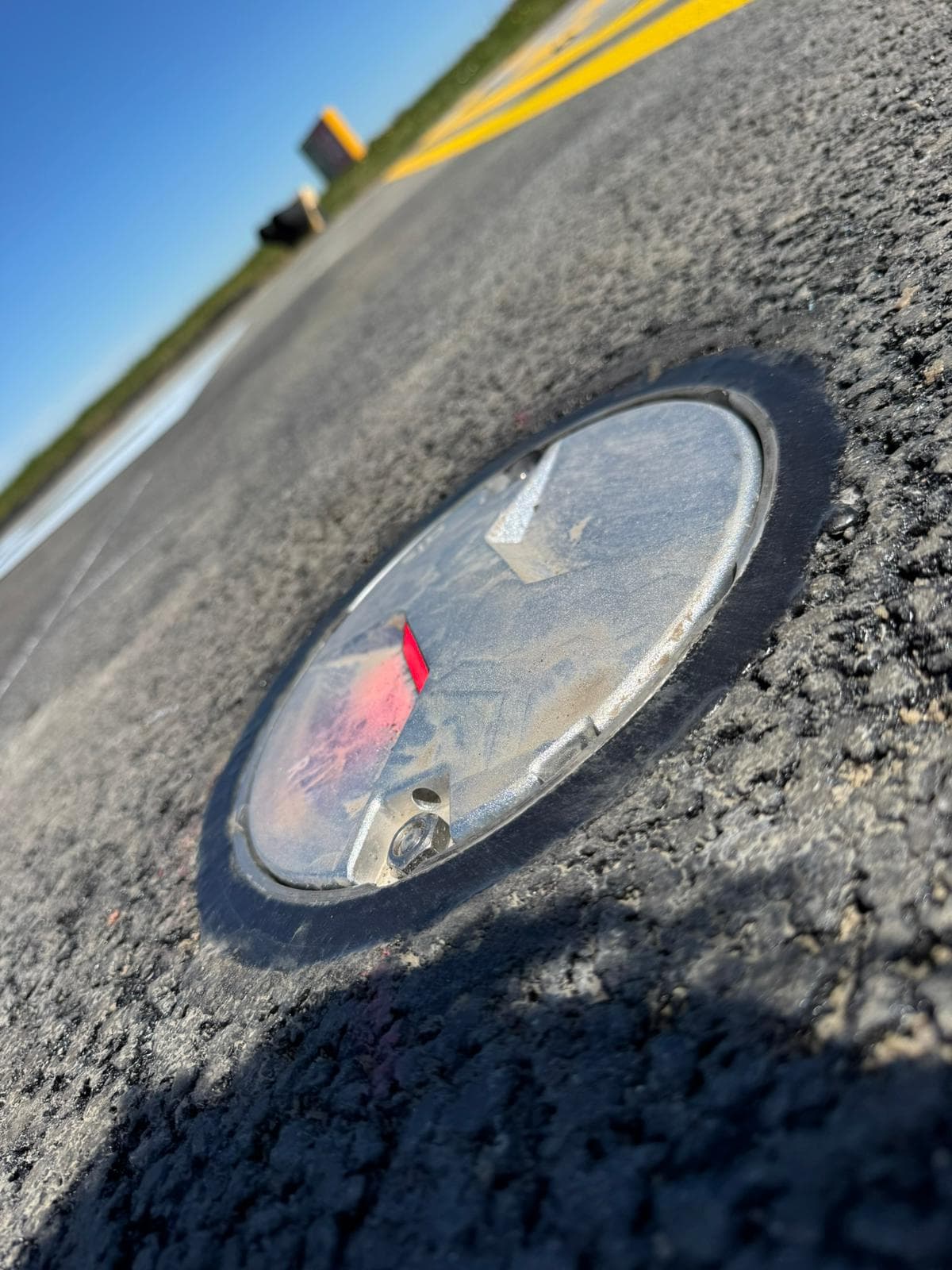
Airfield ground lighting seating pots are set against fitting positions measured in millimetres. Diameter, depth, level and orientation all have to be right. A light has to sit flush in the surface and aim where the design says it aims. A pot left proud of the pavement is a strike risk and a FOD source in one.
At Stansted we are coring 150 AGL seating pots across a ten week programme of restricted overnight possessions, working under the main contractor. On work of that kind we've found the setting out takes longer than the coring. A price built the other way round is how a programme falls behind in its second week. The drilling is the easy half.
Operative competence is the other half of it. Ours hold NVQ Level 2 in cutting and drilling and are CSCS carded. They hold Drilling and Sawing Association competence as well, on top of the airside training each airport requires. None of that is optional on an airfield.
The wind can take your work area away
Runways are used into the wind, so the direction in use changes when the wind changes. Taxi routes change with it. The taxiway you were promised on Tuesday can become the live route to the runway on Wednesday, and your possession moves or disappears.
Other things do the same. A diversion arrives, a stand is needed, an aircraft goes technical in the wrong place, or an incident closes an area. Work stops and the area is cleared, sometimes with very little notice. Nobody is being difficult. The airfield is an operational site first and a construction site second.
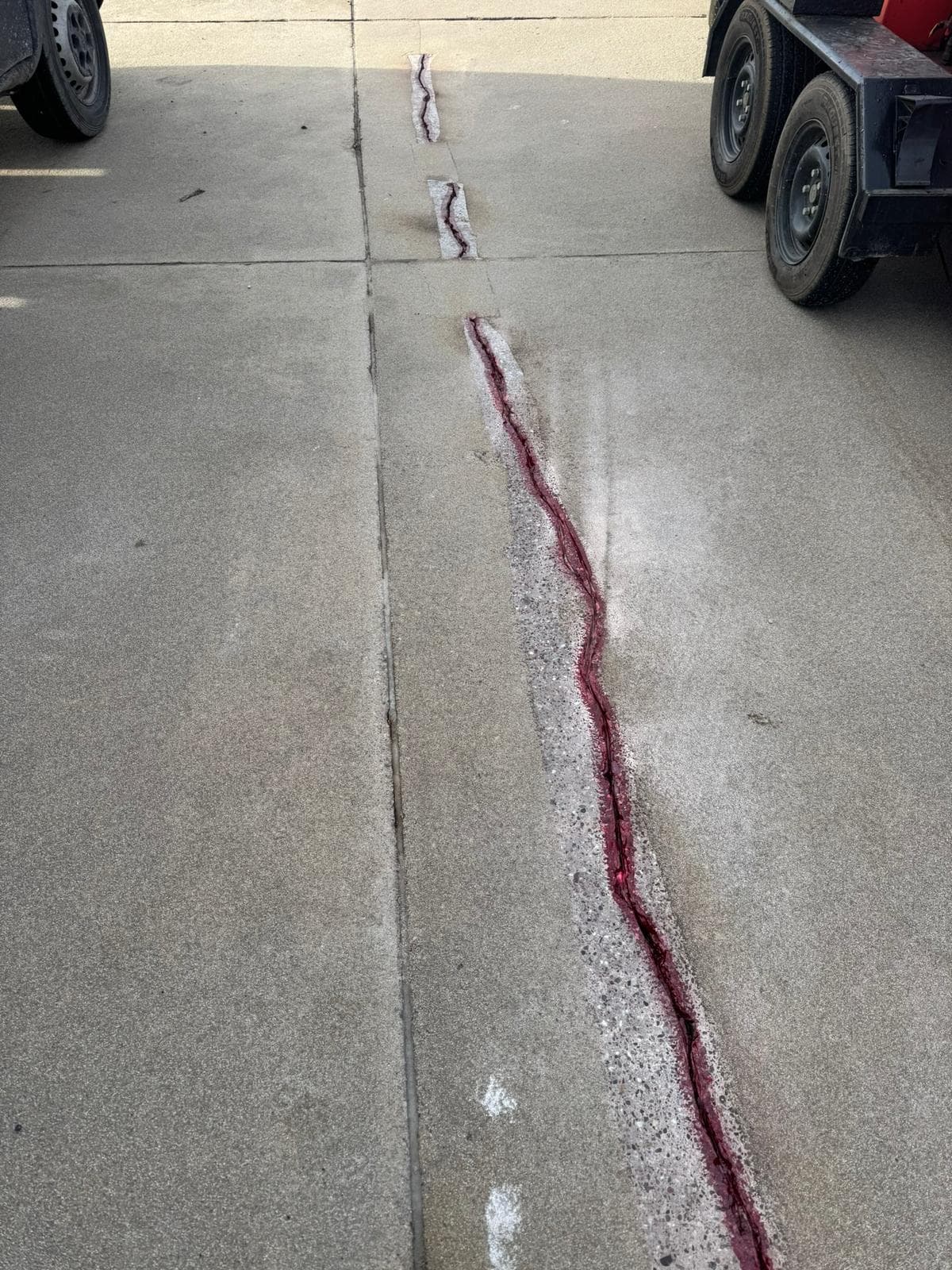
Two habits follow from that. Plant has to be capable of being pulled back quickly and left safe, which shapes what you take out there in the first place. And you never open more than you can close. Cut only what can be sealed and reinstated inside the same shift. A slot left open on a live surface is not a problem you can leave until tomorrow. That rule sits behind how we sequence joint sealing on every airfield programme.
What the airside regime gives the rest of our work
Airside working is a discipline before it is a technique. The habits do not switch off at the gate. Sequencing backwards from handback, counting the debris, planning the journey time, and never opening more than you can close are all good practice anywhere. They simply become non-negotiable airside.
It shows on highway programmes, where the possession is just as fixed and the traffic returns whether you are ready or not. It shows in port and hardstanding work too. At the CLdN container port at Purfleet we set out 220 lorry bays, 36 container bays and more than 450 stencils. The terminal never stopped running while we did it. A live port and a live airfield ask the same question of a contractor. Can you work around us without becoming the problem?
We are a family run firm of more than forty years, based at Little Westerhill Farm in Linton, near Maidstone. We are members of the Extruded Sealant Association and hold SafeContractor and CHAS accreditation. What counts for more airside is continuity, meaning the same pass-cleared gang from one programme to the next rather than a fresh set of applications for every job. That is easier to hold from Kent than it looks, because the airports do not move.
If you have airside work coming up, the earliest useful conversation is the one about passes and permits rather than the one about blades. Call us on 07768 662153 or get in touch and we will tell you honestly what the lead time looks like.