
Shepherd and Sons Ltd
What is joint widening?
Joint widening is the process of cutting an existing pavement joint to a greater width, and often a greater depth, before applying new sealant. It’s carried out during resealing programmes when the original joint slot is too narrow to accommodate the movement the slabs are actually experiencing. Widening the slot reduces the percentage strain on the replacement sealant, because the same absolute movement represents a smaller proportion of a wider joint. The work is done with diamond floor saws, followed by complete removal of the old sealant, re-preparation of the slot faces, and installation of a new bond breaker and sealant system.
At Shepherd and Sons, joint widening sits at the intersection of our two core specialisms: concrete cutting and joint sealing. We’ve been reforming and resealing joints on UK airfields, highways and ports for more than 40 years, and we’re members of the Extruded Sealant Association, working to the ESA Code of Practice. This article explains why joints need widening, how to diagnose when it’s required, what the process involves, and how to specify it properly.
Why joints need widening
A joint sealant fails for one of two reasons, and the distinction determines whether widening is needed or not.
Adhesive failure is where the sealant pulls cleanly away from the joint face, leaving the bead intact but detached. This is almost always a preparation problem: laitance left on the slot face, contamination, missed priming, or sealing onto a damp or frosted surface. The fix is better preparation, not a wider joint.
Cohesive failure is where the sealant tears through the middle of the bead while remaining bonded to both faces. This tells you the sealant has been stretched beyond what it can absorb. The joint is moving more than the sealant width can accommodate. The fix here is a wider slot.
The ESA Code of Practice states the principle directly in its resealing section: where it’s apparent that the degree of movement in a joint has been sufficient to over-stress the existing sealant, the joint slot width should, where appropriate, be increased to reduce stress in the replacement sealant, and it may also be necessary to increase the depth of the slot.
The arithmetic behind that is simple. A 4mm movement in a 10mm joint is 40% strain. The same 4mm movement in a 20mm joint is 20% strain. Widening the slot halves the demand on the sealant without changing anything about the pavement itself.
In our experience, widening an over-stressed joint works better than resealing to the original dimensions with a higher grade sealant because the geometry is the binding constraint, not the product. On a Kent concrete carriageway resealing programme, the sections where we widened the slots before resealing were still sound at year seven, while an earlier phase of the same scheme that had been resealed to original width with an upgraded sealant showed cohesive tearing again inside four winters. Upgrading the sealant treats the symptom. Widening the joint treats the cause.
How to tell whether a joint needs widening
Four signals point towards widening rather than straightforward resealing.
Repeat cohesive failure. If the joint has been resealed before and failed the same way again, the geometry is wrong. Doing the same thing a third time will produce the same result.
Tearing through the bead centre. Visible splitting down the middle of the sealant with the edges still adhered to both faces.
Long slab bays. Longer slabs generate proportionally greater thermal movement at each joint. Older pavements with long bays frequently have joints that were never wide enough for the movement they carry.
Spalled or damaged slot faces. Where the concrete at the joint arris has broken away, the slot has to be cut back into sound material regardless of the movement calculation. The ESA Code requires the slot to be widened if defective or contaminated material is encountered in the original faces.
Alongside these, a straightforward measurement helps. Comparing the actual joint width against the movement the slab dimensions would generate across a full seasonal range tells you whether the original design was adequate.
The joint widening process
Joint widening is a sequence, and the order matters.
Survey and assessment. The existing joints are inspected to determine the failure mode, the current slot dimensions, the condition of the slot faces, and whether the pavement has embedded services or dowel bars that constrain the cutting depth. On airside work this includes confirming services drawings before any cutting starts.
Removal of existing sealant. The ESA Code is explicit that existing sealant should be completely removed. Suitable methods are mechanical or hydraulic, and the removal must not damage the joint or slot faces. Partial removal leaves old sealant residue that prevents the new material bonding.
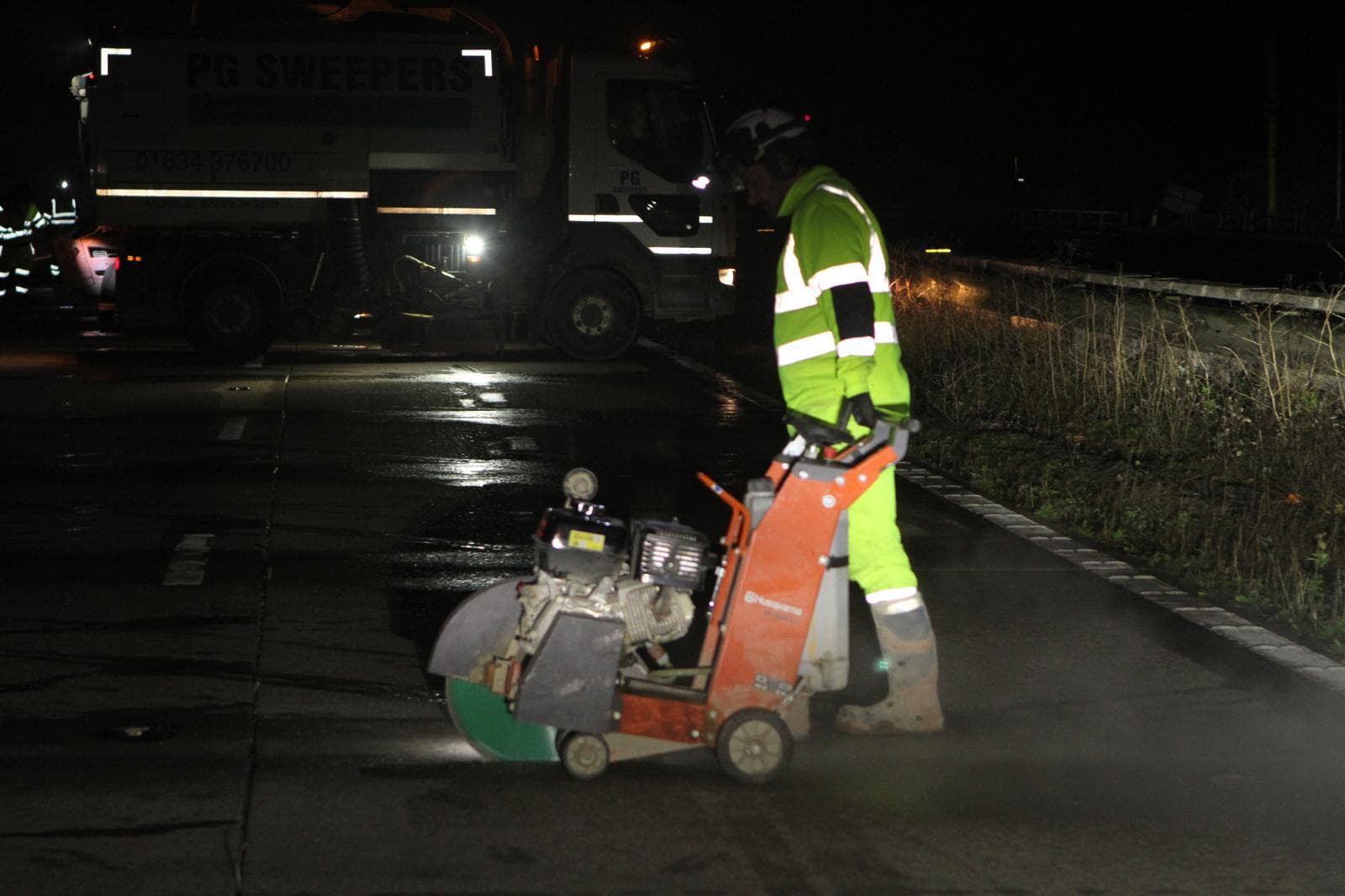
Saw cutting to the new dimensions. Diamond floor saws cut the slot to the specified widened width and depth. The blade width is selected to produce the target slot width in a single pass where possible. Cutting is done wet, with continuous water feed cooling the blade and suppressing dust.
Slurry removal. Debris from the cutting is removed by water jetting. The ESA Code warns that slurry left to dry will harden in the slot, so it should be removed as soon as possible after cutting.
Slot face preparation. This is the step that determines whether the reseal lasts. Freshly sawn faces are smooth and polished, which is poor for adhesion. The Code requires the faces to be roughened so the primer and sealant can key in, with a target texture resembling fine sandpaper. Acceptable methods are wire brushing using a circular wire brush attachment mounted in a wheeled trolley, dry abrasive grit blasting (treating each face separately in narrow slots), or water jetting with vacuum extraction.
Final blow-out. The slot is blown thoroughly clean using oil-free compressed air at a minimum pressure of 0.5N/mm². Oil contamination from an unfiltered compressor will destroy the bond, which is why the oil-free specification matters.
Bond breaker installation. A backer rod is inserted into the base of the widened slot to set the sealant depth and prevent three-sided adhesion. Because the slot is now wider, the original backer rod size will no longer fit. The Code specifies the bond breaking material should be slightly wider in diameter than the joint so it stays firmly located, and notes that a selection of different sizes may be needed where joint widths vary along a pavement.
Priming and sealing. Priming is carried out where the sealant manufacturer specifies it, typically on concrete, with the slot clean and dry. The new sealant is then applied to the specified depth and recess.
Equipment used for joint widening
The plant is essentially the same as general concrete cutting work, matched to the joint dimensions rather than to slab thickness.
Walk-behind diamond floor saws do the cutting, fitted with blades sized to the target slot width. Because joint widening is shallow work compared with slab cutting, blade diameter is not usually the constraint. Blade width is.
Alongside the saws, a joint widening programme needs sealant removal plant, wire brushing or grit blasting equipment for face preparation, an oil-free compressor, and water jetting with vacuum extraction for slurry and debris removal. Contractors who cut but don’t seal typically have the saws and nothing else, which is why the preparation stage is so often the weak point. The full picture of the cutting techniques involved is covered in what is concrete cutting?.
Getting the new dimensions right
Widening a joint is not simply a matter of making it bigger. Three constraints apply.
Width-to-depth ratio. Every sealant has a manufacturer-specified ratio. Widening the slot without adjusting the depth changes that ratio and can push the sealant outside its working specification. The ESA Code notes explicitly that the joint profile should not exceed the manufacturer’s material specification.
Minimum specified width. The Code requires the slot width, measured at any point coinciding with the top level of the sealant, to be not less than the minimum specified for that joint type.
Slot face verticality. The resulting joint slot faces should be within 10 degrees of vertical. A slot cut at an angle produces uneven sealant thickness and concentrates stress at the thin edge.
The dimensions for applied joint seals in highway work are set out in SHW Series 1000, and the ESA Code reproduces the relevant table as an appendix. On airfield work the specification is typically set by the operator’s own pavement standards.
What follows joint widening
Widening is preparation, not the finished job. What goes into the widened slot depends on the pavement and the exposure.
For highway and airfield concrete with no fuel exposure, the reseal is normally hot applied, using an N1 or N2 grade under BS EN 14188-1. For fuel-exposed pavements such as aircraft fuelling aprons or oil terminals, the specification moves to cold applied systems under BS EN 14188-2 Classes B, C and D.
We’ve found that specifying the widening and the resealing together produces consistently better outcomes than treating them as separate scopes, because the target slot dimensions depend entirely on which sealant is going in. A contractor who cuts to a generic width without knowing the sealant will frequently produce a slot that sits outside the product’s specified ratio.
Related work: crack chasing
Joint widening applies to formed joints. Where a pavement has developed uncontrolled cracks outside the joint pattern, the equivalent operation is crack chasing, which cuts the crack out to a regular profile so it can be sealed properly. The two often appear in the same maintenance programme, and the preparation discipline is broadly the same.
Standards and compliance
Joint widening and resealing in the UK work to:
- The ESA Code of Practice for Joint Sealing (Issue 3.0, November 2025), Section 5 on slot preparation and Section 9 on resealing
- BS 10948:2020 (application and use of hot and cold applied joint sealant systems for concrete pavements)
- BS EN 14188-1 and BS EN 14188-2 for the sealant specification
- SHW Volume 1 Series 1000 for highway joint seal dimensions
- The Drilling and Sawing Association Code of Practice for the cutting operations
- CDM 2015 Regulations for the construction phase
The ESA Code also sets the QC regime. Depth measurements are taken from the top surface of the bond breaker and the top surface of the sealant, at three locations along a transverse joint or at 1m spacing, mid-width, to an accuracy of ±0.5mm using a metal ruler and a 150mm straightedge placed centrally across the joint.
Sectors where joint widening is specified
Highway authorities and Tier 1 contractors specify joint widening on concrete carriageway resealing programmes, particularly on older long-bay pavements. Aviation clients specify it on taxiway, apron and runway joint reformation where the original slot dimensions no longer suit the movement or the current sealant specification. Port operators use it on quayside and hard standing joints subject to heavy plant loading. Public sector clients specify it on depot pavements, bus stations and infrastructure concrete.
Specifying joint widening properly
A meaningful joint widening specification will identify the existing slot dimensions, the diagnosed failure mode, the target widened width and depth, the sealant system going in and its required width-to-depth ratio, the sealant removal method, the face preparation method, the backer rod sizes, the recess depth, the linear metres, and the QC sampling regime.
A specification that says “widen and reseal joints” without the movement assessment behind it is likely to reproduce the original problem at greater cost.
If you’re planning a resealing programme and want to establish whether the joints need widening or just better preparation, get in touch. We’ll assess the failure mode, the slab dimensions and the movement range, and specify the slot geometry against the ESA Code of Practice. You can see recent project work on our LinkedIn and Instagram.
Other Posts
 Aviation
What Is a Cable Chase?
Read More » Line Marking
What Is Epoxy Line Marking?
Read More » Joint Sealing
N1 Sealant for High Movement Joints Explained
Read More »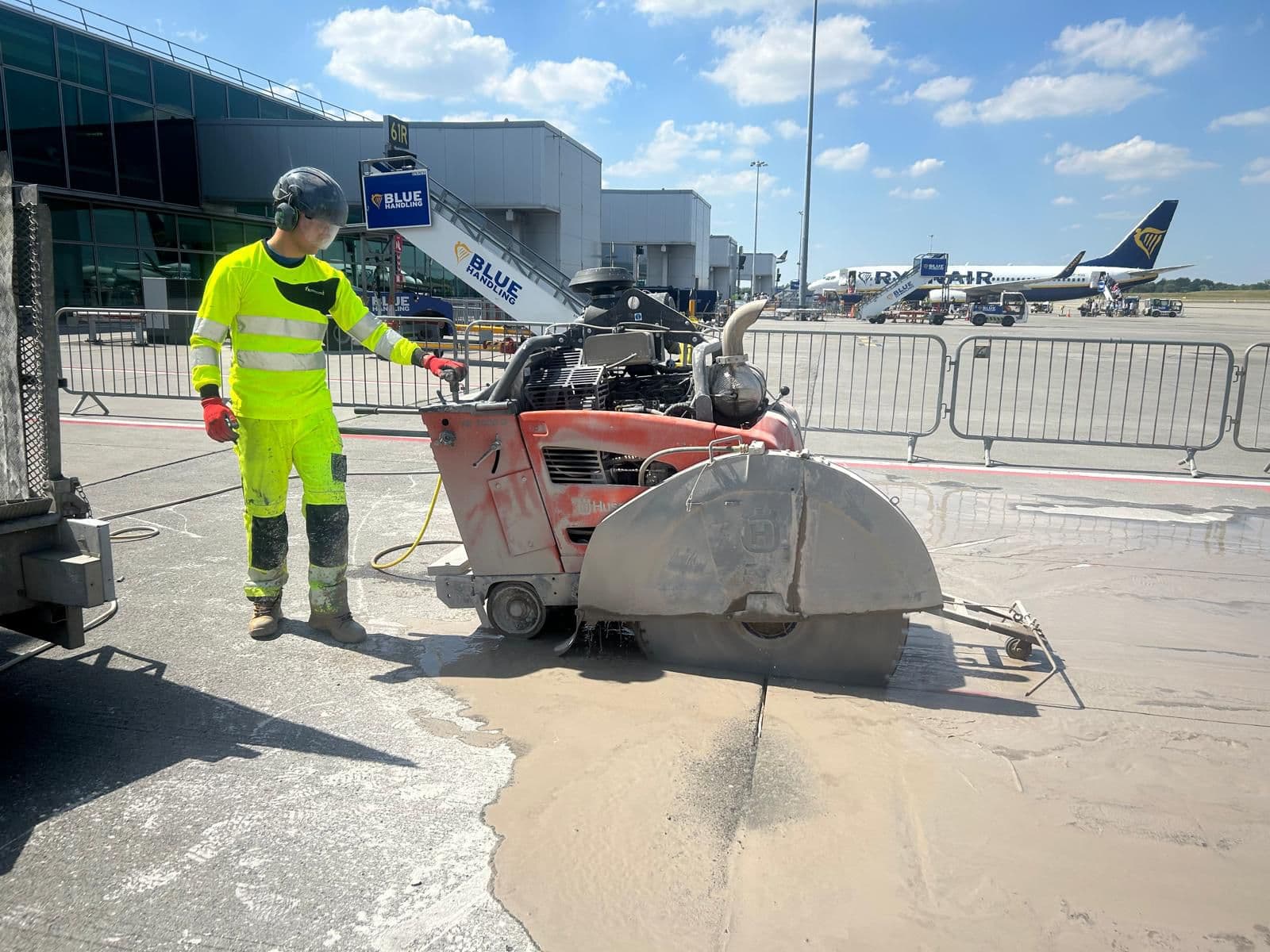 Concrete Cutting
Port Concrete Cutting in Kent
Read More » Concrete Cutting
What is Core Drilling?
Read More »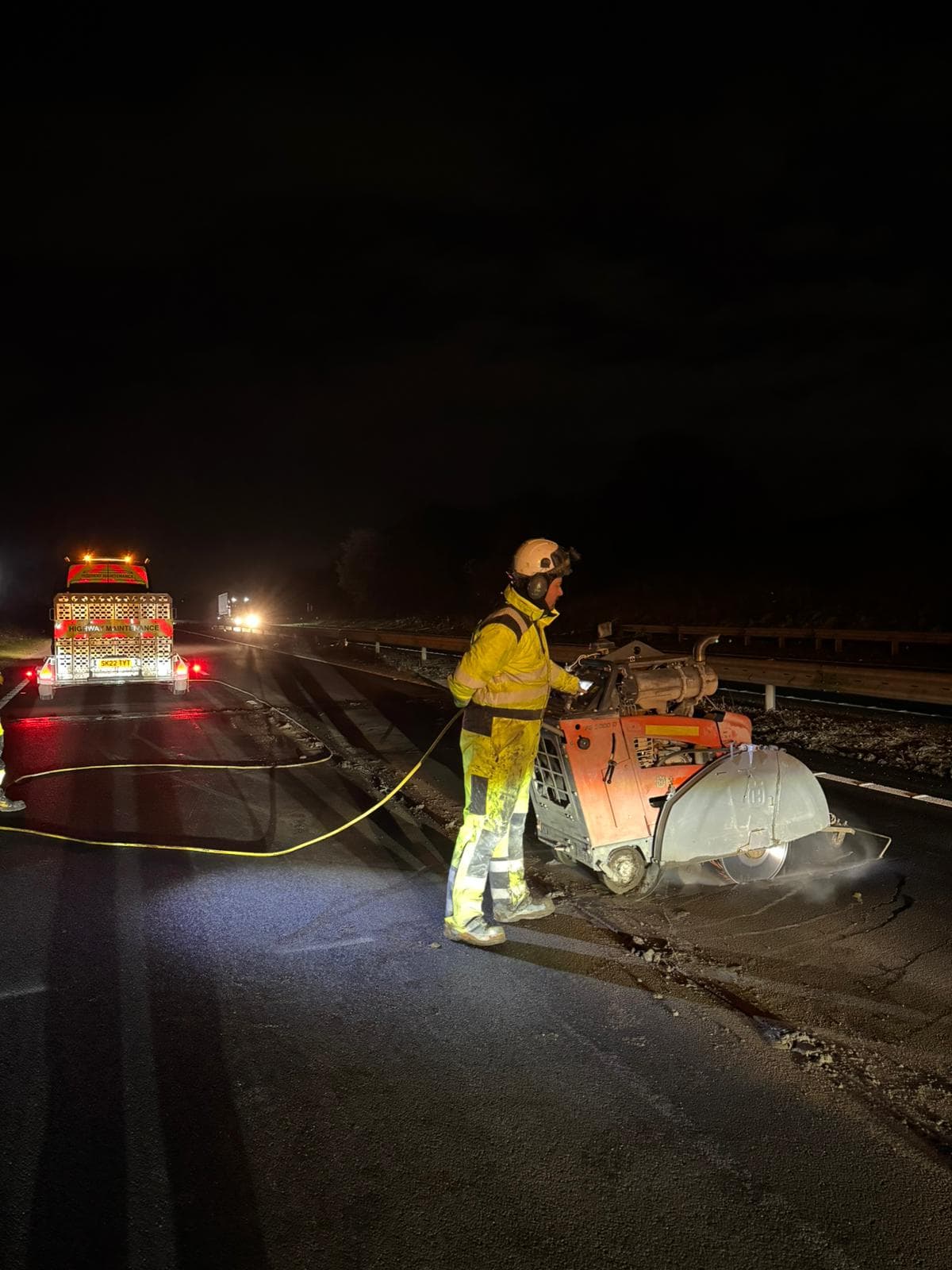 Concrete Cutting
Floor Sawing Services in Kent
Read More »