
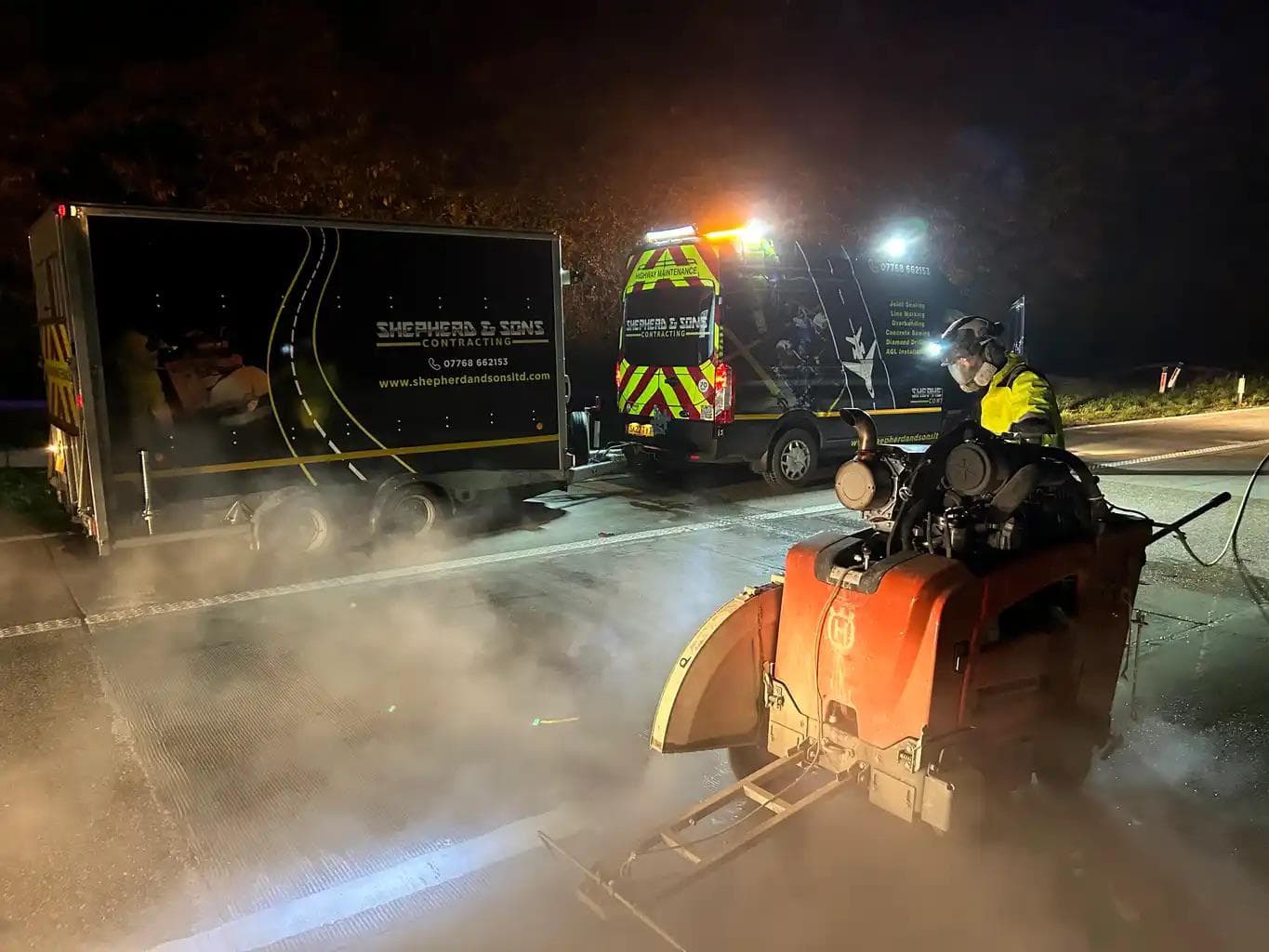
Shepherd and Sons Ltd
What Is a Cable Chase?
A cable chase is a narrow slot cut into a surface to house electrical or communications cable, which is then backfilled and sealed flush. In pavement and infrastructure work, the term refers to a slot cut into a runway, taxiway, apron, road or hard standing using a diamond saw, into which cable is laid before the slot is sealed back to the surface level. Typical pavement cable chases are 10mm to 30mm wide and cut to a depth that gives the cable adequate cover without compromising the structural integrity of the slab. The most common application in the UK is routing cable for airfield ground lighting, followed by traffic signal detector loops, road stud wiring and communications cable in trafficked surfaces.
At Shepherd and Sons, cable chasing sits directly between two of our core services: concrete cutting and airfield ground lighting installation. We’ve been cutting and sealing cable routes on UK airfields for more than 40 years, and we’ve been sole contractor to BAA PLC since 2008. We’re based at Westerhill Farm in Kent, hold SafeContractor and CHAS accreditation, and are members of the Extruded Sealant Association. This article covers what a pavement cable chase is, where it’s used, how the work is carried out, and the details that determine whether the installation lasts.
Two meanings of the same term
Worth clearing up at the outset, because “cable chase” is used in two distinct contexts.
In building services, chasing means cutting a channel into a wall, floor or ceiling to conceal electrical cable or conduit before plastering or finishing. It’s routine electrical work, governed by structural limits on how deep a chase can be cut into masonry.
In pavement and infrastructure work, a cable chase is a slot cut into a trafficked surface to carry cable across or along the pavement. The engineering considerations are different: structural depth limits relative to slab thickness, movement across joints, trafficking loads, water ingress, and on airfields, foreign object debris control.
This article covers the second. It’s the application where the specification detail matters most and where getting it wrong is most expensive to put right.
Where pavement cable chases are used
Five applications account for most UK pavement cable chasing work.
Airfield ground lighting. The largest category. Runway edge and centreline lighting, taxiway centreline and edge lighting, stop bars, approach lighting and apron floodlighting all need power and control cable routed to each fitting. Where cable can’t be ducted below the pavement, it’s chased into the surface.
Traffic signal detector loops. Inductive loops cut into the carriageway to detect vehicles at signalised junctions. The loop itself and the feeder cable back to the controller are both installed in cut chases.
Road stud and marker wiring. Powered road studs and illuminated markers on highways and airfield surfaces.
Communications and fibre. Fibre or data cable routed across a pavement where trenching isn’t practical and the run is short.
Car park and port control systems. Barrier control, ANPR camera feeds, weighbridge cabling and dockside lighting control.
Why the cut depth matters more than it looks
A cable chase is a deliberate cut into a load-bearing surface, and every millimetre of depth removes structural capacity from that slab.
The depth has to balance two competing requirements. Deep enough that the cable has adequate cover and won’t be damaged by trafficking, surface wear, or a snow plough blade. Shallow enough that the slot doesn’t create a plane of weakness or approach the reinforcement mat.
On thin asphalt overlays this is a genuine constraint. On thick airfield concrete there’s more room, but the reinforcement position and dowel bar locations become the limiting factor instead. A chase cut through a dowel bar at a joint is a serious defect.
This is why the pre-cut survey matters. We’ve found that the projects which go wrong are almost always the ones where the chase route was drawn on a plan without anyone confirming what was actually in the slab first.
The critical detail: crossing movement joints
If there is one thing that separates a cable chase installation that lasts from one that fails, it’s how the chase deals with movement joints.
A concrete pavement joint opens and closes across the seasonal cycle. A cable laid rigidly across that joint and sealed in place will be stretched every winter as the joint opens. Cable has very little tolerance for repeated tensile strain. It work-hardens, the conductors fatigue, and eventually the circuit fails, usually somewhere inaccessible.
There are three ways to deal with it, and the right one depends on the pavement.
Route around the joint. Where the geometry allows, taking the chase along the slab rather than across the joint avoids the problem entirely.
Build in slack. Where the joint has to be crossed, a service loop or deliberate slack at the crossing point gives the cable room to accommodate the joint movement without going into tension.
Use a flexible crossing detail. A flexible duct or sleeve through the joint zone, with a sealant that accommodates the joint movement independently of the cable.
In our experience, routing a cable chase around a movement joint works better than crossing it with a rigid seal because the cable never sees the tensile cycling in the first place, whereas even a well-detailed crossing introduces a maintenance point that will eventually need attention. On airfield work where a single failed AGL circuit means an out-of-service light and a potential operational restriction, designing the route to minimise joint crossings is worth the extra metres of chase.
How a pavement cable chase is cut and sealed
The work is a sequence, and the preparation stages carry most of the risk.
Route survey and services check. The proposed route is surveyed against existing services drawings and, on airside work, verified physically. Live cabling, fuel mains, drainage and existing AGL circuits all have to be located before any blade touches the surface. Reinforcement and dowel bar positions are established where the chase depth approaches them.
Setting out. The route is marked precisely. On airfields, the chase has to align with the fitting positions and the pit locations, and tolerance is measured in millimetres.
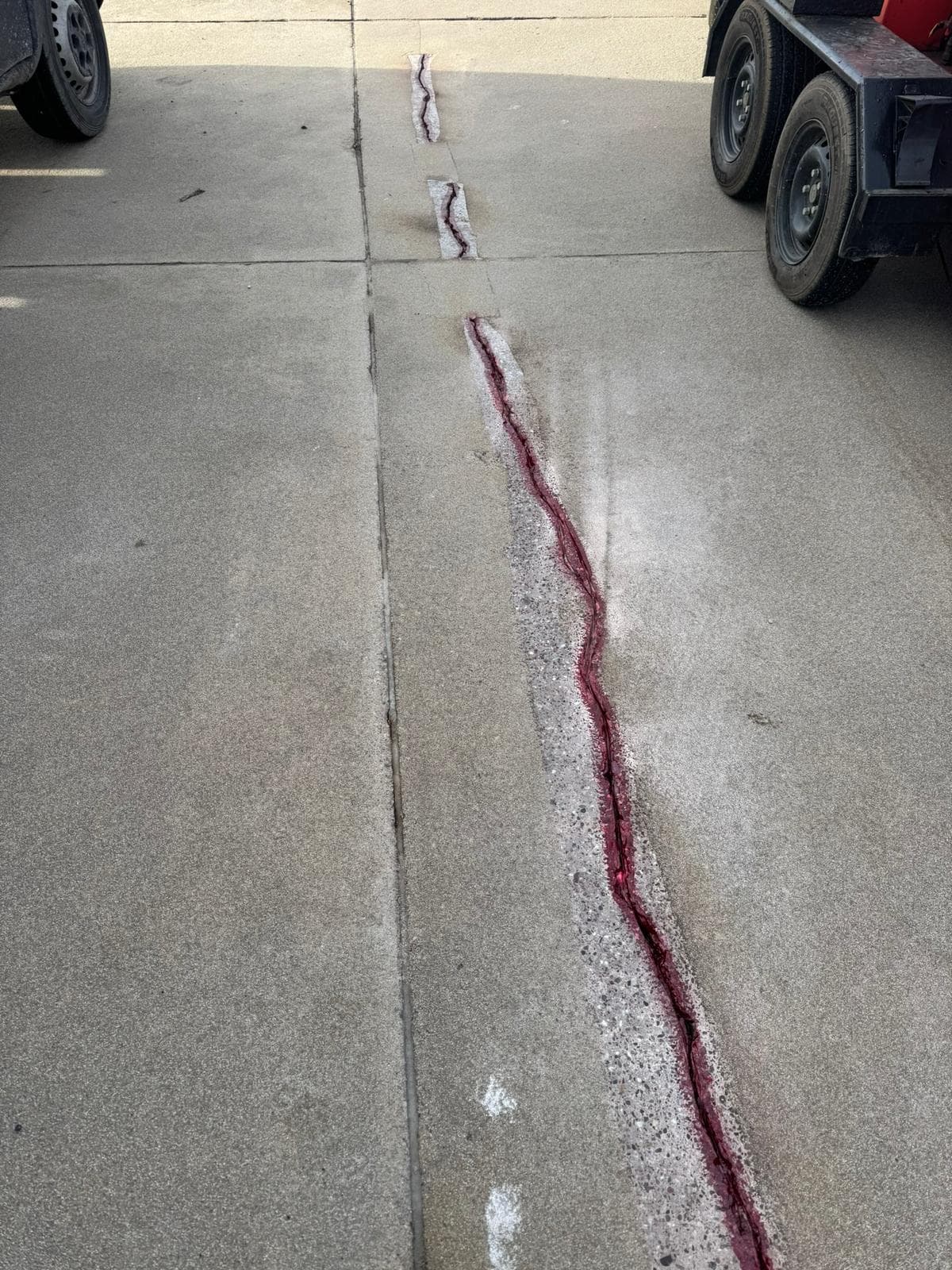
Cutting. A diamond saw fitted with a narrow blade cuts the slot to the specified width and depth. Cutting is done wet, with continuous water feed cooling the blade and suppressing dust at source. Where the specified slot width exceeds the blade width, two parallel cuts are made and the material between removed.
Slurry removal and drying. Debris is removed by water jetting and vacuum extraction. Slurry left to dry will harden in the slot and prevent the sealant bonding. The slot is then dried before cable installation, because sealing a wet slot is one of the most common causes of premature failure.
Cable installation. The cable is laid into the slot, with bedding, ducting or protective sleeving where the specification calls for it. Depth is set so the cable sits below the level the sealant will occupy.
Sealing and reinstatement. The slot is backfilled and sealed with a system matched to the pavement and exposure. Flexible resin, polyurethane and specialist bituminous compounds are all used depending on whether the substrate is concrete or asphalt, the movement expected, and whether there’s fuel or de-icer exposure. The finish is flush with, or slightly below, the surrounding surface.
Records. The as-built route is recorded. This matters more than it sounds. A chase that isn’t on the drawings will eventually be cut through by someone else’s saw.
Why the surface finish specification is non-negotiable on airfields
On an airfield, the sealed surface of a cable chase has to sit flush with or marginally below the surrounding pavement. Sealant standing proud of the surface is a foreign object debris risk, a snow plough catch point, and a trip hazard on walkways.
That flush finish is harder to achieve than it sounds, because the sealant has to be placed to fill the slot completely without over-filling, and some systems shrink slightly on cure. The tolerance on an airside chase is tighter than on a highway equivalent, and the FOD walk before handback will pick up anything that’s been left proud.
This is also where cable chasing shares its discipline with joint work. The reinstatement is a sealing operation, and the same rules apply: sound, clean, dry slot faces, correct sealant depth, and a controlled surface finish. Contractors who cut chases but don’t do sealing work routinely under-specify this stage.
Cable chasing compared with crack chasing
The two are frequently confused because the cutting operation looks similar.
Crack chasing cuts out an existing crack in a concrete or asphalt surface to a regular profile so it can be sealed properly. The objective is to convert an irregular crack into a controlled slot that a sealant can bond to and bridge.
Cable chasing cuts a new slot along a designed route to house cable. The objective is a service route, not a repair.
The equipment overlaps and both end in a sealing operation, but they’re different scopes with different specifications.
Standards and compliance
Pavement cable chasing in the UK works to:
- CAP 168 (Licensing of Aerodromes) for licensed UK airfield work, covering pavement surface requirements and AGL provision
- CAA advisory publications including survey and aerodrome guidance documents
- ICAO Annex 14 for international aerodrome design standards
- The Drilling and Sawing Association Code of Practice for the cutting operations
- BS 7671 (IET Wiring Regulations) for the electrical installation itself
- HSE guidance on diamond drilling and sawing, and on avoiding danger from underground services
- CDM 2015 Regulations for the construction phase
On defence estate work, DIO standards apply in place of, or alongside, the civil aviation framework.
Sectors where cable chasing is specified
Aviation clients account for most of our cable chasing work, covering AGL circuits on runways, taxiways, aprons and stands. It’s some of the most exacting cutting work on an airfield because of the combination of embedded services, FOD control and closure-window discipline, which is covered more fully in our guide to concrete cutting at UK airports.
Highway authorities and Tier 1 contractors specify cable chasing for signal detector loops, powered road studs, variable message sign feeds and gantry cabling.
Port operators use it for quayside lighting control, barrier and gate systems, weighbridge cabling and crane control routes.
Public sector clients specify it for car park control systems, depot lighting, ANPR installations and site security infrastructure.
Specifying a cable chase properly
A meaningful cable chase specification will identify the route and length, the slot width and depth, the pavement type and thickness, the reinforcement and dowel bar constraints, the services survey requirement, the cable type and any ducting or sleeving, the treatment at every movement joint crossing, the sealant system, the surface finish tolerance, and the as-built recording requirement.
A specification that just states “cut and seal cable chase, X metres” leaves the joint crossings and the finish tolerance undefined, which is exactly where these installations fail. The broader cutting techniques involved are covered in what is concrete cutting?.
If you’re specifying or commissioning cable chasing work, whether that’s an AGL circuit installation, a detector loop scheme or a port control cabling route, get in touch. We’ll assess the pavement, the services, the joint crossings and the reinstatement specification, and quote the full scope. You can see recent project work on our LinkedIn and Instagram.
More on Aviation
 Aviation
Concrete Cutting at UK Airports
Read More » Aviation
What Is Airfield Ground Lighting?
Read More »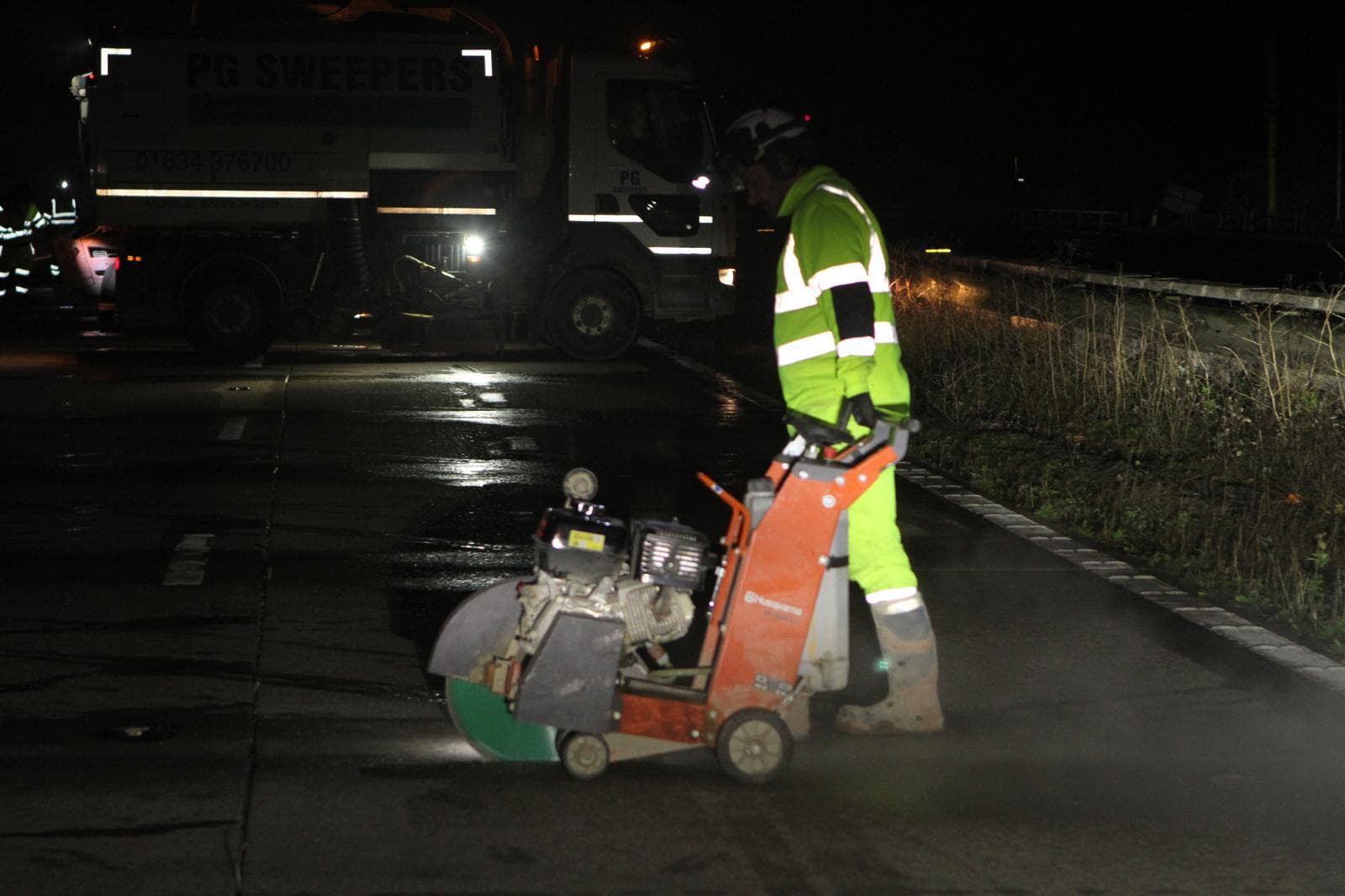
What is joint widening?
Read More » Line Marking
What Is Epoxy Line Marking?
Read More »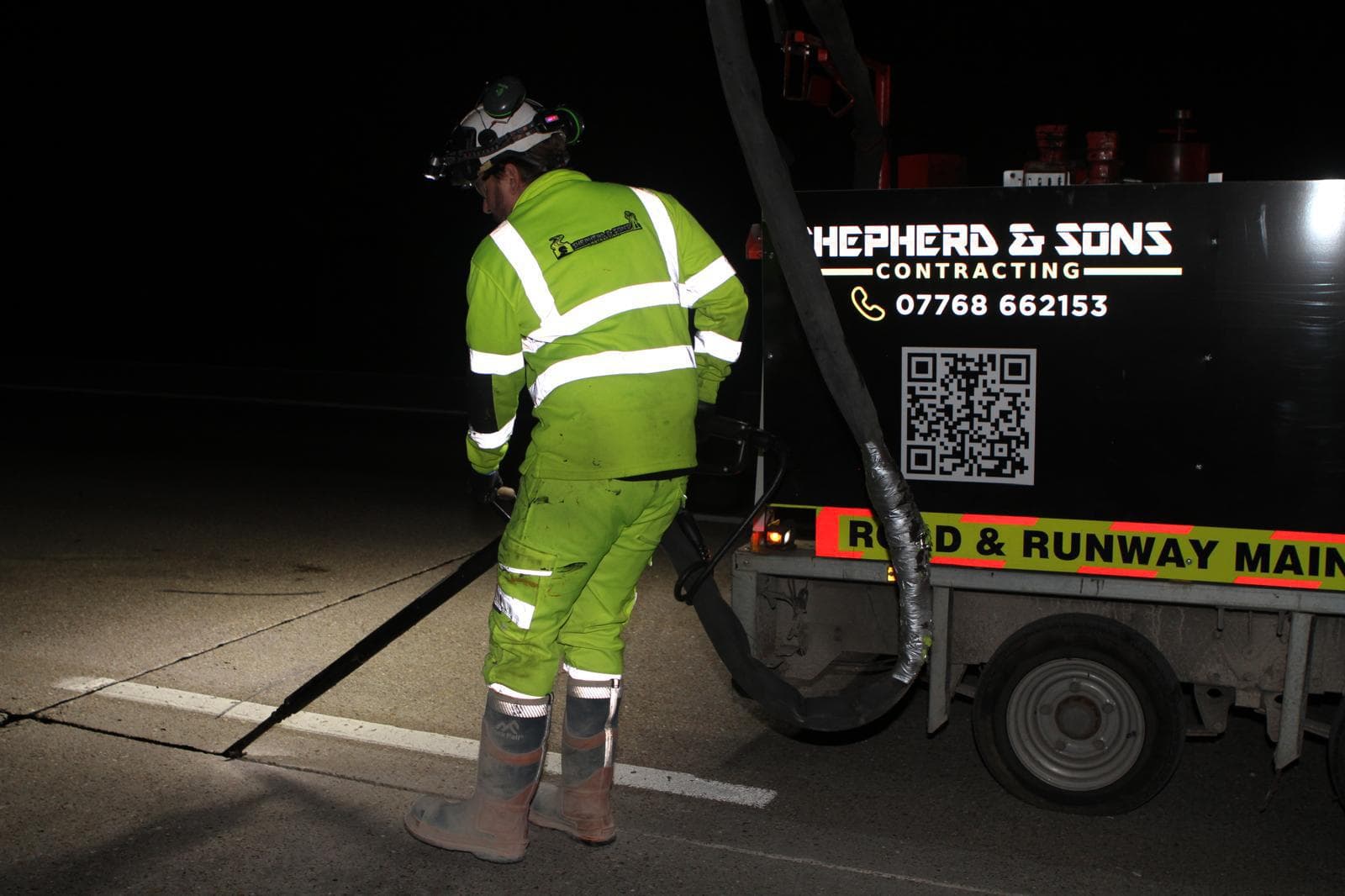 Joint Sealing
N1 Sealant for High Movement Joints Explained
Read More »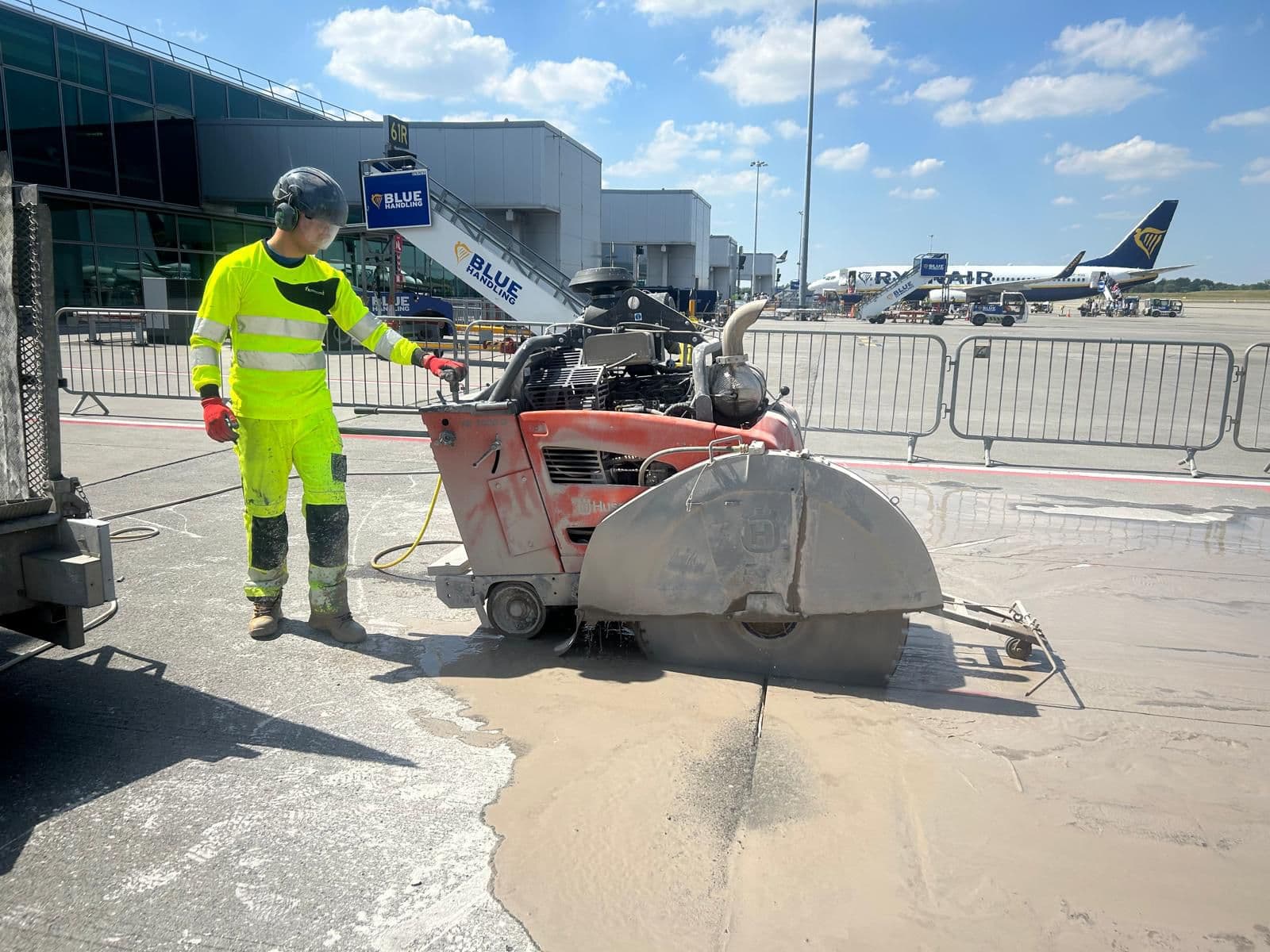 Concrete Cutting
Port Concrete Cutting in Kent
Read More »