
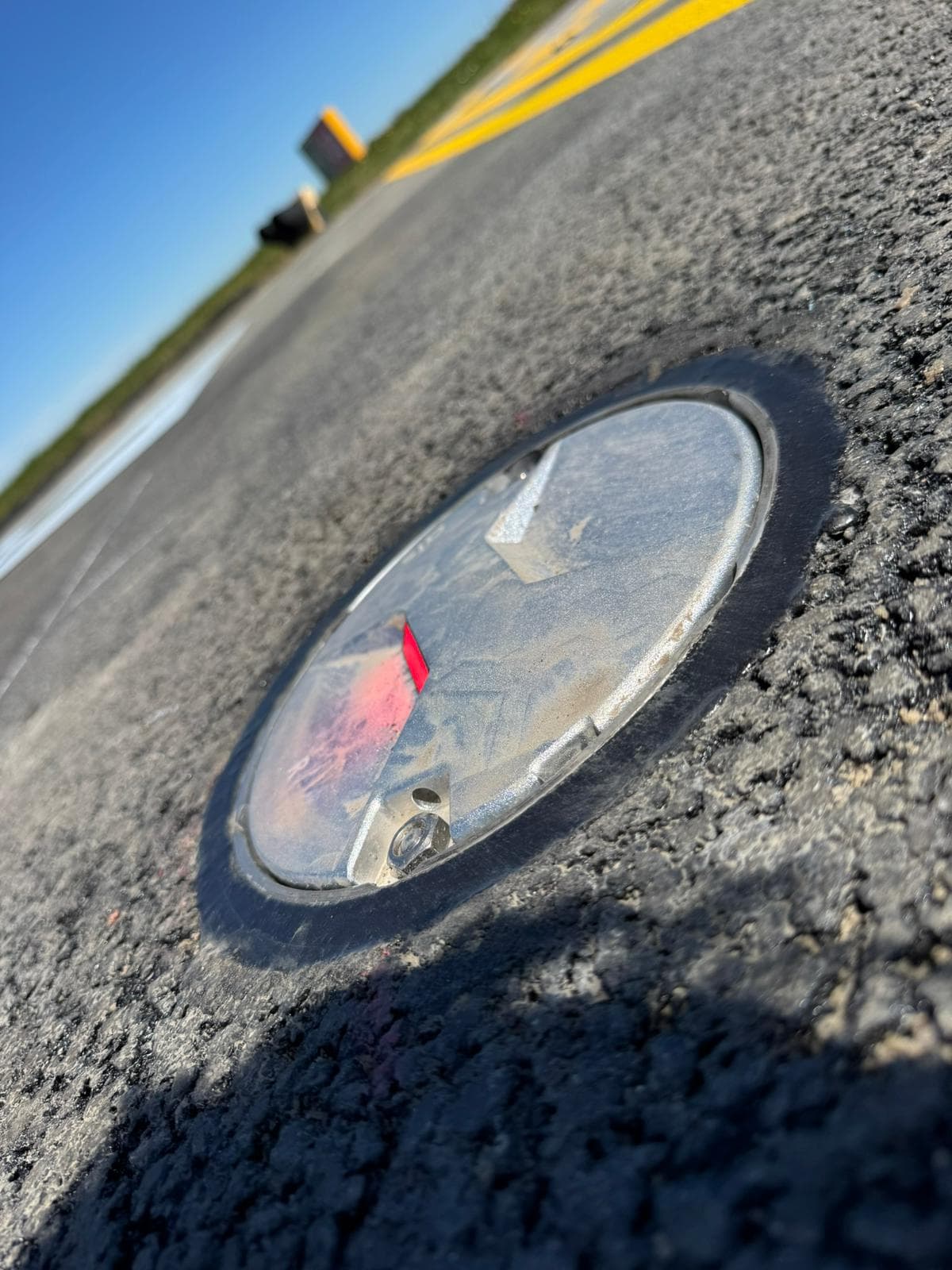
Airfield ground lighting, usually shortened to AGL, is the system of lights set into and beside a runway, taxiway and apron. It tells a pilot where the surface is, where it ends and which way it leads. It covers approach and threshold lighting, runway edge and centreline, touchdown zone lighting, taxiway centreline and edge lighting, and stop bars. Most of it runs in series from a constant current regulator, so every fitting holds the same brightness however long the circuit. The part that surprises people is what installing it actually involves. It is a concrete cutting job before it is an electrical one.
At Shepherd and Sons we install, core and maintain airfield ground lighting at UK airports, and have done for a decade. We are the pavement side of the system. That means coring the seating pots, forming the cable routes, setting the bases and reinstating the surface so the runway can reopen. From working with clients at Stansted, Luton and across the seven former BAA airports, we've found the lighting is rarely the hard part. Handing the pavement back serviceable before the first movement is.
Inset fittings and elevated fittings are different jobs
Lighting beside the surface sits on frangible mountings, designed to snap rather than damage an aircraft that strikes them. Those are elevated fittings, and installing one is groundworks.
Lighting that aircraft actually run over has to sit flush in the pavement. Those are inset fittings, and they are the reason a lighting contract turns into a cutting contract. Runway centreline, touchdown zone and taxiway centreline are all inset. So are stop bars.
Why it is a cutting job before it is an electrical one
An inset fitting does not sit on the pavement. It sits in it. The light is mounted in a base assembly, commonly called a pit or a can, set flush into the surface and wired back through ducting to the circuit. Installing or replacing one therefore starts with cutting concrete, and the pit itself is where the work is won or lost.
The pavement has to be handed back serviceable at the end of the shift either way. That single requirement shapes every decision that follows.
Coring the pit, not breaking it out
A pit is formed or removed by coring around it at large diameter and lifting the unit clear. The reason is the surrounding slab. A percussive break-out fractures concrete beyond the intended line, and on an airfield pavement that turns a fitting replacement into a bay repair. A clean core leaves a sound, square shoulder for the new base to be grouted into. The reinstatement depends on it.
Depths vary with the base type. A shallow base sits within the surface course. A deep base extends well below it and needs a correspondingly deeper core. Either way the hole must be cut square and to depth. A pit set slightly proud or out of level is a trip hazard and a foreign object debris risk, and neither is tolerated on that surface.
Rig choice matters more than people expect. In our experience, a bolt-down coring rig works better than a vacuum-mounted one on airfield concrete because a brushed or grooved finish will not reliably hold a vacuum seal. If the seal creeps mid-core, the barrel binds. Bolting down costs the time it takes to set anchors. It buys certainty, which is the right trade when the surface has to be handed back before the first movement.
Connecting the pits
A pit is only useful once it is connected. Primary cable normally runs in ducting. Secondary connections between fittings often run in a chase cut into the pavement and resealed afterwards.
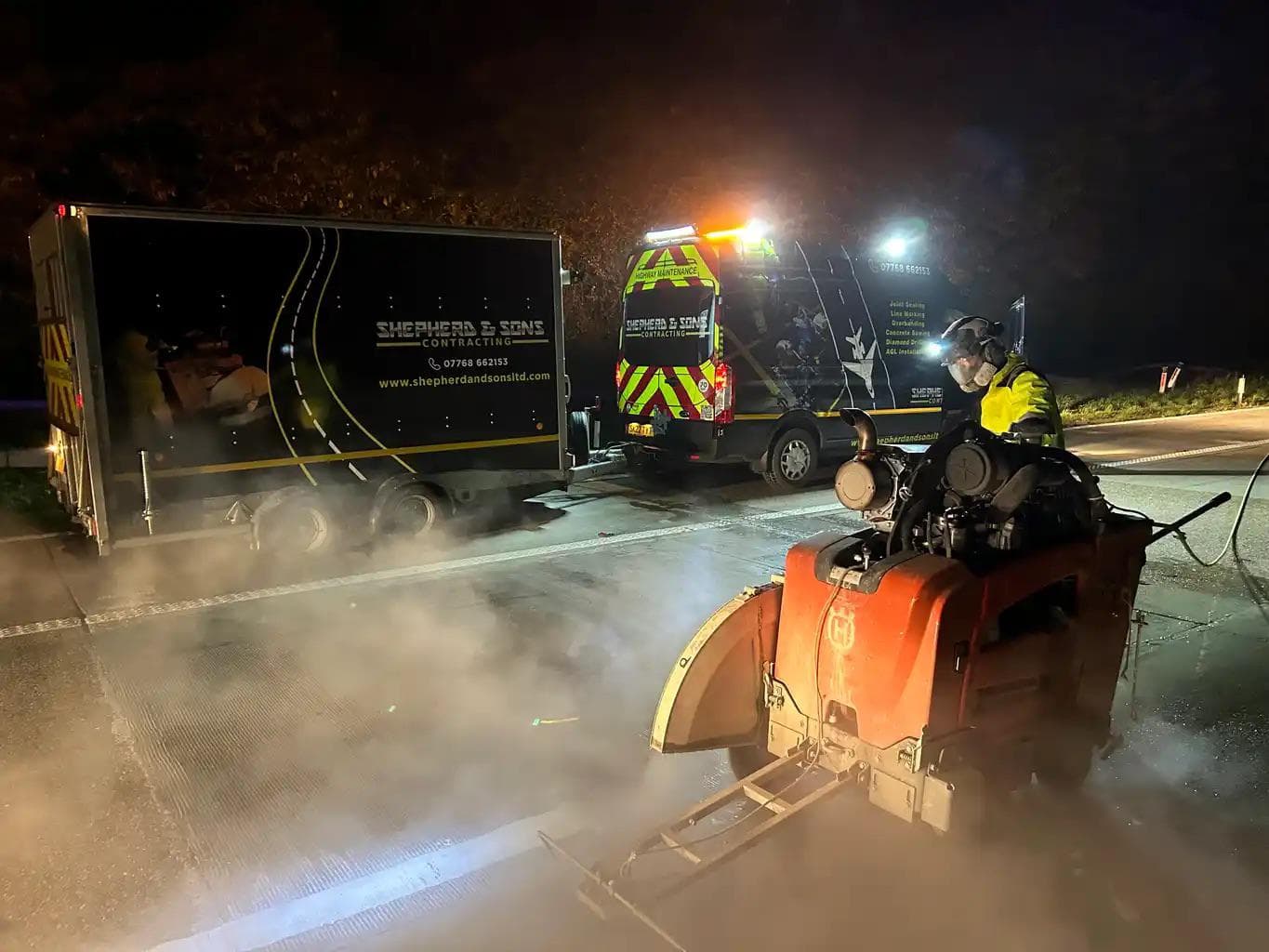
That chase is the same discipline as cable chasing with far tighter tolerances. It is cut to width and depth, cleaned, the cable laid, and then sealed so the pavement is watertight again before the runway reopens. Where the chase crosses a movement joint, the detailing has to allow the slab to move without shearing the cable.
The possession is the real constraint
Everything happens inside the window the aerodrome gives you. At Stansted we are part of a ten-week programme to enhance the airfield ground lighting system, working with Lagan Aviation and Infrastructure. Our part is coring out 150 AGL seating pots, all inside restricted overnight possessions on a live operational airfield.
The arithmetic is what makes that a programme rather than a series of jobs. 150 pots across ten weeks of restricted possessions means a nightly rate has to be set and then held. A night that under-delivers has to be recovered from a later one. That planning happens before the first core, because on an airfield you cannot buy extra hours at short notice.
Why coring beats trenching next to a live runway
The same logic applies to cable routes. At Luton we worked on a runway verge signage installation, again with Lagan. Over four nightshifts our operatives used a bolt-down coring rig to create the cable routes, drilling through reinforced concrete at 320mm.
A trench looks cheaper on paper and is more expensive in practice. It opens a long continuous void beside an operational surface. It generates spoil. It cannot be made good inside a single possession. A line of cores leaves the pavement intact between them. The cores can be counted out and removed. Best of all, the work can be stopped and made safe at any point the possession ends.
At 320mm through reinforced concrete, the reinforcement matters more than the concrete. Bar slows the cut and consumes segments. Barrel specification and water supply are what decide whether four nightshifts is realistic or optimistic.
When AGL fails, it is often the pavement
An AGL fault is frequently a pavement fault. The circuit runs in series, so water in one pit can take out more than one fitting. The usual culprits are a grout line that has failed around a base, or a chase seal that has split where the slab moves.
That is why reinstatement matters as much as installation. A pit grouted into a clean, square core shoulder stays watertight. One bedded into a fractured opening does not.
A fitting standing proud is the other recurring problem. It is a foreign object debris risk and a catch point for a snow plough. Both should be picked up on the FOD walk before handback, which is the last chance to find them.
The standards that govern it
Aerodrome lighting is licensed work. CAP 168 sets the licensing requirements for UK aerodromes, and ICAO Annex 14 sets the international design standard behind it. The CAA also issues advisory publications that sit alongside them.
It is worth being clear about where the scope divides. We install the fittings and the pavement systems that serve them. Circuit design, energisation and final commissioning sit with the aerodrome's own electrical authority, under BS 7671 and the aerodrome specification. Any contractor who blurs that line in a tender is worth a second look. The wider discipline is the same one that governs all cutting work at UK airports.
What to ask before appointing an AGL contractor
- Do operatives hold current airside passes, and who provides the escort?
- Is the rig bolt-down or vacuum-mounted, and has the pavement finish been checked?
- What nightly rate is being committed to, and what is the recovery plan for a lost night?
- Who reinstates and seals the chase, and is that the same team or a second appointment?
- What does the FOD walk and handback record look like?
That fourth question is the one that catches people out. The cut and the seal are a single operation in practice, and splitting them across two contractors puts the watertightness of the pavement on an interface nobody owns.
For coring, AGL installation and pavement reinstatement across the UK's aviation estate, get in touch with our team.
More on Aviation
 Aviation
What Is a Cable Chase?
Read More »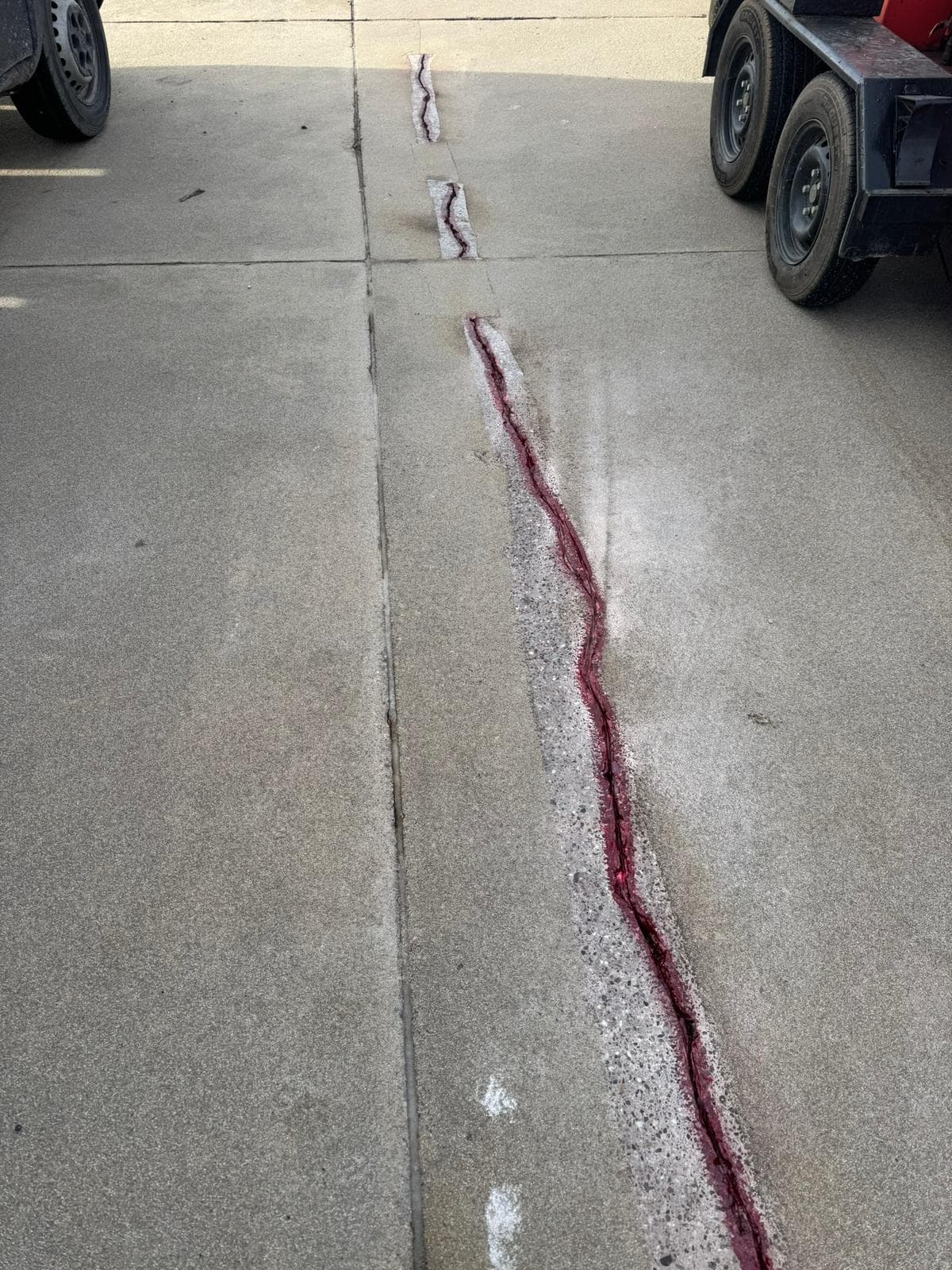 Aviation
Concrete Cutting at UK Airports
Read More » Aviation
Resin Repair or Bay Replacement? How to Tell Which You Need
Read More »- Aviation
Why Does Airfield Concrete Fail at the Surface First?
Read More » - Aviation
What Is Different About Airside Working?
Read More » 
What is joint widening?
Read More »